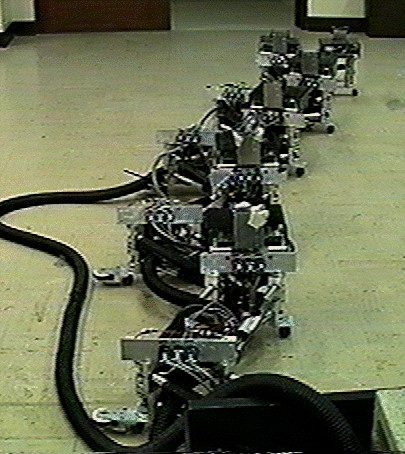
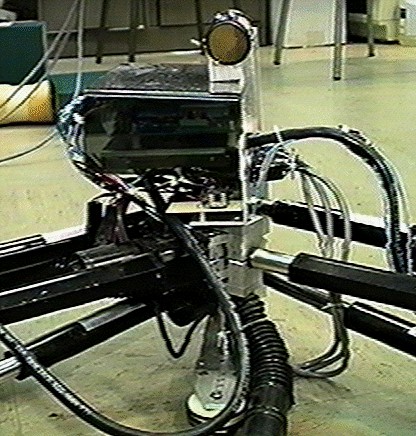
How Do Snakes Move Without Legs? The Answer Is Incredible
THE SCIENCE BEHIND SURVIVAL · YouTube
This video could not play here. Watch on YouTube.
How snakes move, and the machines they inspired.
THE SCIENCE BEHIND SURVIVAL · YouTube
This video could not play here. Watch on YouTube.
Snake Discovery · YouTube
This video could not play here. Watch on YouTube.
Bruce Jayne · YouTube
This video could not play here. Watch on YouTube.
Lateral undulation: a wave of sideways bends travels down the body. Contact with the ground or surrounding objects supplies the forces that move the snake forward.
Sidewinding: sideways bending combines with lifting. Some body regions remain planted while others move to new contact points.
Concertina: the snake anchors part of its body, extends another part, then draws the rest forward. This is useful in tight passages and on branches.
Rectilinear motion: muscles move the belly skin and scales relative to the skeleton, so a heavy snake can creep forward with little sideways bending.
Newest featured designs and versions first, followed by earlier machines. Current product families appear at the top; dates identify the work shown.
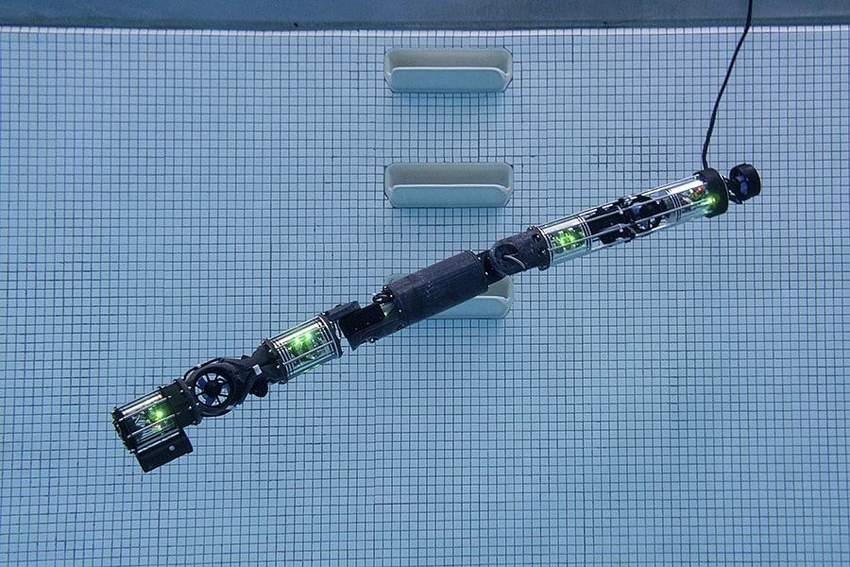
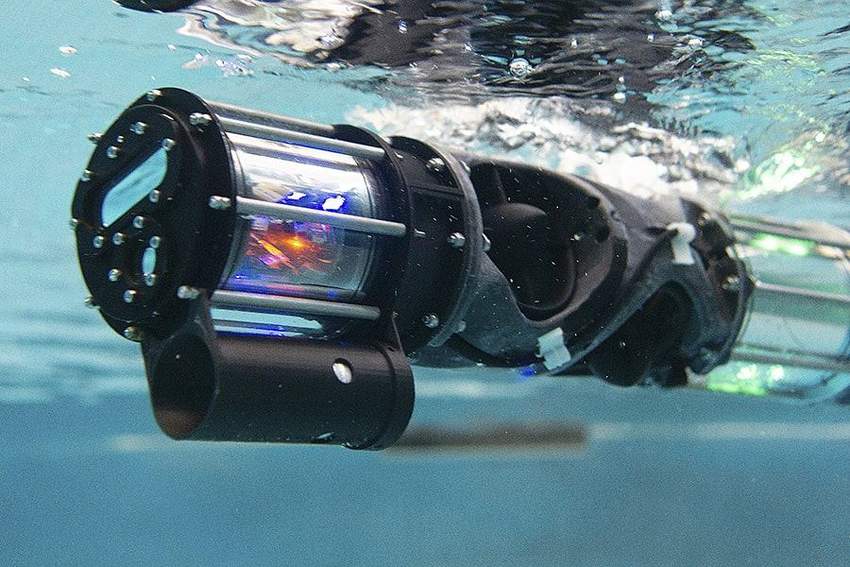
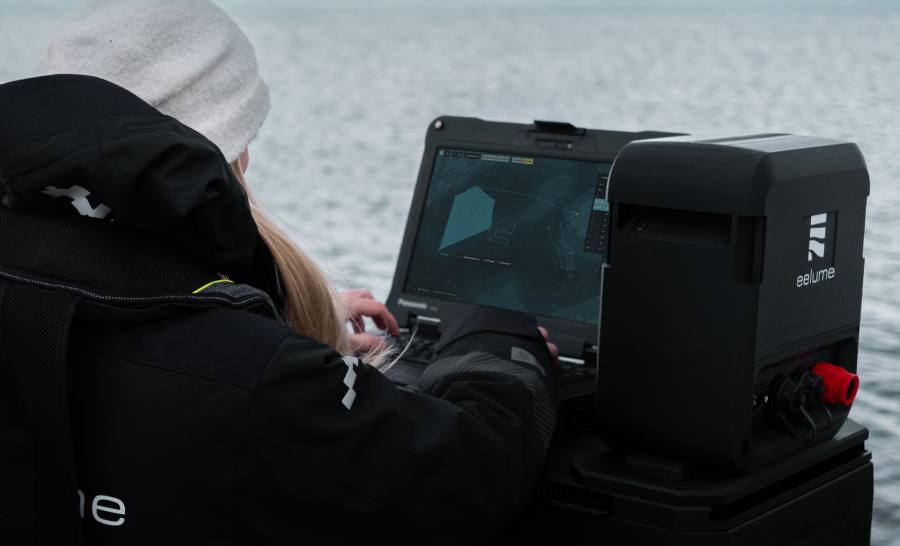
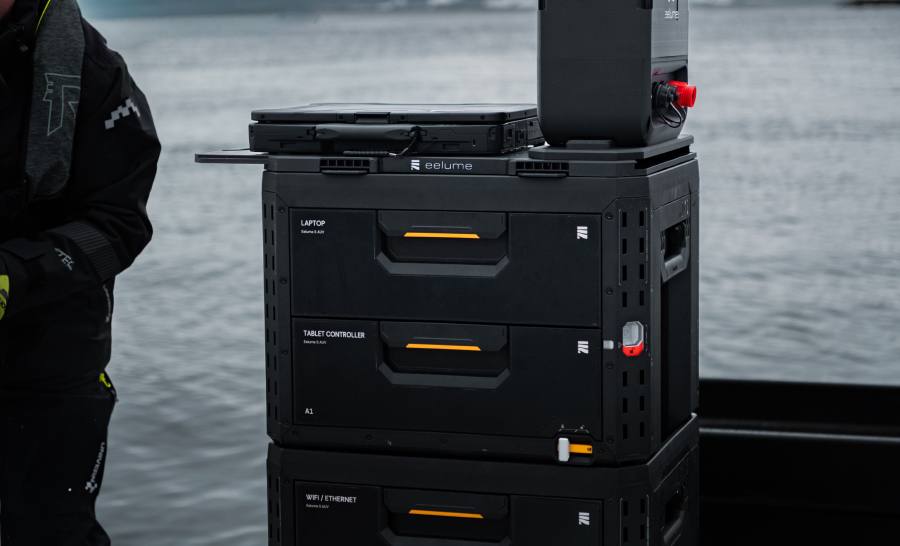
The current S3 catalog offers 300 m or 600 m depth ratings, up to 11 hours / 62 km depending on payload, multi-aperture sonar and a 4K still camera. S6 is rated to 600 m with synthetic-aperture sonar and configurable multi-day operation. The manufacturer describes articulated maneuvering, close terrain following and acoustic communication. These figures describe the current S-series, not every earlier long, slender Eelume inspection robot.


Marine Technology TV · YouTube
This video could not play here. Watch on YouTube.
Kongsberg Maritime · YouTube
This video could not play here. Watch on YouTube.
Kongsberg Maritime · YouTube
This video could not play here. Watch on YouTube.
NTNU · YouTube
This video could not play here. Watch on YouTube.
Eelume Subsea Intervention · YouTube
This video could not play here. Watch on YouTube.
Innovasjon Norge · YouTube
This video could not play here. Watch on YouTube.
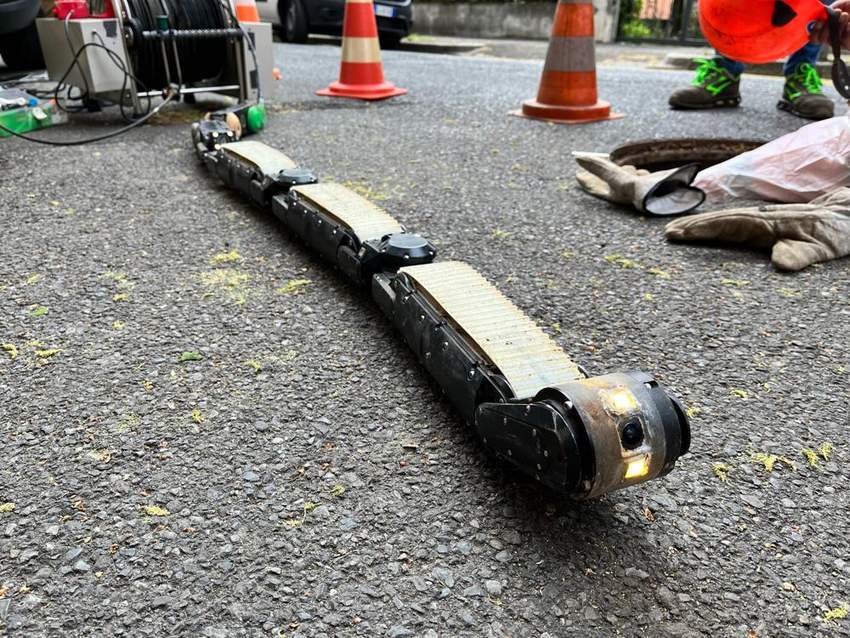
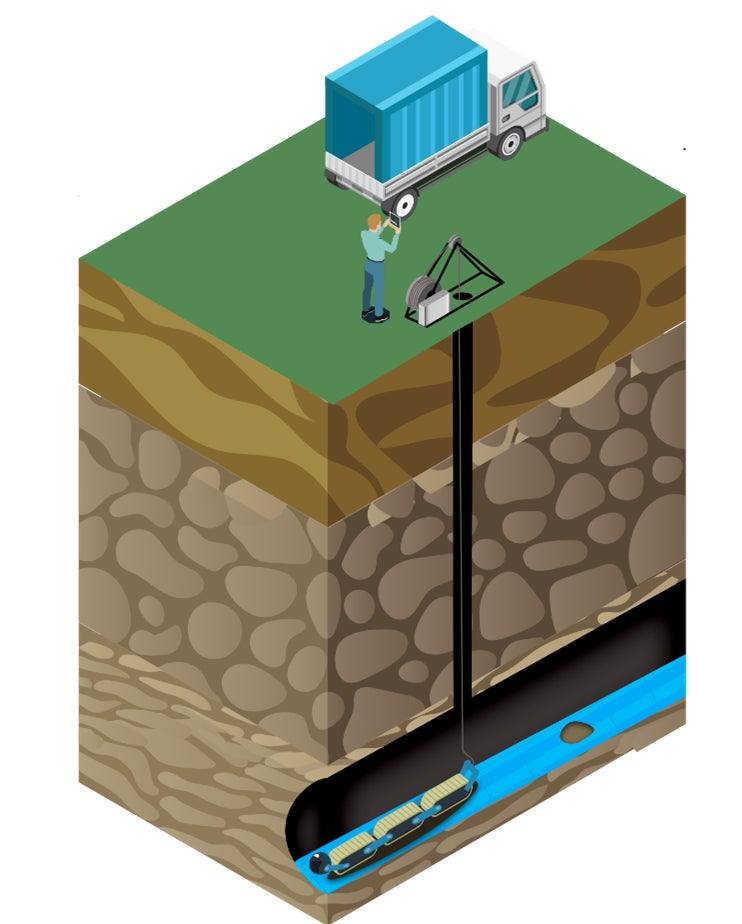
The current listing gives a main-unit envelope of 1720 × 94.5 × 79.5 mm, mass 10.5 kg, speed 100 mm/s and traction force 49 N. The tether is 150 m. Two HD cameras support inspection. The manufacturer rates the main unit IP67 and specifies insertion through openings as small as 100 mm diameter. A separate reel has different dimensions and protection.
Michele Guarnieri · YouTube
Earlier SORYU4 inspection robot, distinct from the current Soryu-C.
This video could not play here. Watch on YouTube.
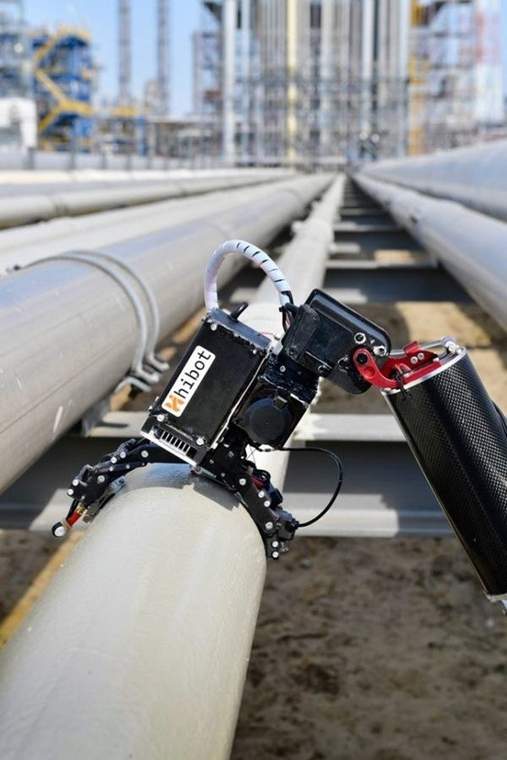
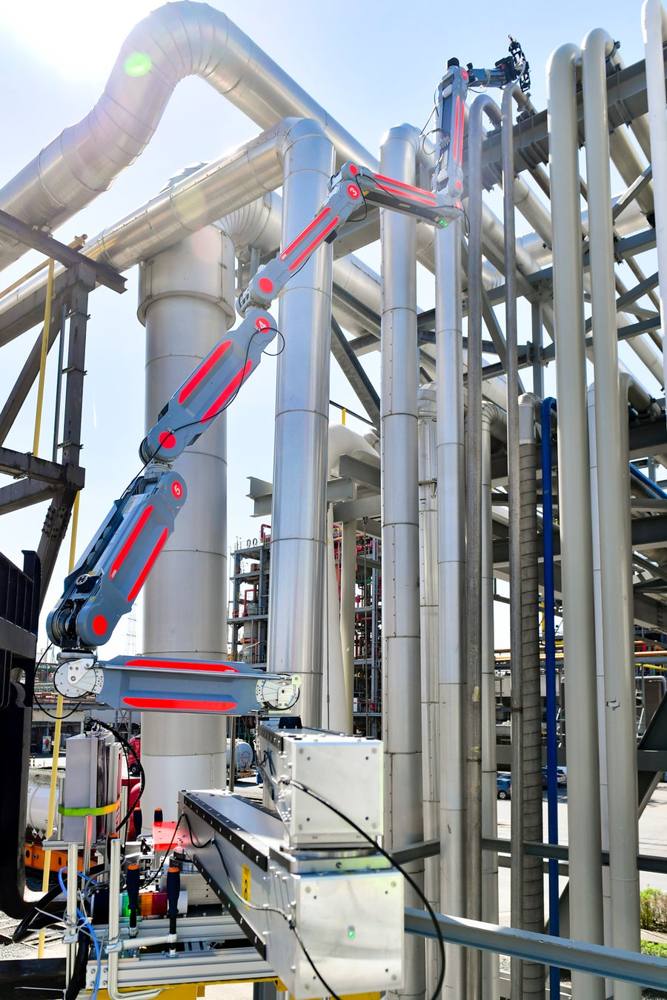
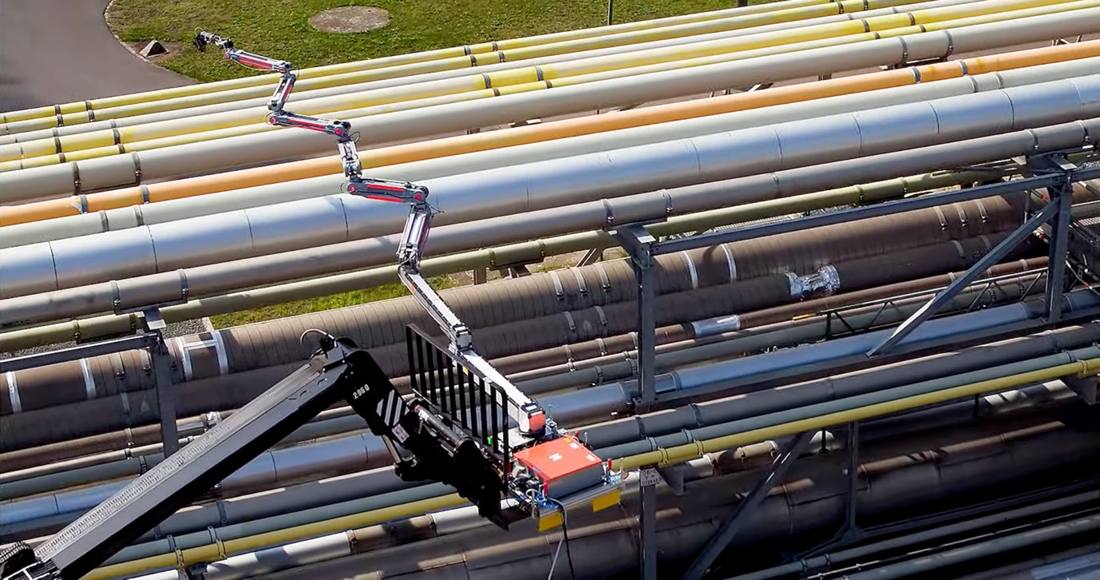
A self-balancing articulated arm for confined-space inspection and maintenance. The published specification is 5 m extended length, 35 kg mass, 2.5 kg payload and up to nine links. Possible tools include HD or thermal cameras, ultrasonic probes, lidar and time-of-flight cameras. It follows a confined path as an arm rather than crawling independently across the floor.
hibot Corporation · YouTube
This video could not play here. Watch on YouTube.
hibot Corporation · YouTube
Float Arm concept presentation; distinguish the illustrated mechanism from deployed inspection footage.
This video could not play here. Watch on YouTube.
hibot Corporation · YouTube
This video could not play here. Watch on YouTube.
hibot Corporation · YouTube
Broader hibot exhibition presentation with multiple platforms.
This video could not play here. Watch on YouTube.
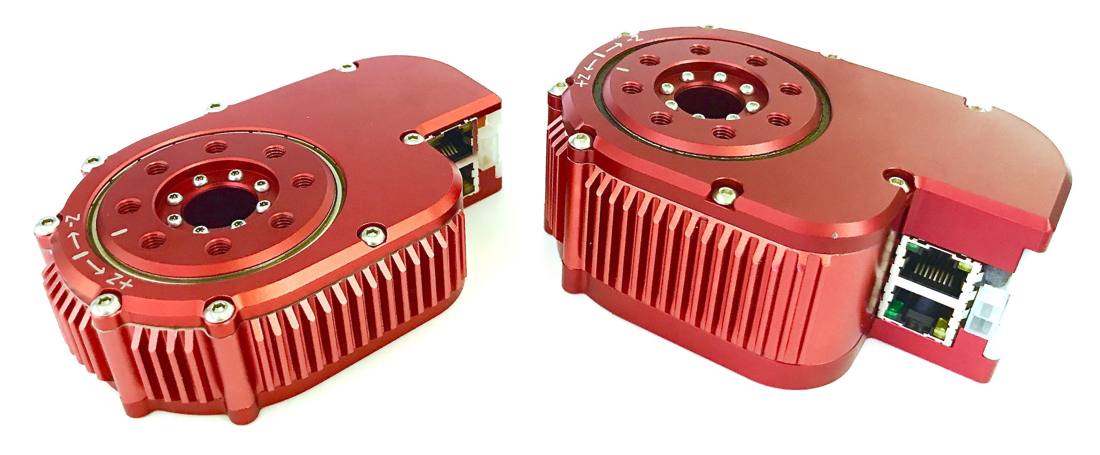
HEBI’s modular electric actuators combine a geared joint, sensing and control electronics. Their hardware documentation includes CAD, connector details and programming interfaces, making them one route to assembling a modular snake body.
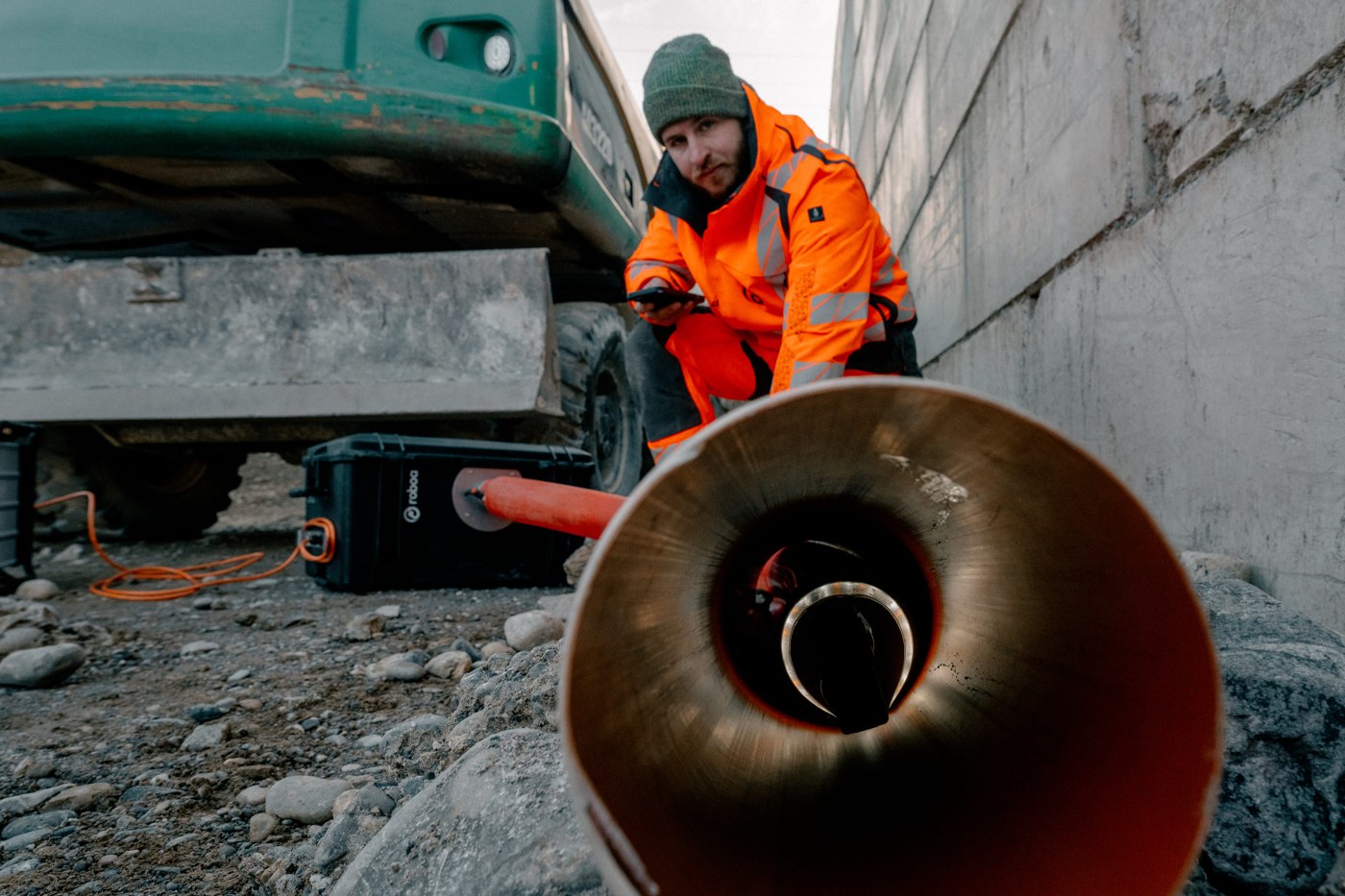
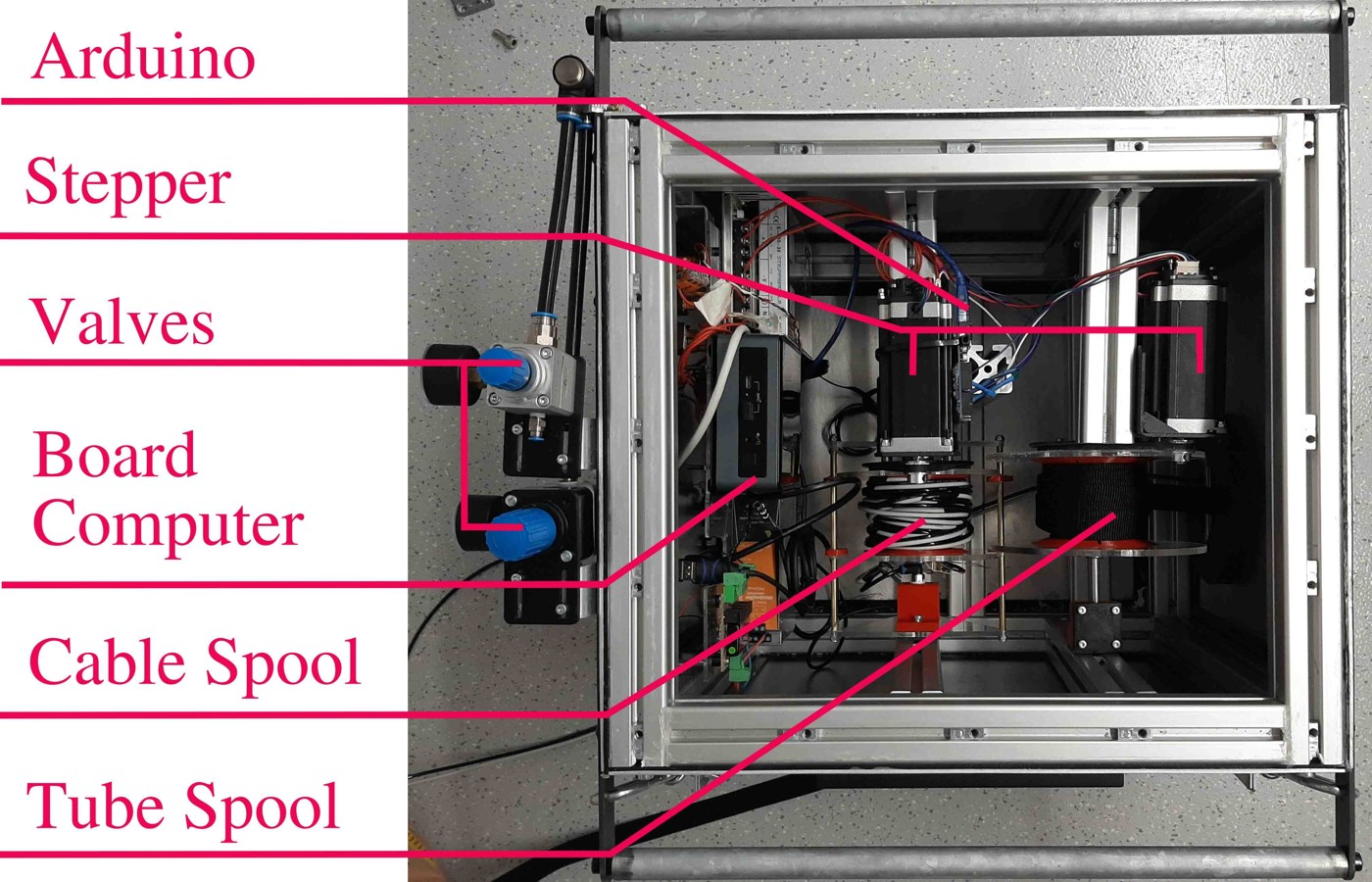
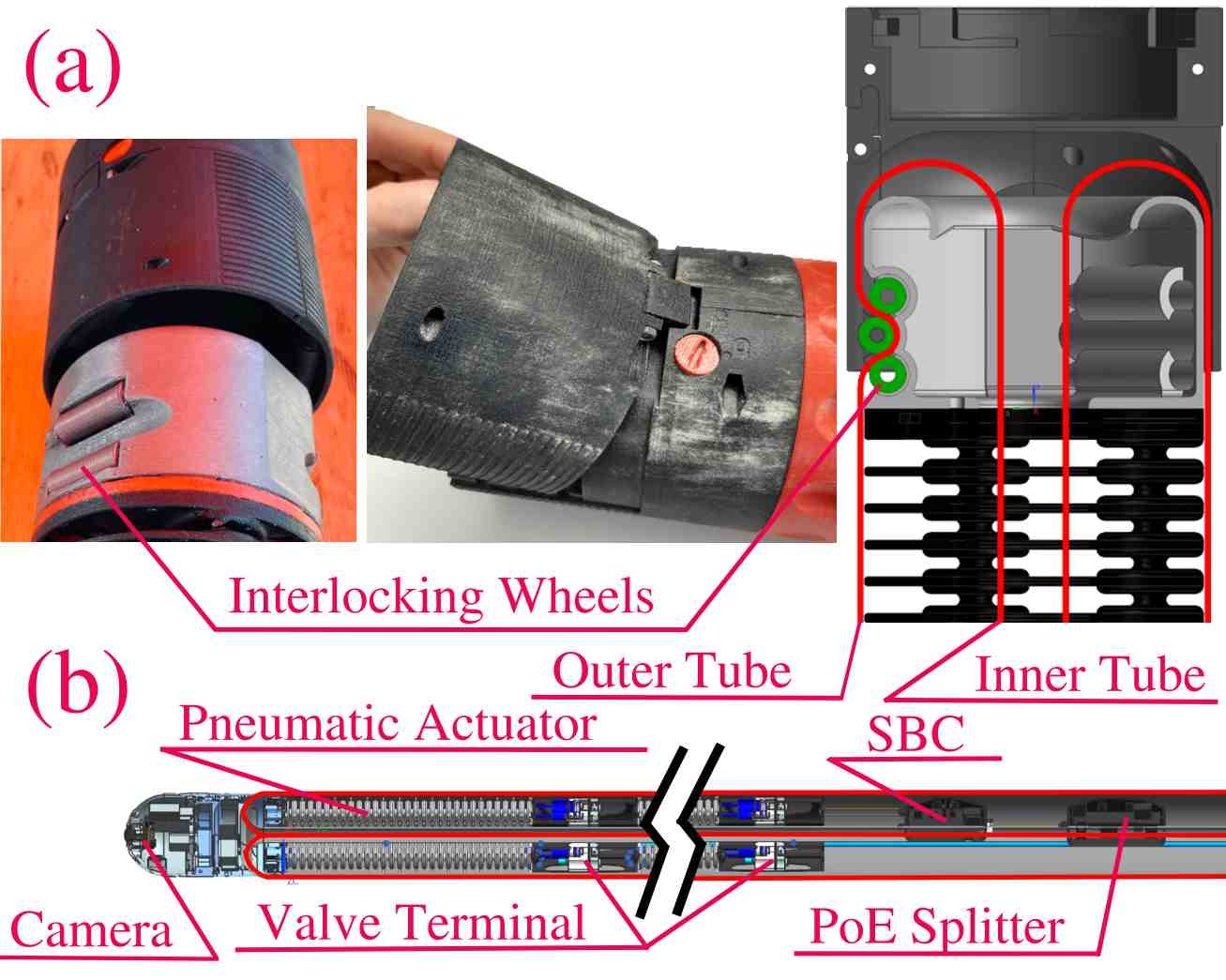
roboa advances by turning its soft tube inside out at the tip, so the body grows into a passage. A base supplies the tube and operating services, while interchangeable heads support inspection or cable deployment. The earlier ETH research prototype used pneumatic steering and a sensor head for search-and-rescue experiments. The current manufacturer lists an additional steering module as coming soon.
roboa · YouTube
This video could not play here. Watch on YouTube.
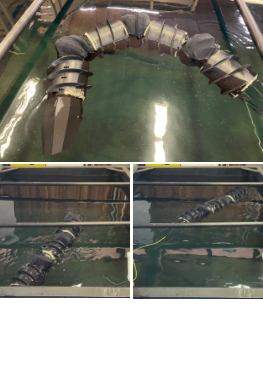
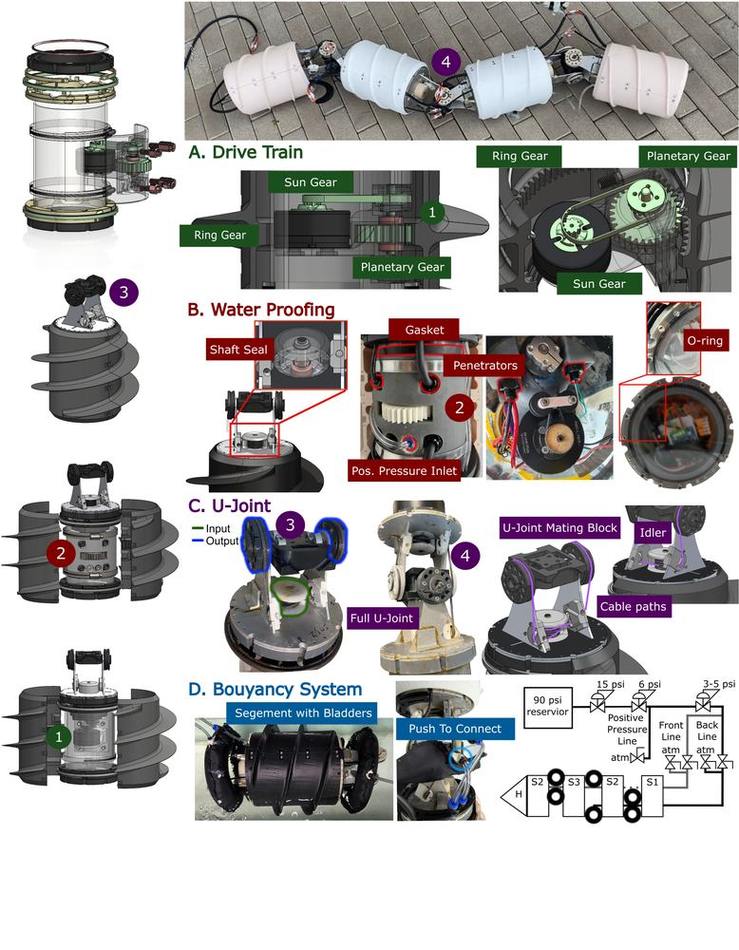
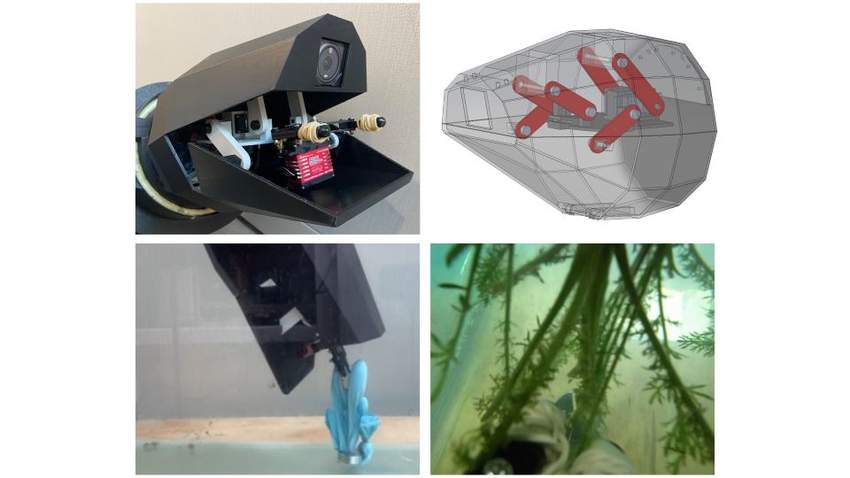
Water-sealed screw modules combine body articulation with Archimedean screw propulsion. V2 adds buoyancy control for diving and surfacing. The paper describes a 48 V tethered power rail, local conversion to 24 V, a buoyancy bladder system, and joint tests that expose load-dependent hysteresis. Underwater experiments support its amphibious capabilities; exploration and rescue remain proposed applications.
UCSD Advanced Robotics and Controls Lab · YouTube
Original ARCSnake platform; this is not the V2 paper demonstration.
This video could not play here. Watch on YouTube.
UCSD Advanced Robotics and Controls Lab · YouTube
This video could not play here. Watch on YouTube.
UCSD Advanced Robotics and Controls Lab · YouTube
This video could not play here. Watch on YouTube.
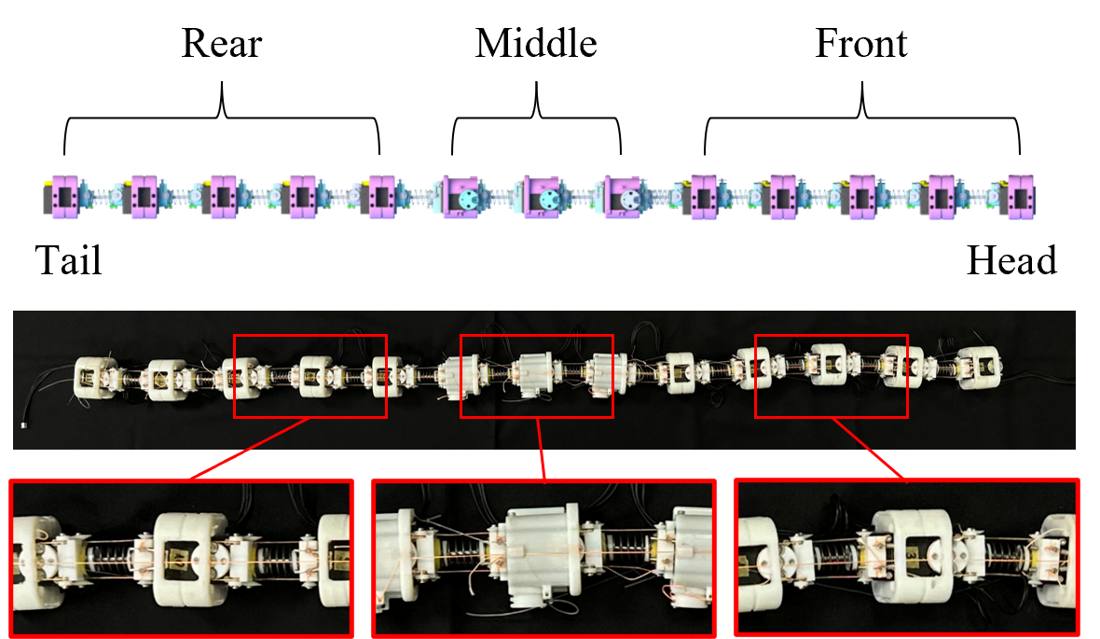
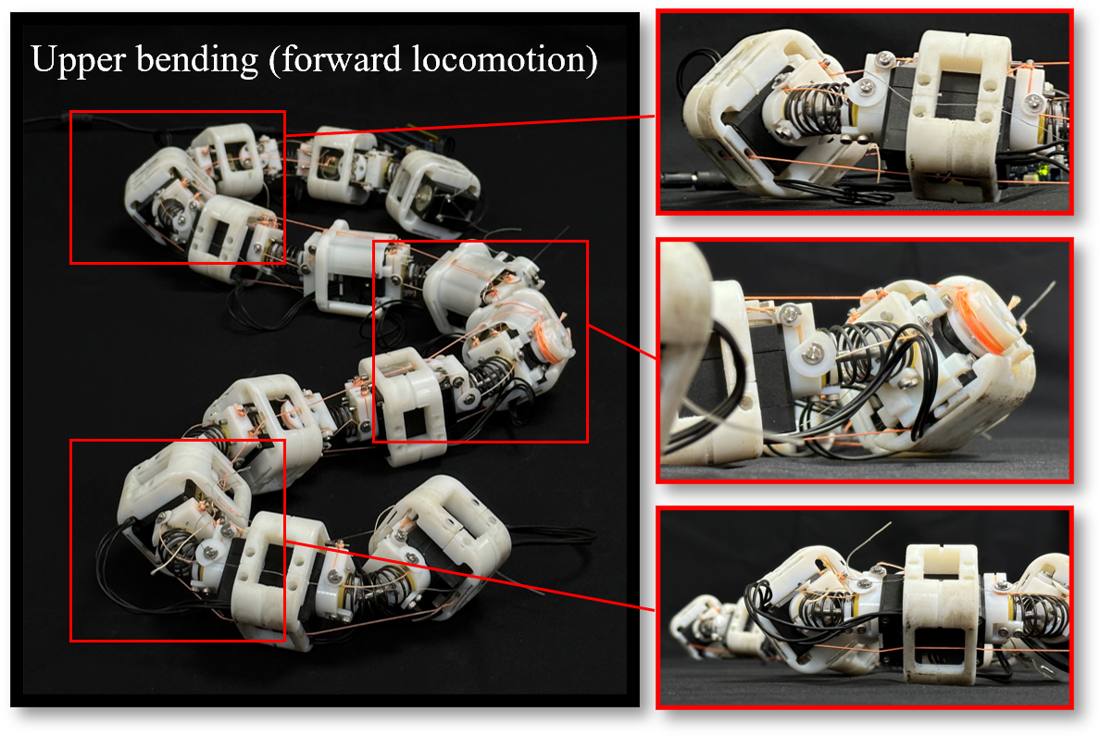
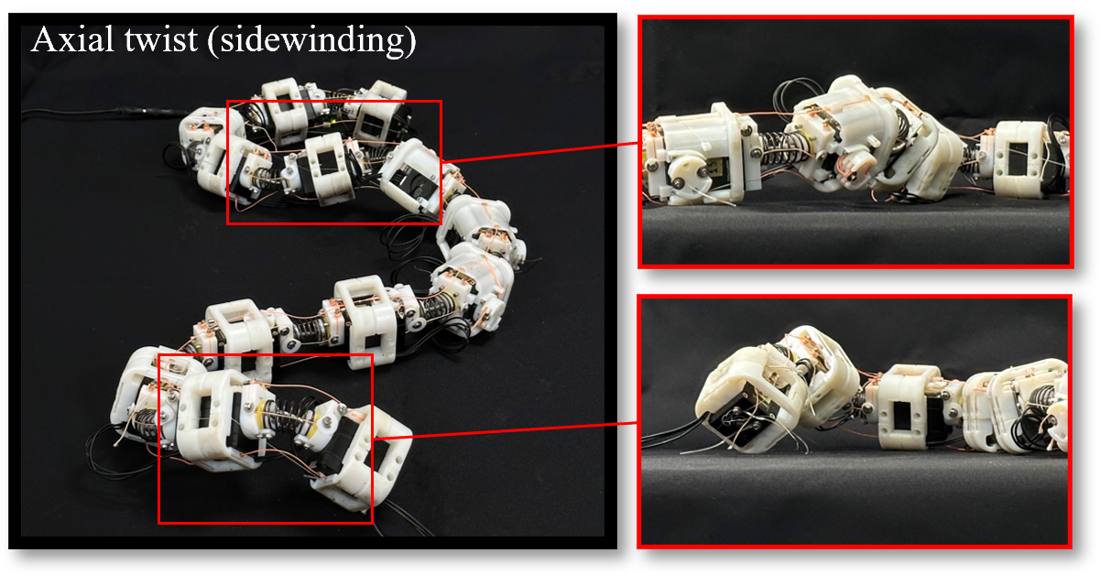
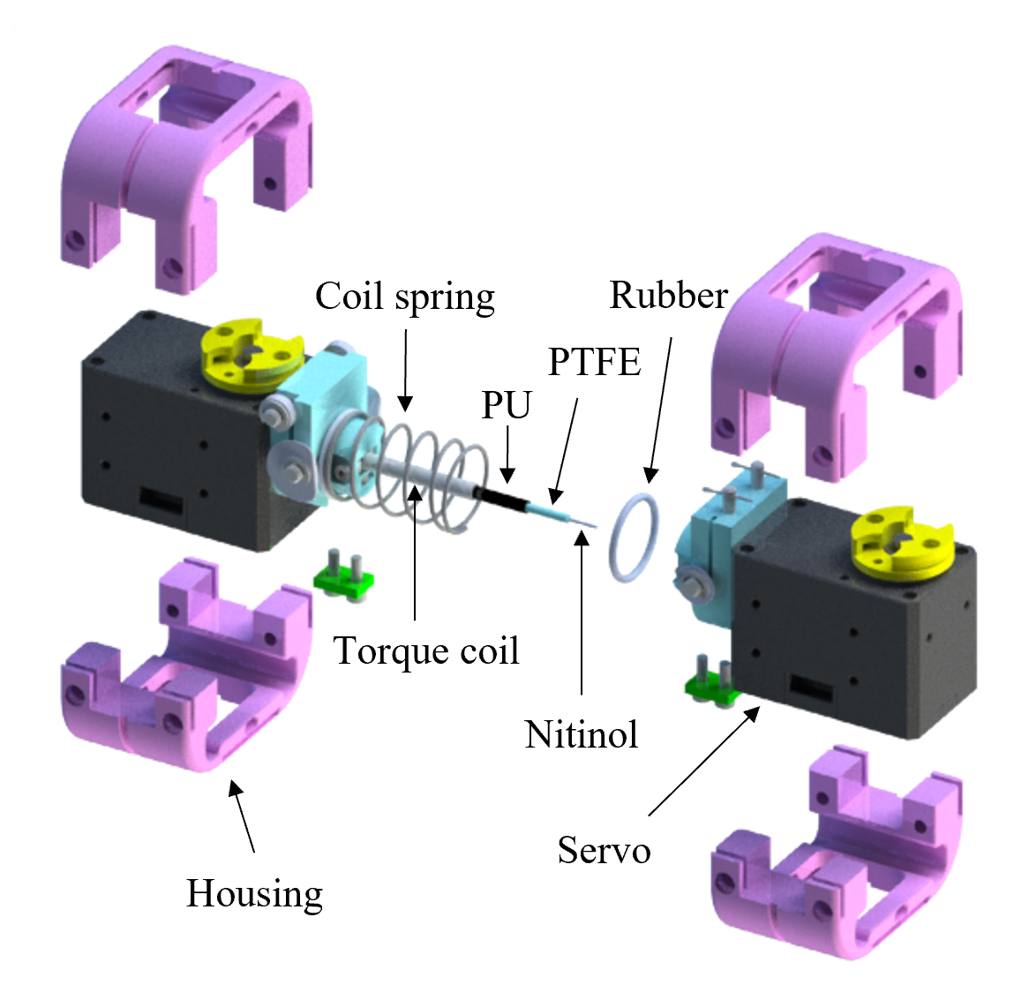
The 1.25 m, 2.21 kg prototype has 13 motor modules and 12 compliant joints. Local tendon actuation creates the planar wave; centrally placed additional drives tension body-length dorsal, ventral and spiral tendons to alter lift and twist. Coil springs surround a flexible backbone. Demonstrated forward, backward and sidewinding speeds were 27.6, 35.5 and 20.0 mm/s on an indoor surface. Torsional backlash and flipping limited speed.
Junhyoung Ha · YouTube
This video could not play here. Watch on YouTube.
Junhyoung Ha · YouTube
This video could not play here. Watch on YouTube.
Junhyoung Ha · YouTube
This video could not play here. Watch on YouTube.
Junhyoung Ha · YouTube
This video could not play here. Watch on YouTube.
Junhyoung Ha · YouTube
This video could not play here. Watch on YouTube.
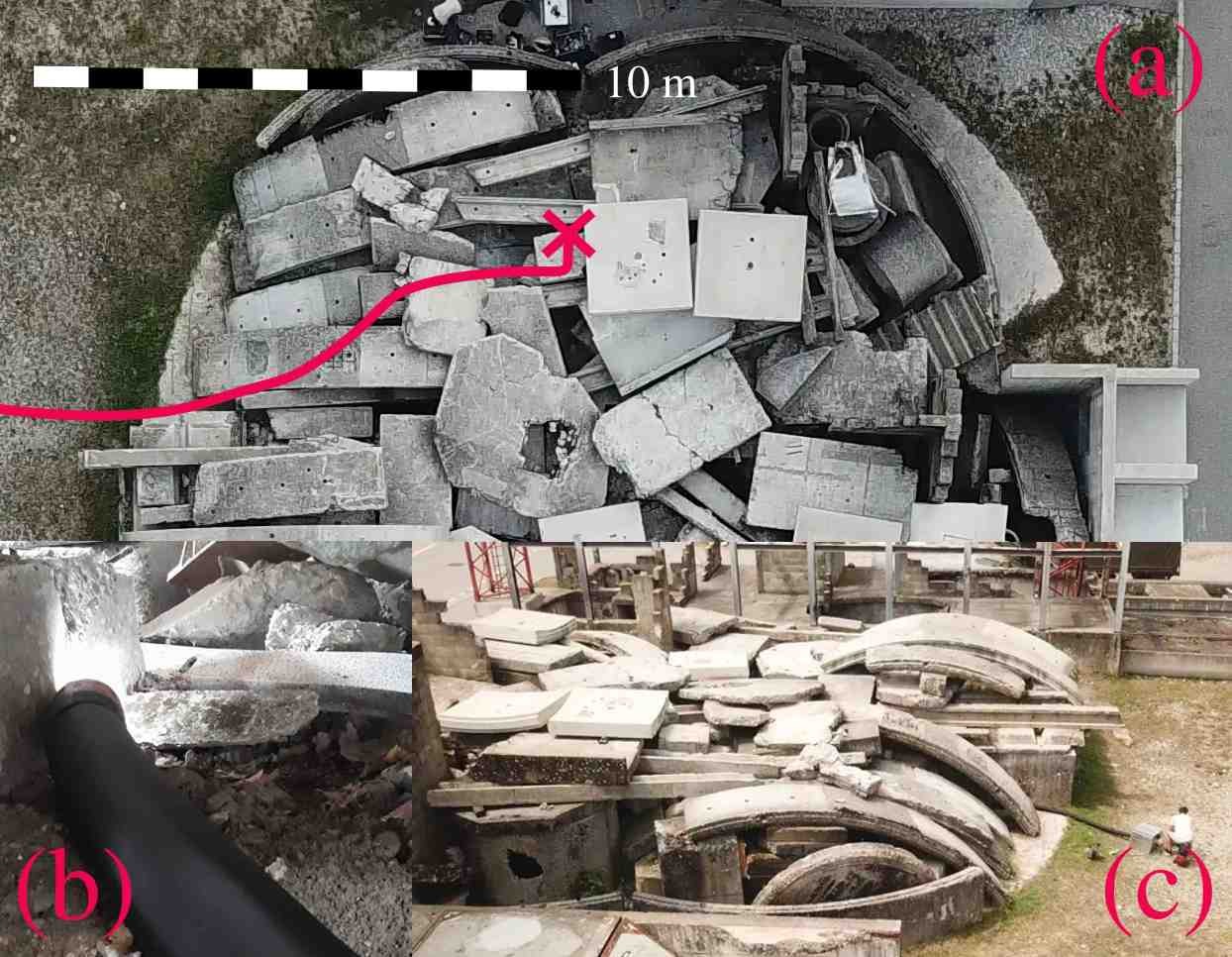
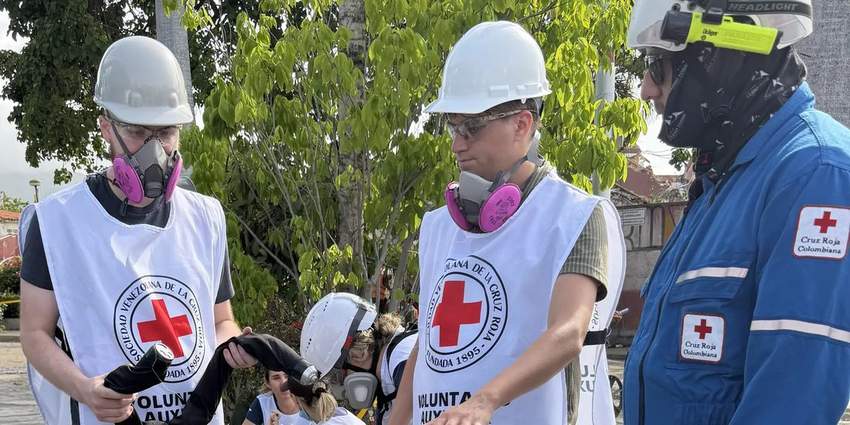
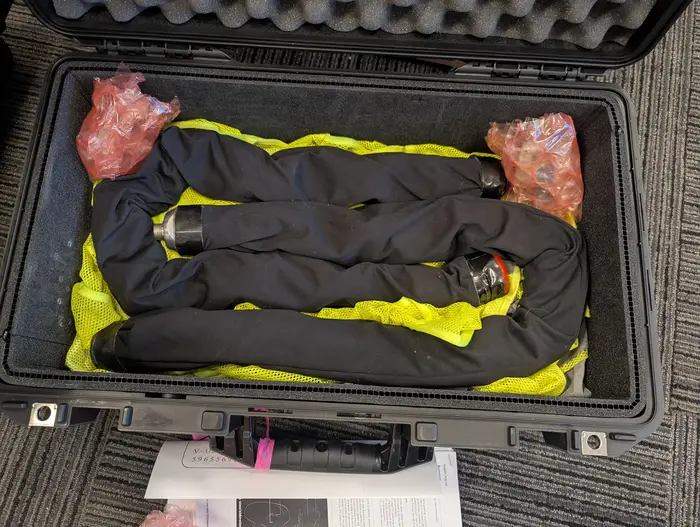
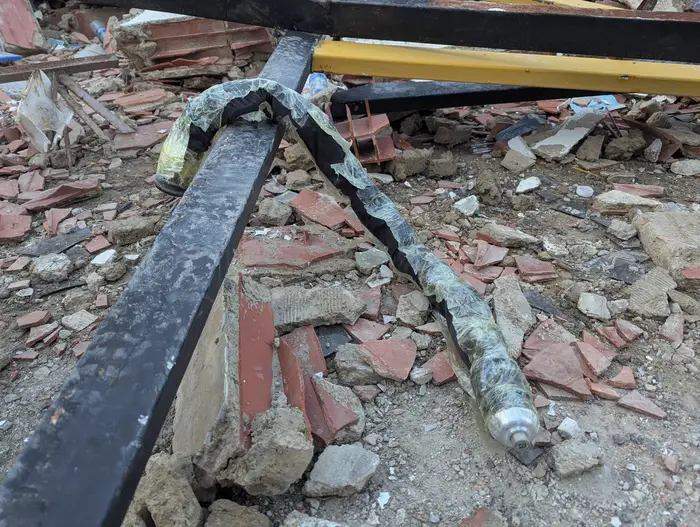
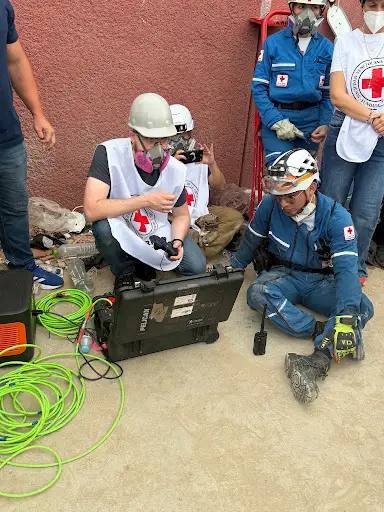
CMU reports using camera-equipped snake robots to inspect collapsed buildings in Venezuela from June 30 to July 3, 2026. Operators returned images from spaces responders could not enter. The team did not locate survivors. Equipment repairs, power, communications and logistics were part of the field experience. Earlier CMU deployment documentation covers the 2017 Mexico City earthquake.
CMUBiorobotics · YouTube
This video could not play here. Watch on YouTube.
CMUBiorobotics · YouTube
This video could not play here. Watch on YouTube.
WTAE-TV Pittsburgh · YouTube
This video could not play here. Watch on YouTube.
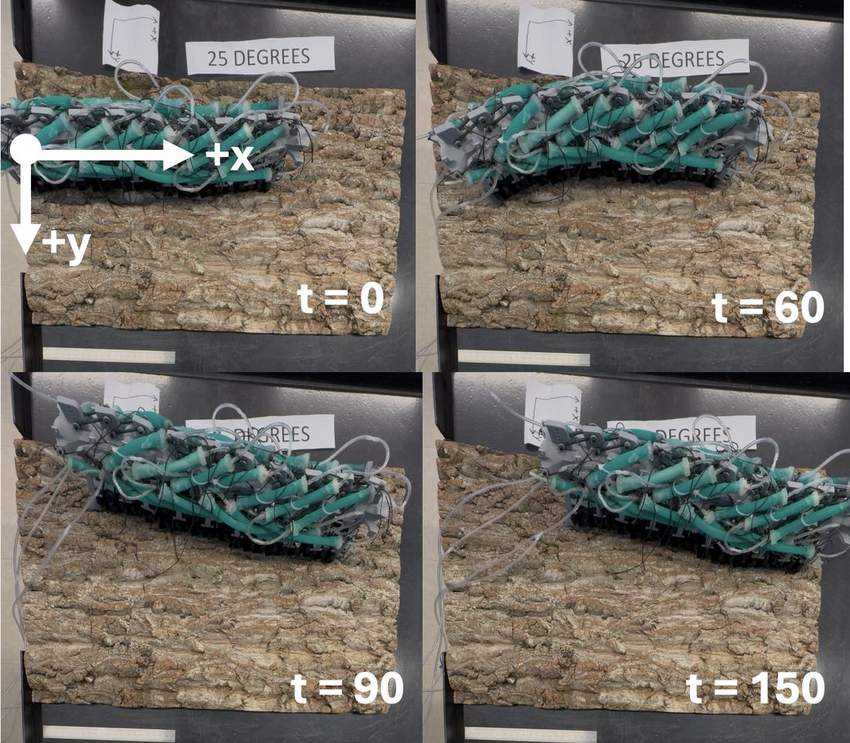
A modular articulated skin allows scales to be removed or replaced. Experiments compare scale attack angles of 15°, 25°, 35° and 45° on grass, bark, carpet and a smooth surface, measuring both friction and robot speed. The expected relationship between friction ratios and speed was not consistent. Surface interaction cannot be reduced to a single anisotropy number.
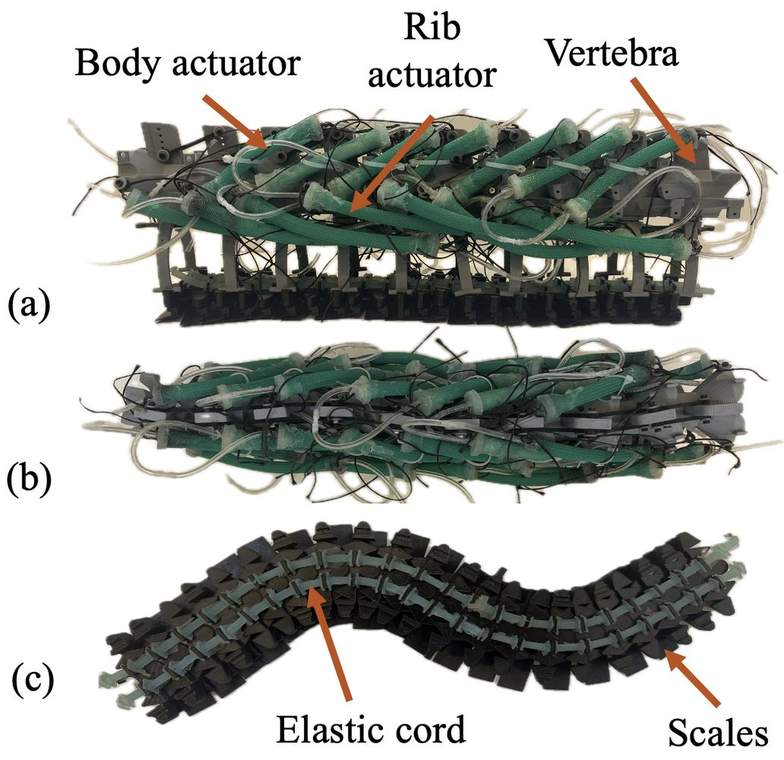
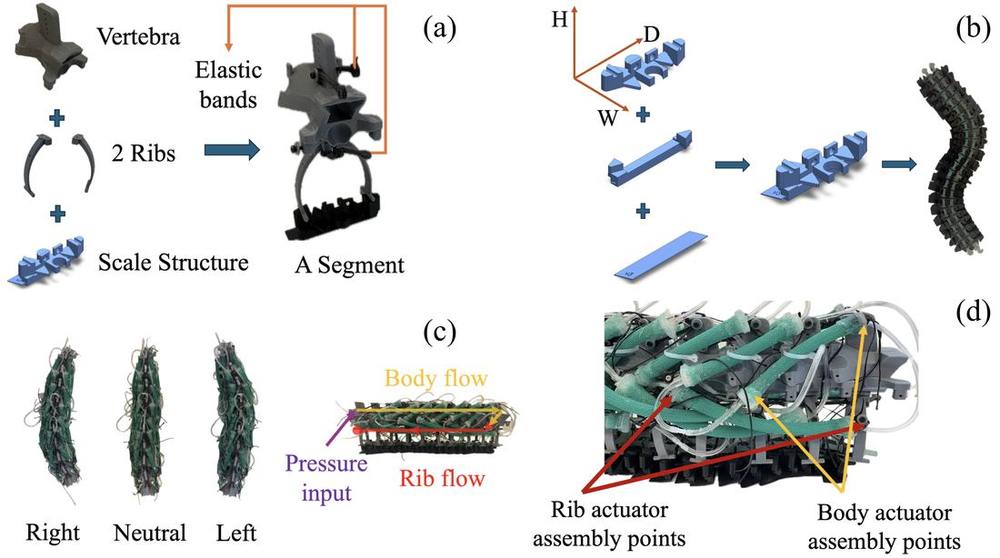
The test robot uses 12 Dynamixel XL330-M288-T motors, printed brackets, an inert front segment and an OpenRB-150 controller. All motor axes are horizontal, producing vertical bending. The algorithm assigns body regions scale-like and skin-like roles: a scale region lifts, advances as adjacent regions contract and extend, then returns to ground contact. Tests compare displacement, current and vertical clearance against propagating vertical waves. The paper reports code in its supplementary material and links an open data deposit.
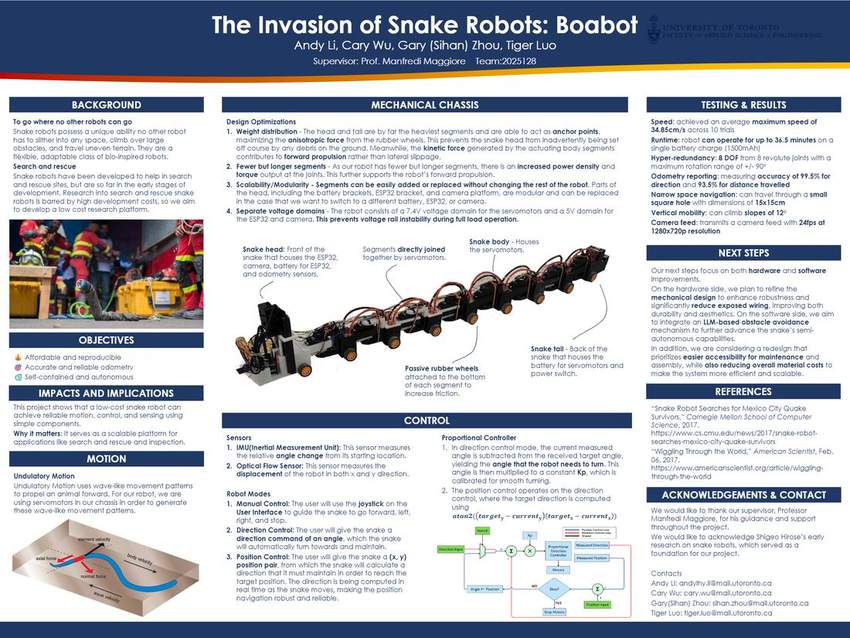
The repository supplies Arduino/ESP32 sketches, a Python Bluetooth interface, wiring notes and printable CAD meshes. It lists a BNO08x IMU and PMW3901 optical-flow sensor for feedback, with a fixed 0.5 Hz gait in the described controller. Calibration and later position-control firmware are separated. The README reports a University of Toronto capstone poster from March 26, 2026.
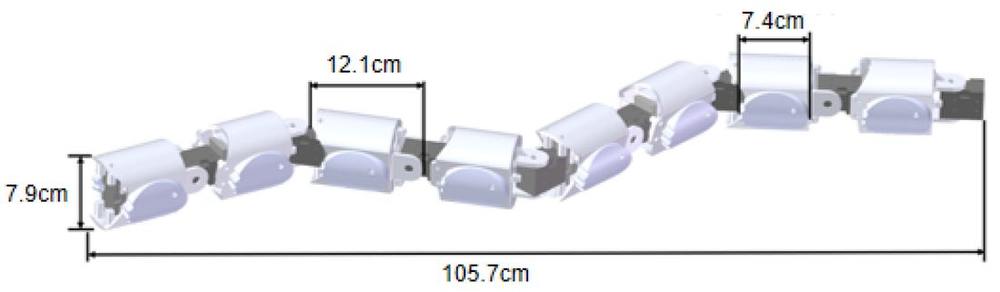
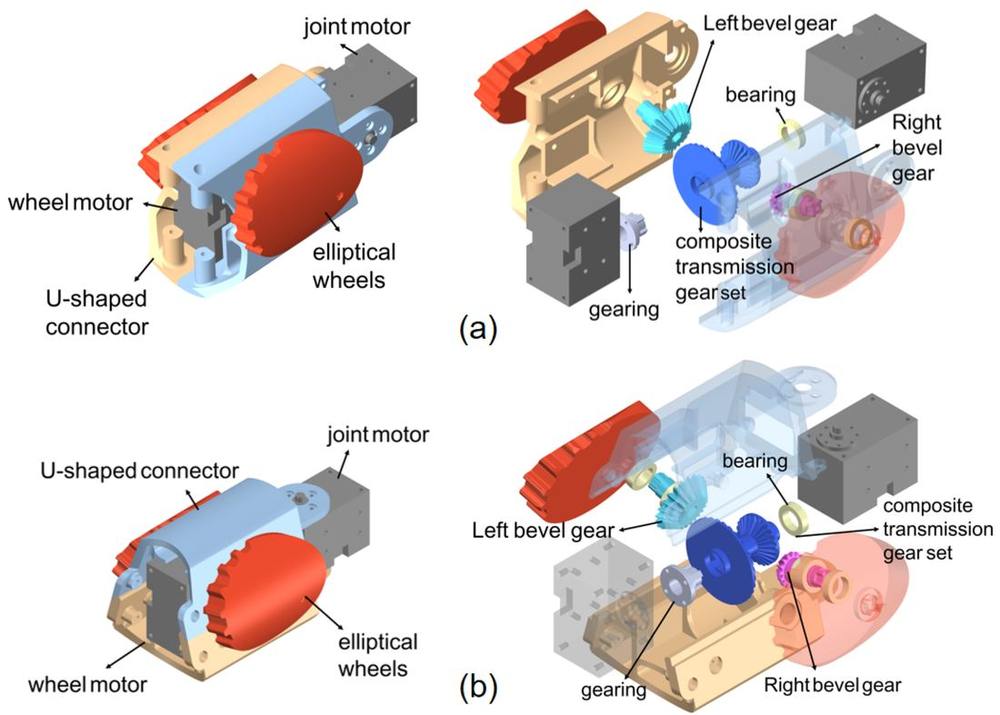
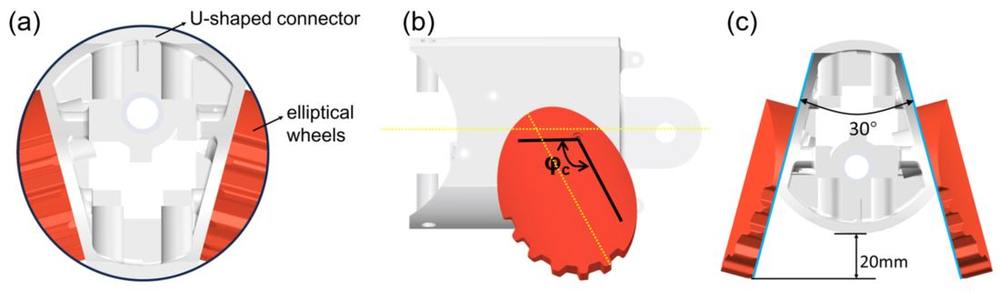
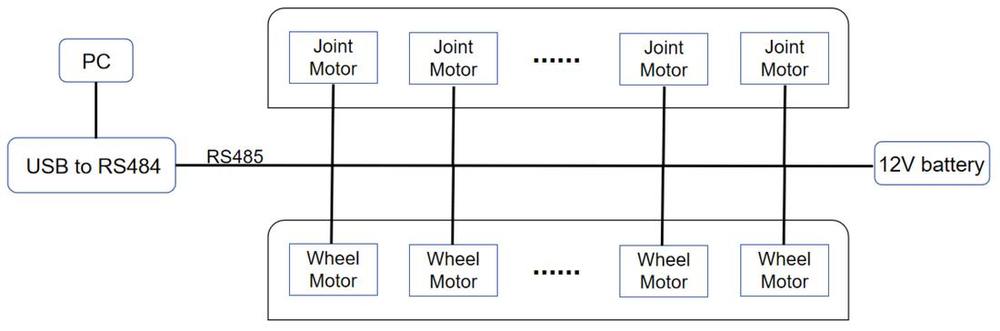
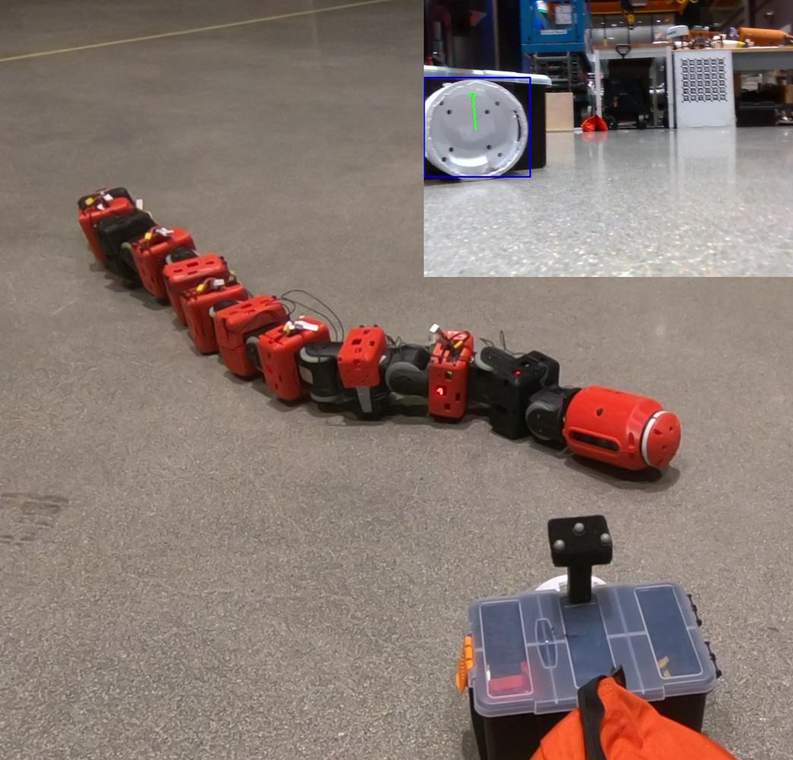
Each module uses a joint motor, a wheel motor, two elliptical wheels and a bevel-gear transmission. Adjacent pitch and yaw modules are orthogonal. Both motor roles use Dynamixel XH430-W350-R actuators. Printed housings and transmissions package the wheels into the body profile. Tests cover grass, gaps, slopes, pipes and cylindrical climbing, alongside coordinated wheel/body motion on uneven ground.
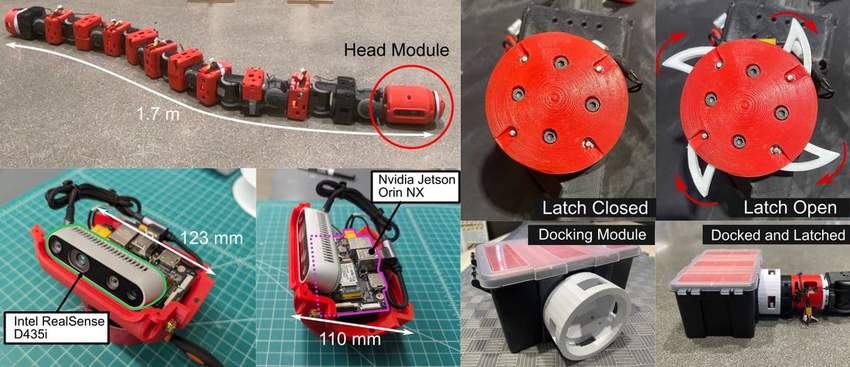
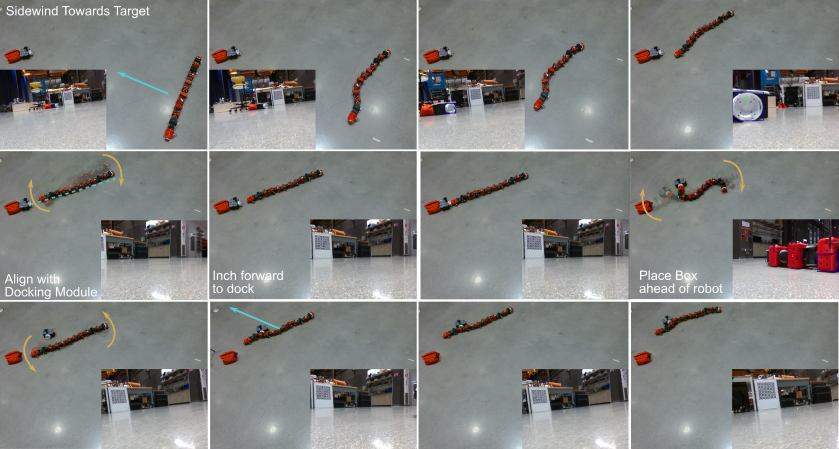
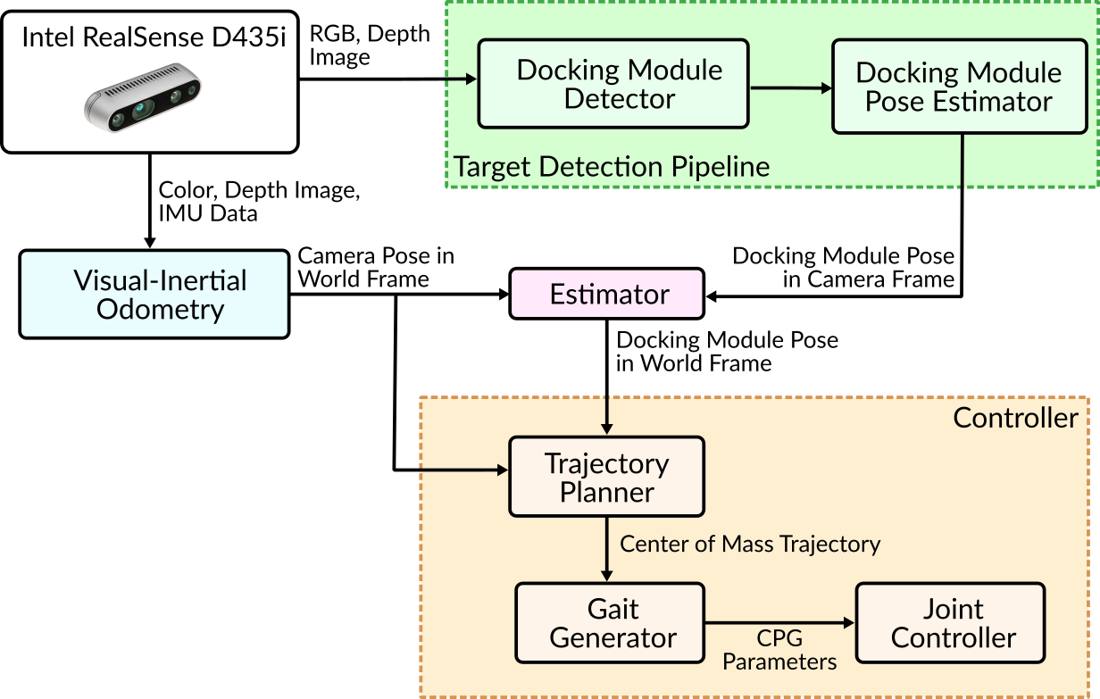
An 11-DOF articulated robot can change posture for slithering, tumbling and object interaction. The 2025 vision paper combines YOLOv8 detection with stereo depth and object pose estimation; its reported manipulation experiments were open loop. A separate December 2025 master's thesis reports physical waypoint-navigation experiments using visual-inertial localization, center-of-mass estimation and closed-loop adjustment of CPG gait parameters.
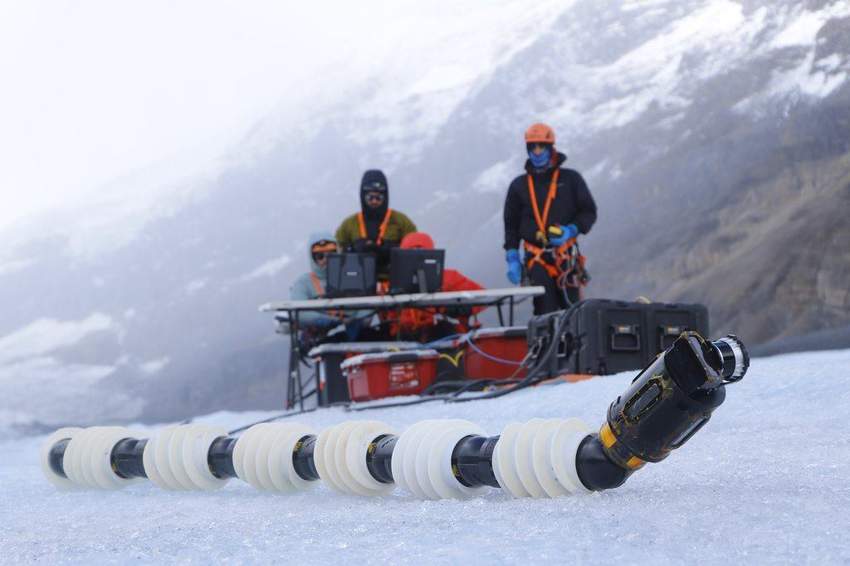
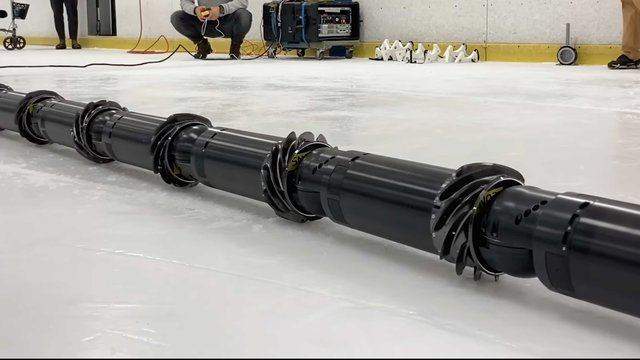
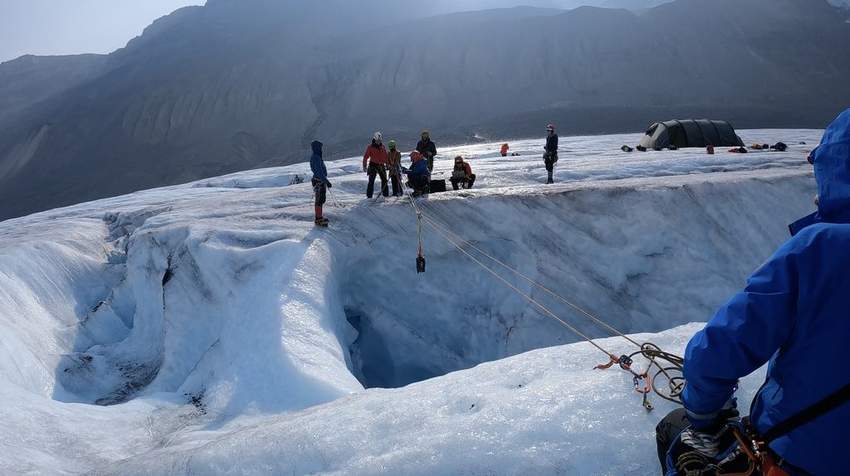
JPL's project page lists EELS 1.0 at 4.4 m and 100 kg. Rotating screw surfaces provide traction and grip in snow, sand and ice while articulation changes the body shape. The head uses lidar and four stereo camera pairs for mapping, with risk-aware autonomy. Glacier tests include a separate 1.5 configuration for subsurface autonomy. A potential Enceladus application inspired the work; this is not a flown spacecraft or a confirmed mission.
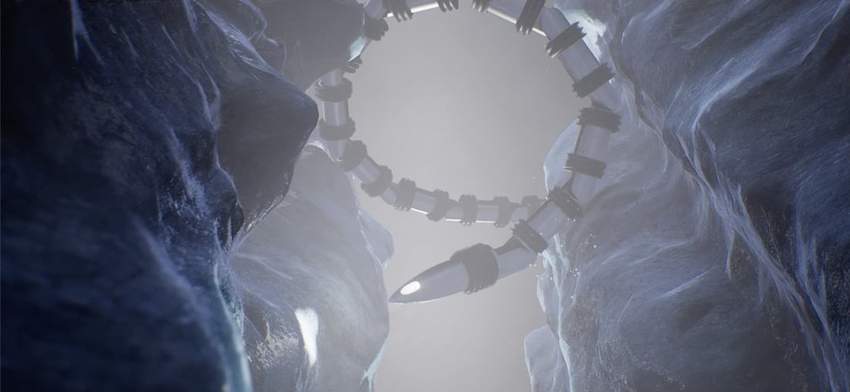
NASA Jet Propulsion Laboratory · YouTube
This video could not play here. Watch on YouTube.
JPLraw · YouTube
Mission concept animation, not footage of a robot operating on Enceladus.
This video could not play here. Watch on YouTube.
CBC News · YouTube
This video could not play here. Watch on YouTube.
MechDesignTV · YouTube
This video could not play here. Watch on YouTube.
A soft robot uses a textile-origami structure to produce rectilinear progress. Reported tests use a four-module sequence at 28 kPa and approximately 183 mm/min on plastic, with lower speeds on foam and soil. These values describe the stated test setup. The full article and supplements are the place to inspect fabrication methods and motion sequences.
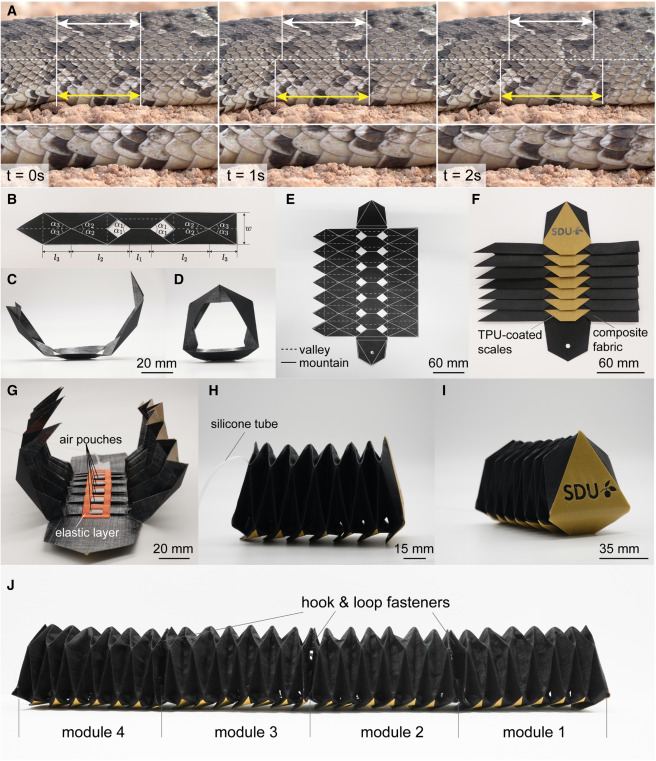
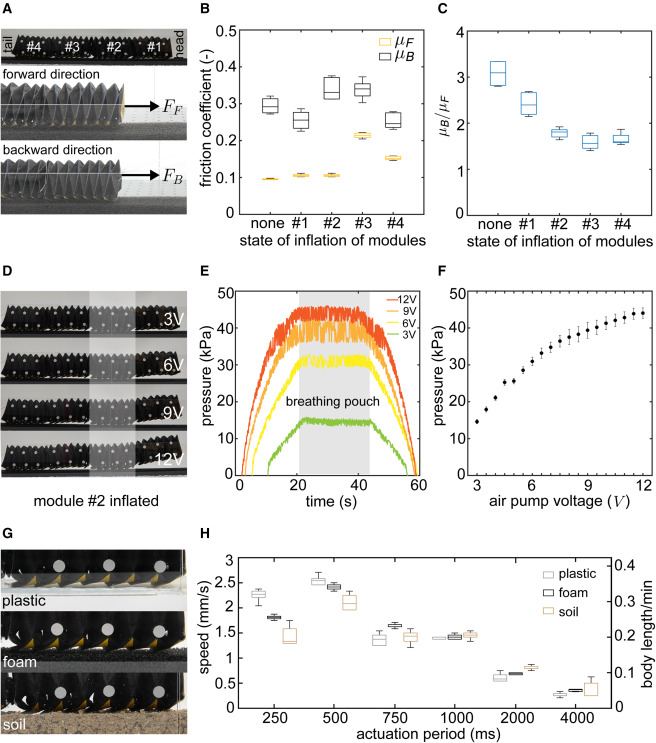
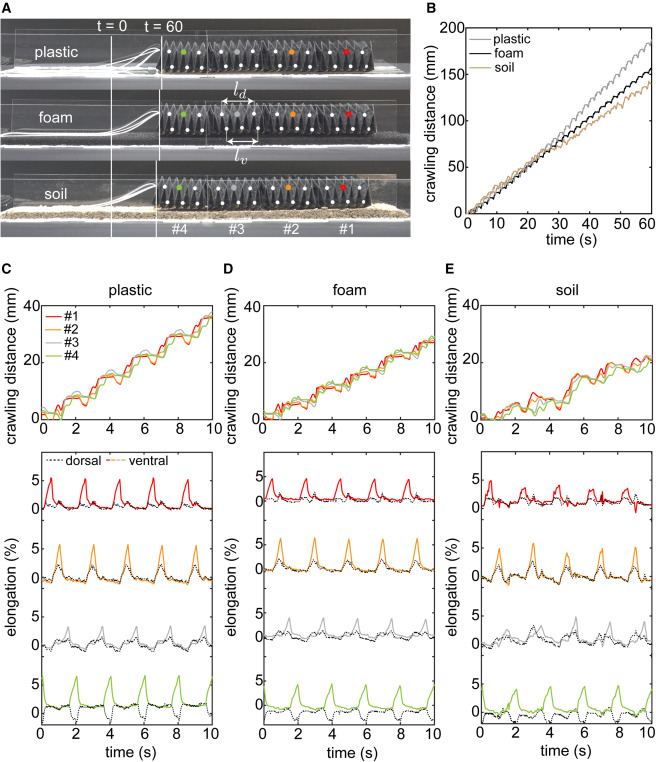
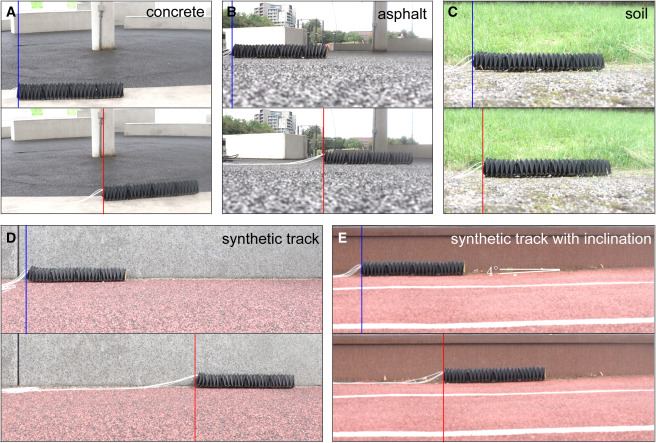
SDU Soft Robotics · YouTube
This video could not play here. Watch on YouTube.
Ingeniøruddannelserne på Syddansk Universitet · YouTube
This video could not play here. Watch on YouTube.
SDU Soft Robotics · YouTube
This video could not play here. Watch on YouTube.
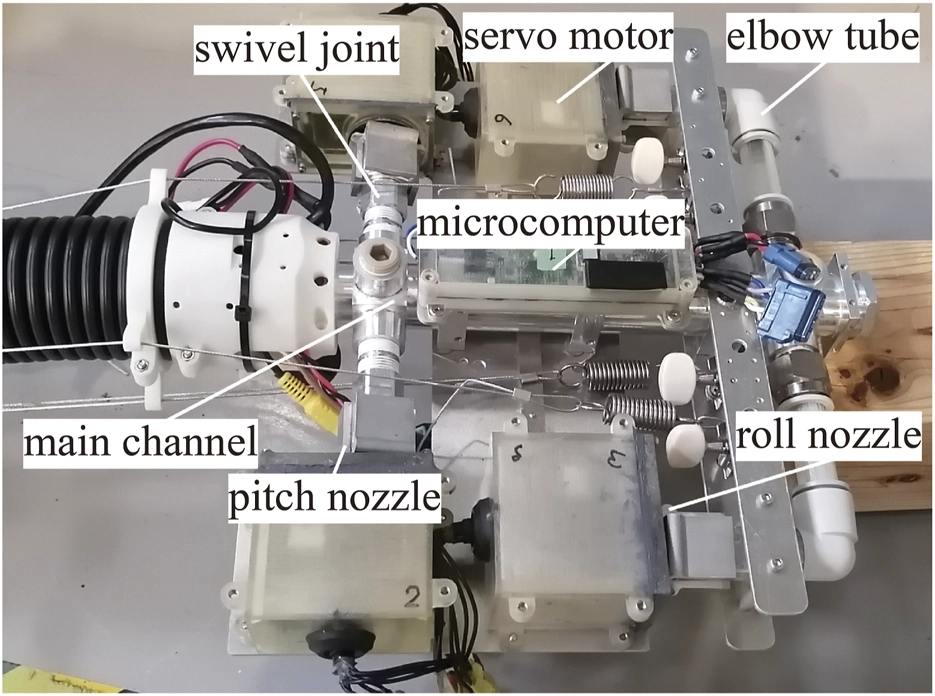
Dragon Firefighter lifts and steers a flexible firefighting hose using controlled water jets. Fluid reaction forces support the body and aim the nozzle above obstacles. It is a tethered continuum robot with a very different propulsion system from a ground-crawling snake.
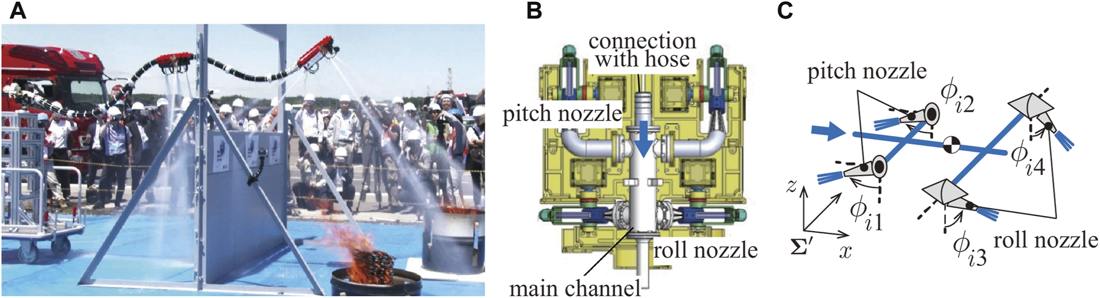
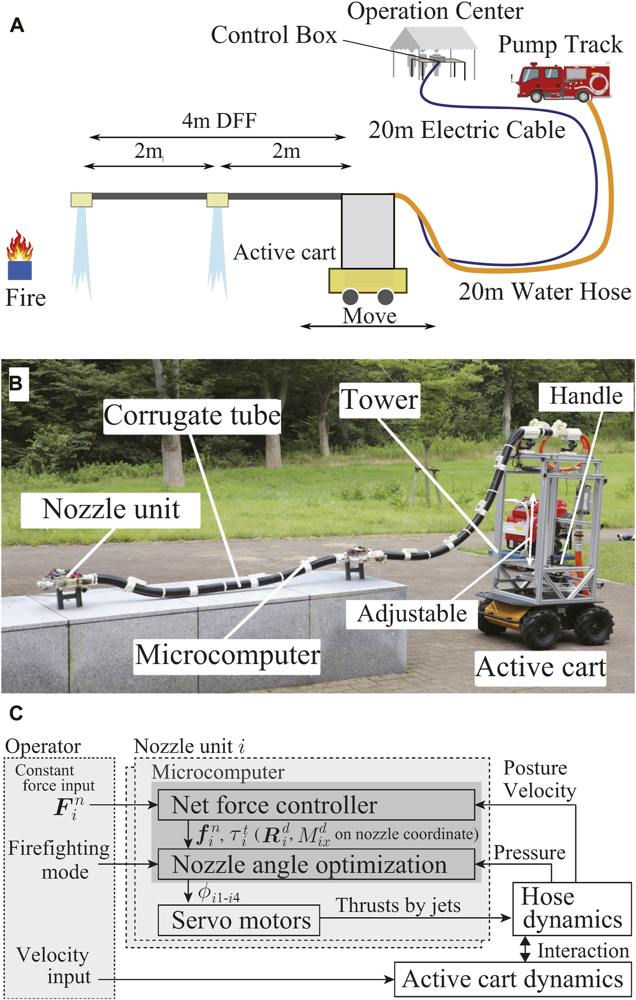
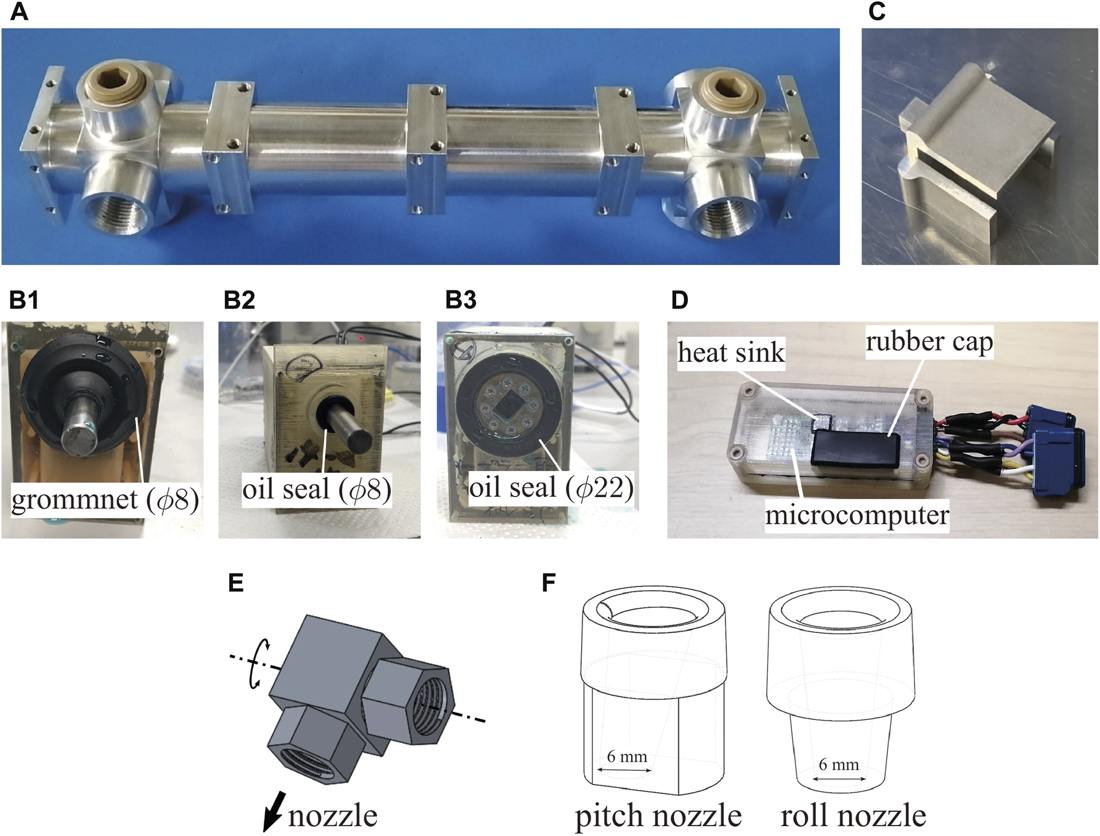
Science X · YouTube
This video could not play here. Watch on YouTube.
DroneLife TV · YouTube
This video could not play here. Watch on YouTube.
The Helical Inflating Soft Snake Robot demonstrates spatial sidewinding using compliant actuation. The authors report locomotion tests on multiple surfaces, including low-friction and granular media.
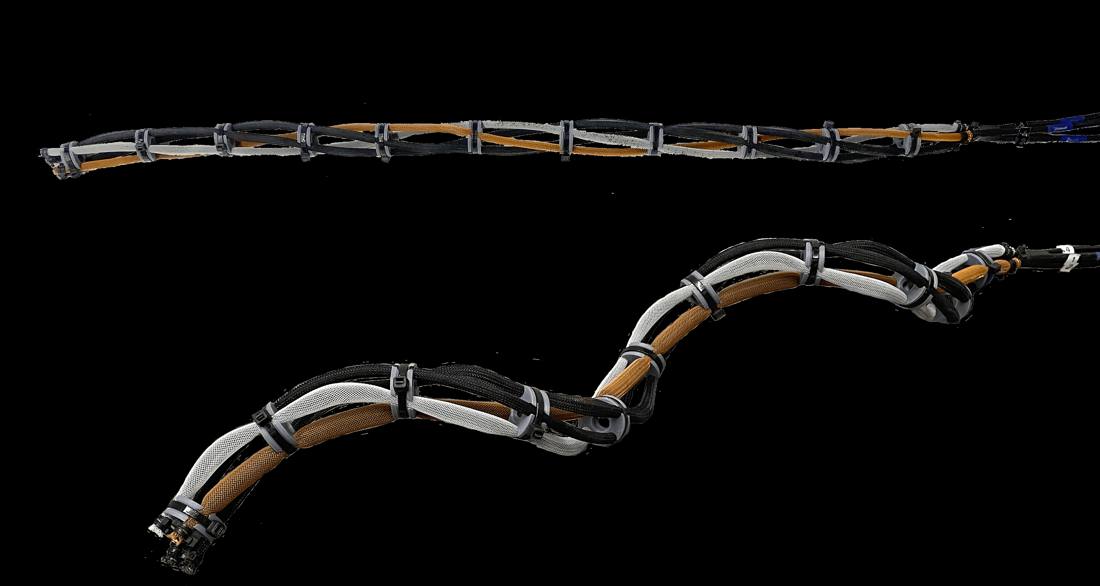
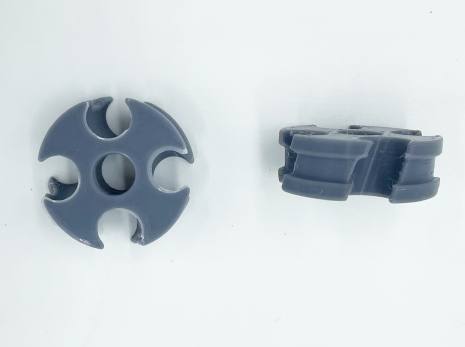
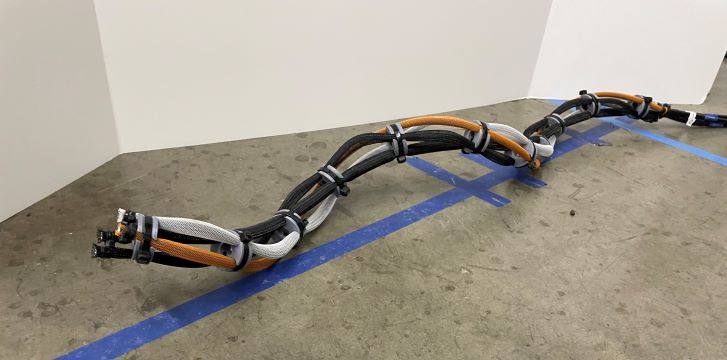
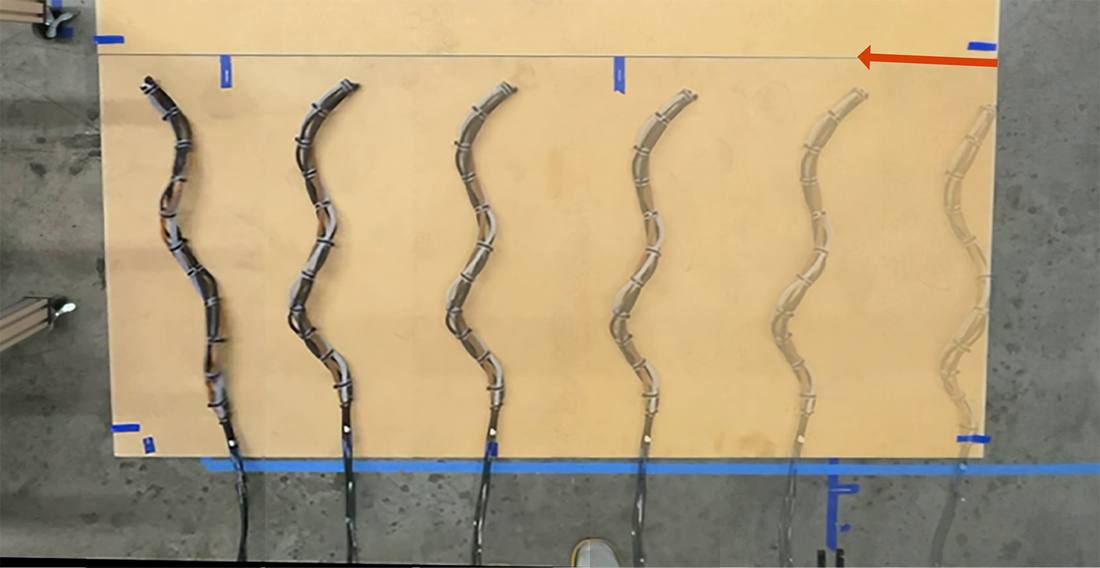
The work studies motion along or around a pipe while using partial grasping rather than a full-body wrap. The publisher record reports experiments negotiating an obstacle on a pipe. It supplies another contact strategy for constrained supports beyond a uniform rolling helix.
電気通信大学VideoUEC · YouTube
Tanaka laboratory overview with multiple robot designs; not exclusively the partial-grasping paper.
This video could not play here. Watch on YouTube.
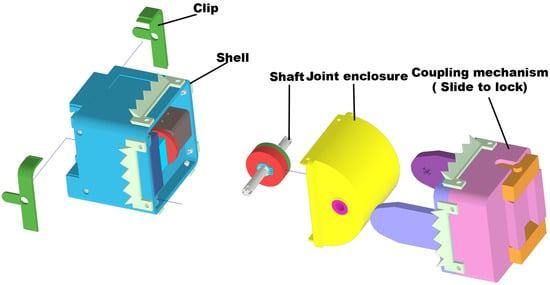
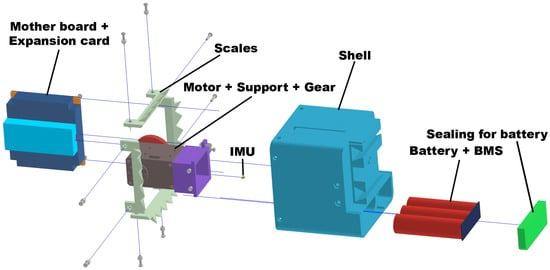
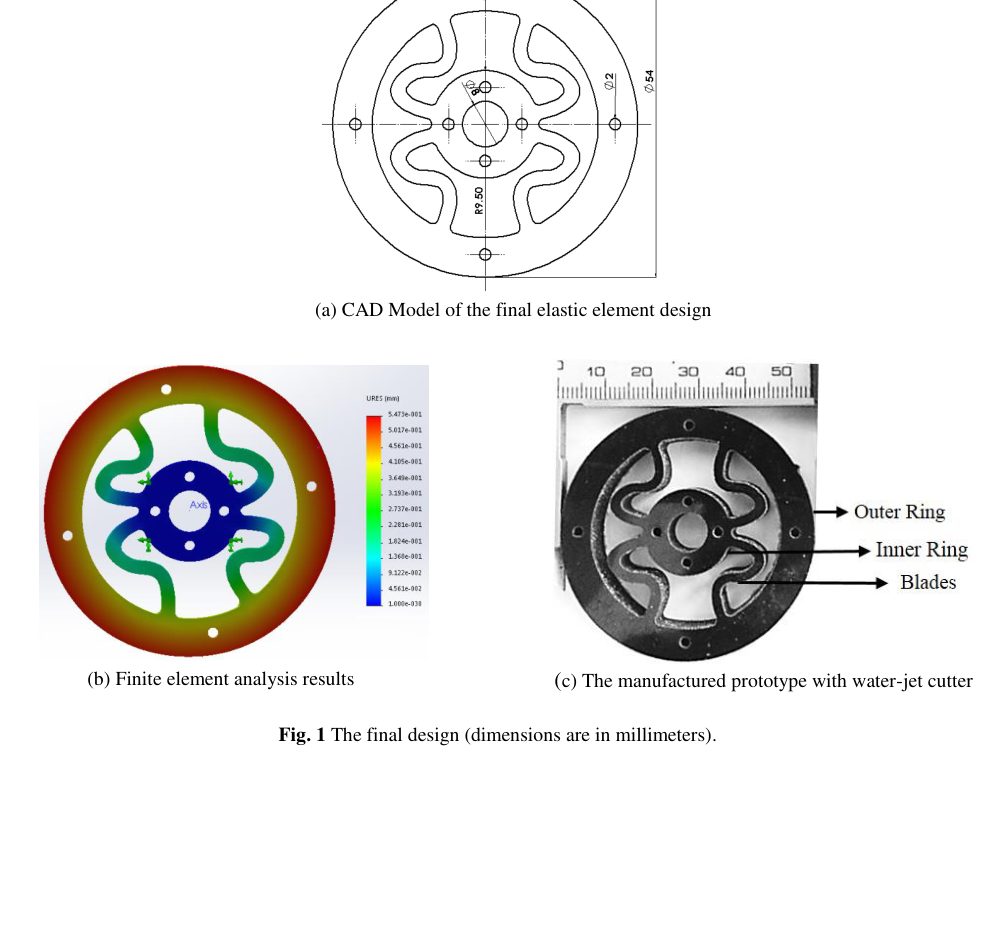
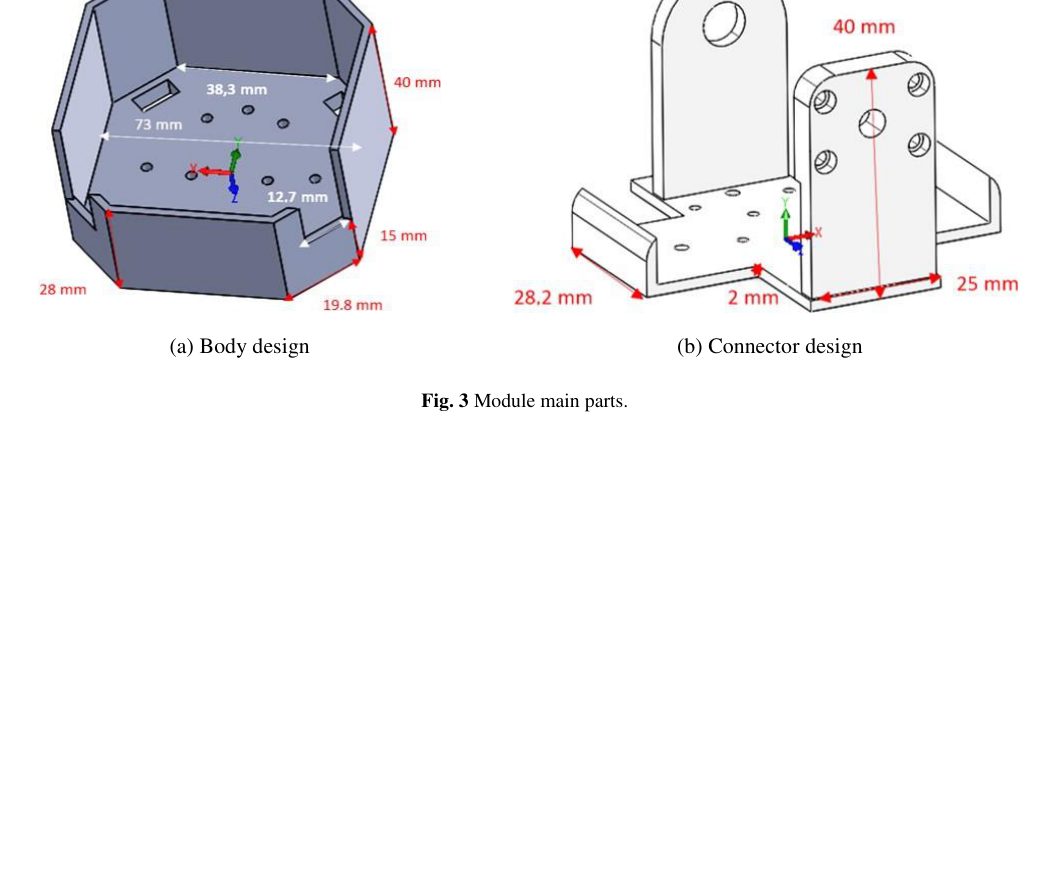
The 2019 design uses a Dynamixel XM430-W210-class actuator with a compliant joint, stereoscopic vision and a screw-less modular interface. Its reported module is about 500 g, 75 mm across, with 200 mm between joint axes and ±90° travel. The 2022 redesign adds damping, a stronger latch, revised thermal packaging and better battery access. It uses output-side sensing to compare motor and load motion. The redesign paper includes preliminary simulations, not proof of autonomous rescue.
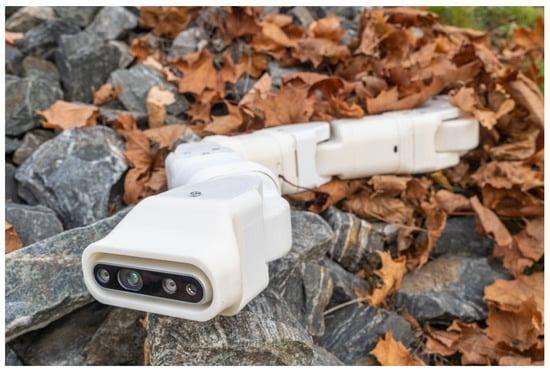
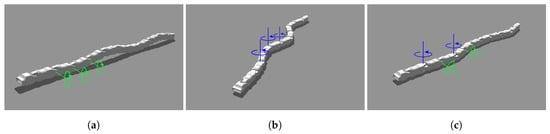
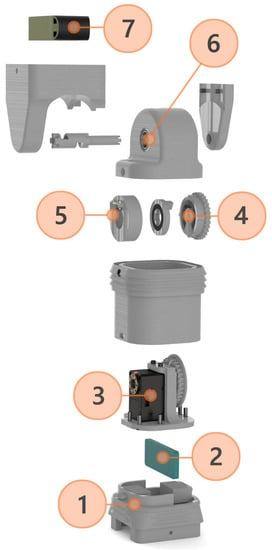
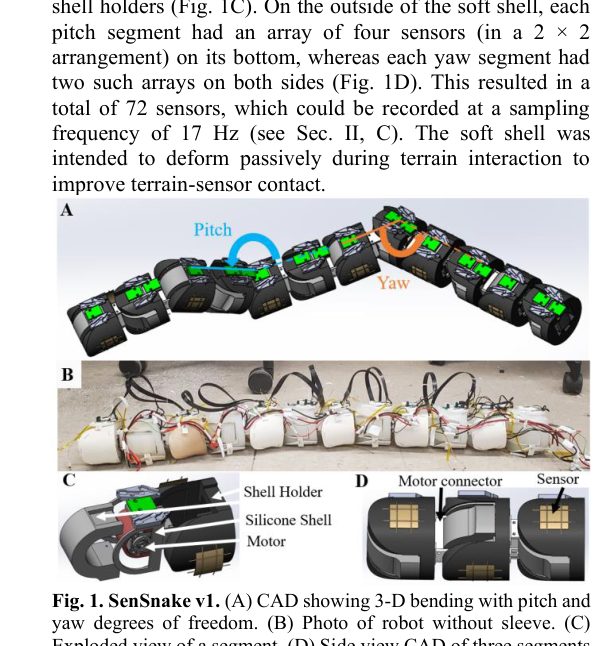
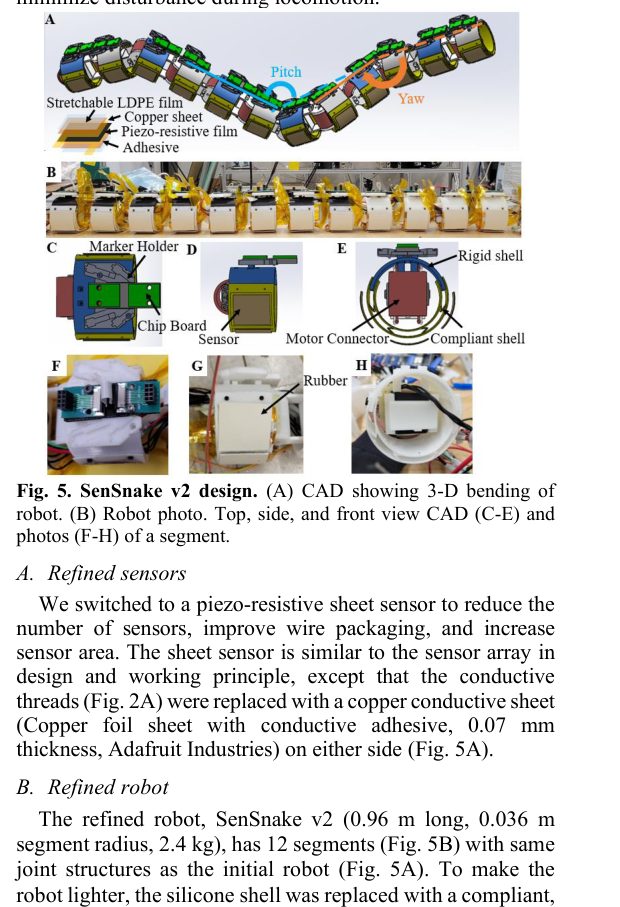
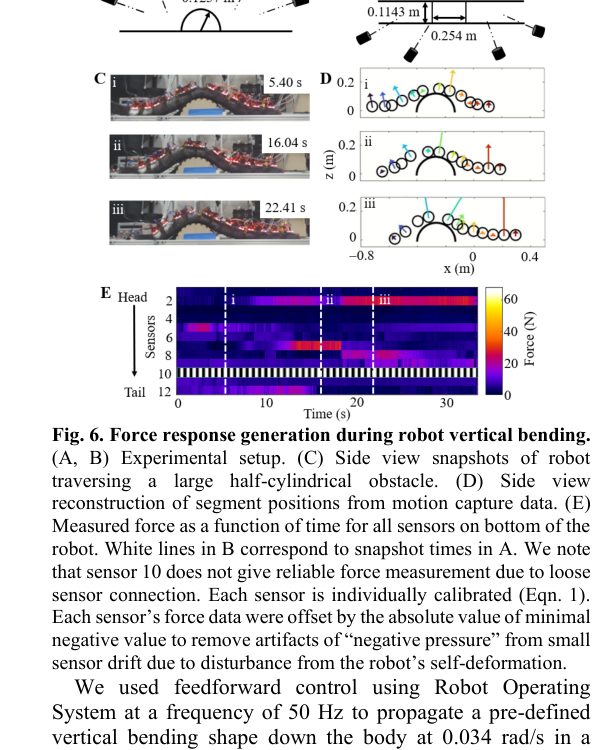
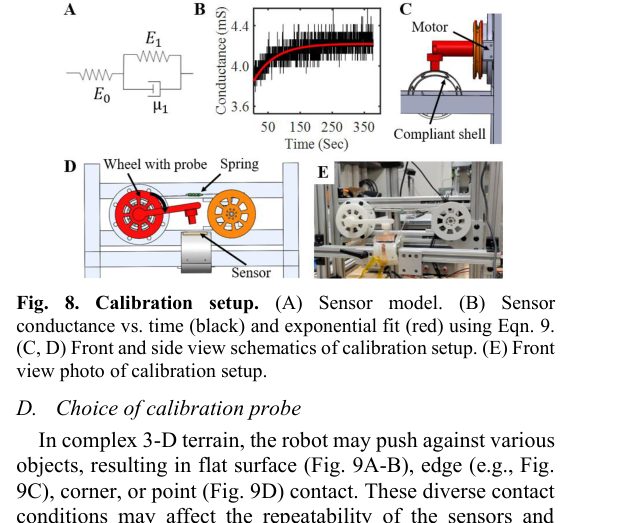
The primary paper reports a 12-segment robot with 36 piezoresistive sheet sensors sampled at 30 Hz. The system measures contact forces during repeatable obstacle-traversal experiments. Sensor behavior and calibration are part of the work, including the viscoelastic response of the sensing material.
Terradynamics Lab · YouTube
This video could not play here. Watch on YouTube.
Terradynamics Lab · YouTube
This video could not play here. Watch on YouTube.
Terradynamics Lab · YouTube
This video could not play here. Watch on YouTube.
Terradynamics Lab · YouTube
This video could not play here. Watch on YouTube.
Hardened Underwater Modular Robot Snake research extends modular snake hardware to underwater inspection and confined spaces such as ballast tanks. Watertight modules and aquatic mobility address access problems that rigid vehicles cannot easily solve. Lab work includes navigation, inspection and environmental interaction. These research goals should not be read as an operational fleet with fully autonomous confined-space inspection.
Carnegie Mellon University · YouTube
This video could not play here. Watch on YouTube.
The specialized tethered climber alternates winding grips and length change to progress along a rod. The publisher abstract reports vertical climbing up to 30.85 mm/s and turning around a corner along a rod. Those results belong to the reported test geometry and pneumatic setup; they are not a universal tree-climbing specification.
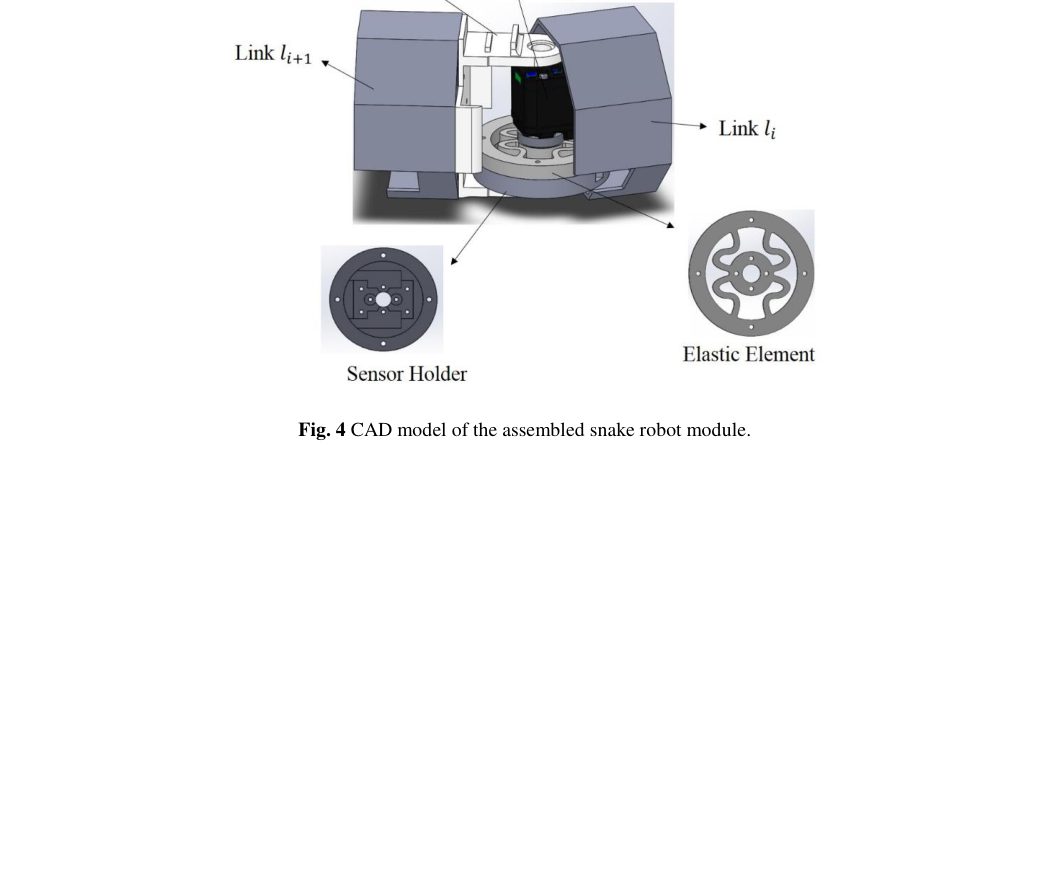
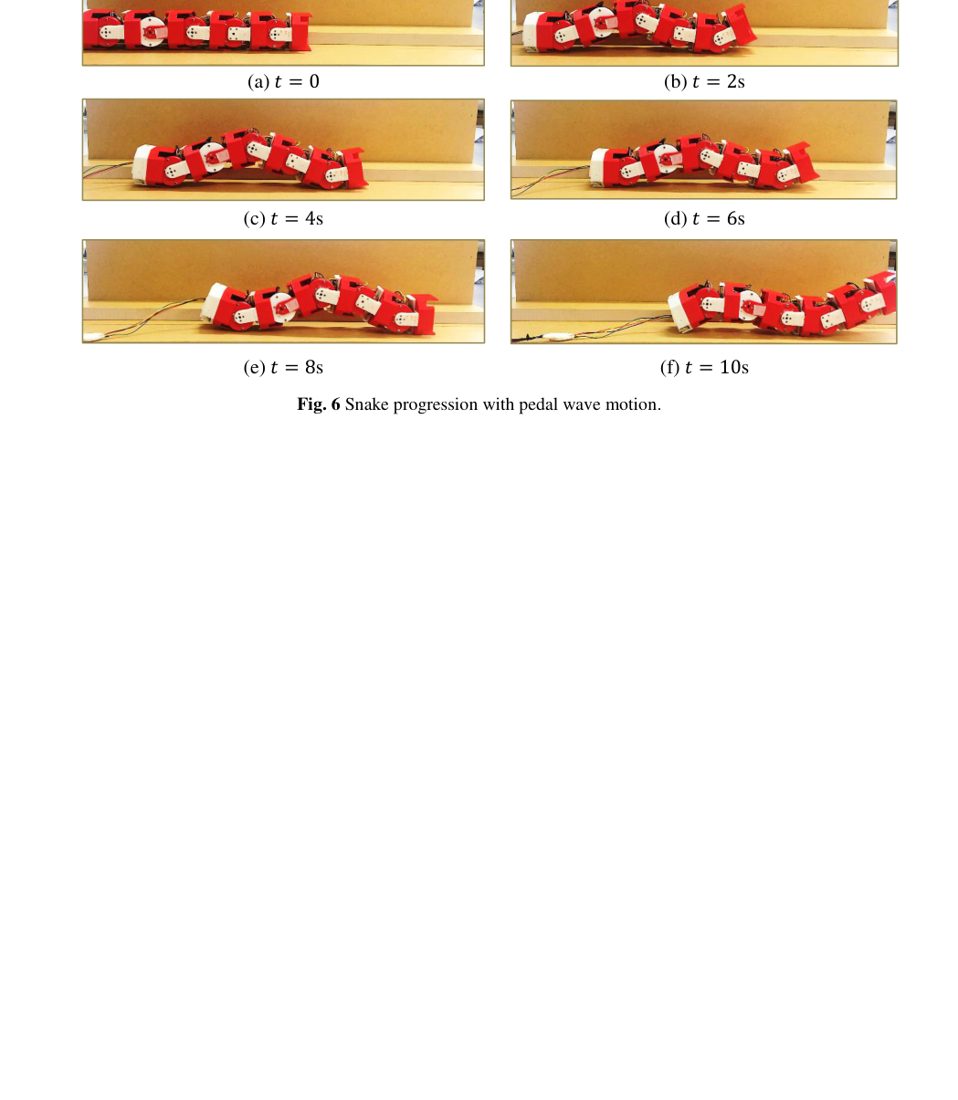
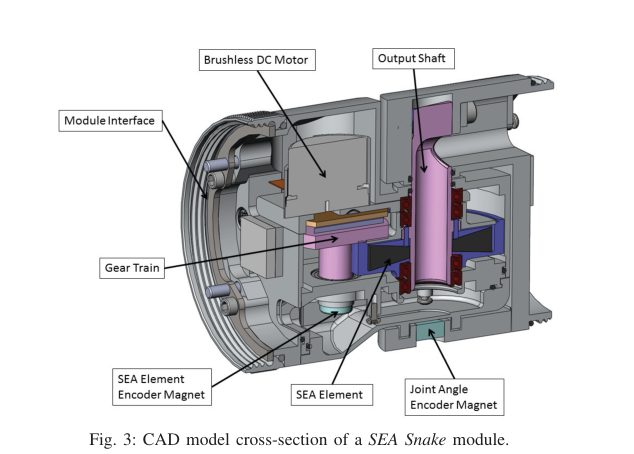
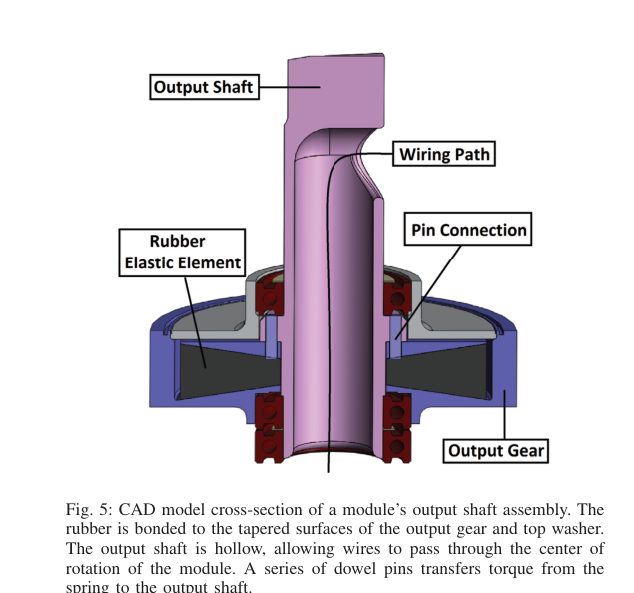
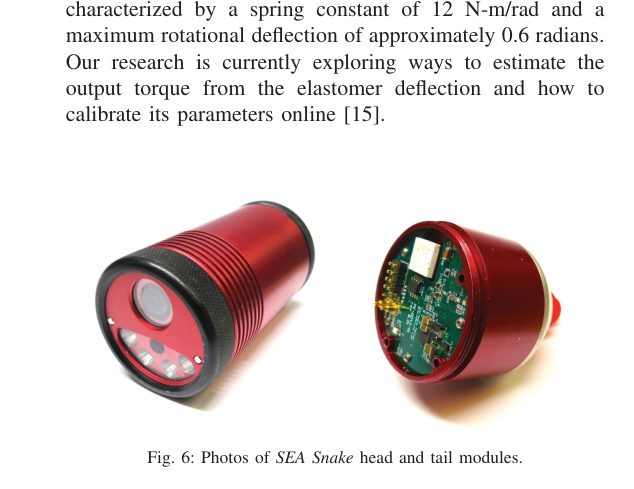
This research develops a modular wheel-free snake with series elastic actuators to study torque measurement and active stiffness control. The design connects adaptation over uneven terrain and to modeling the interaction between actuator compliance and the body wave.
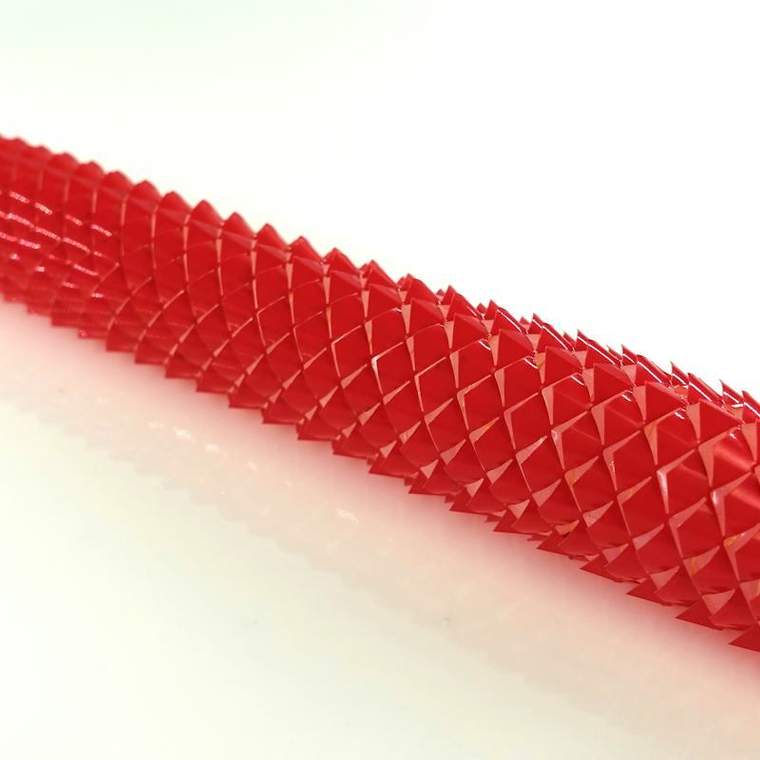
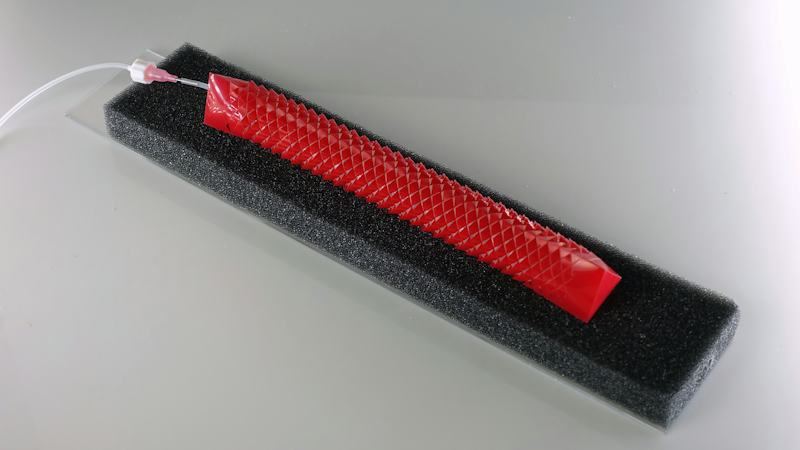
A patterned skin wrapped around an extending soft actuator opens into protruding scale-like features. Inflation changes the geometry and ground interaction, allowing repeated extension/contraction cycles to advance the body. It uses soft actuation and surface design rather than a chain of rotary servo joints.
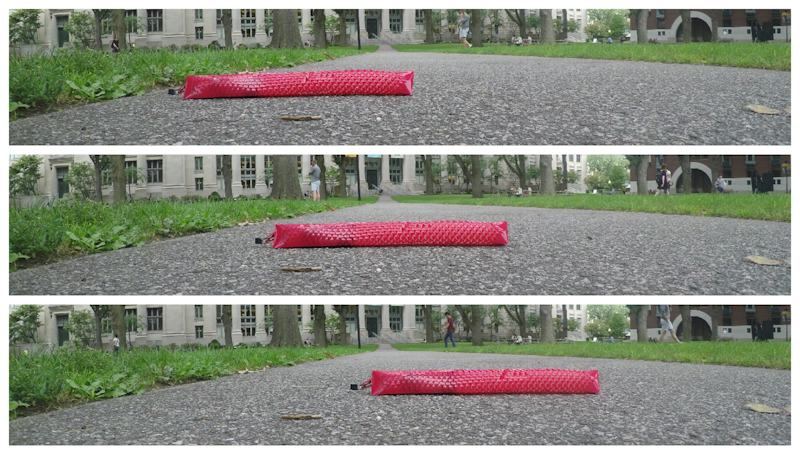
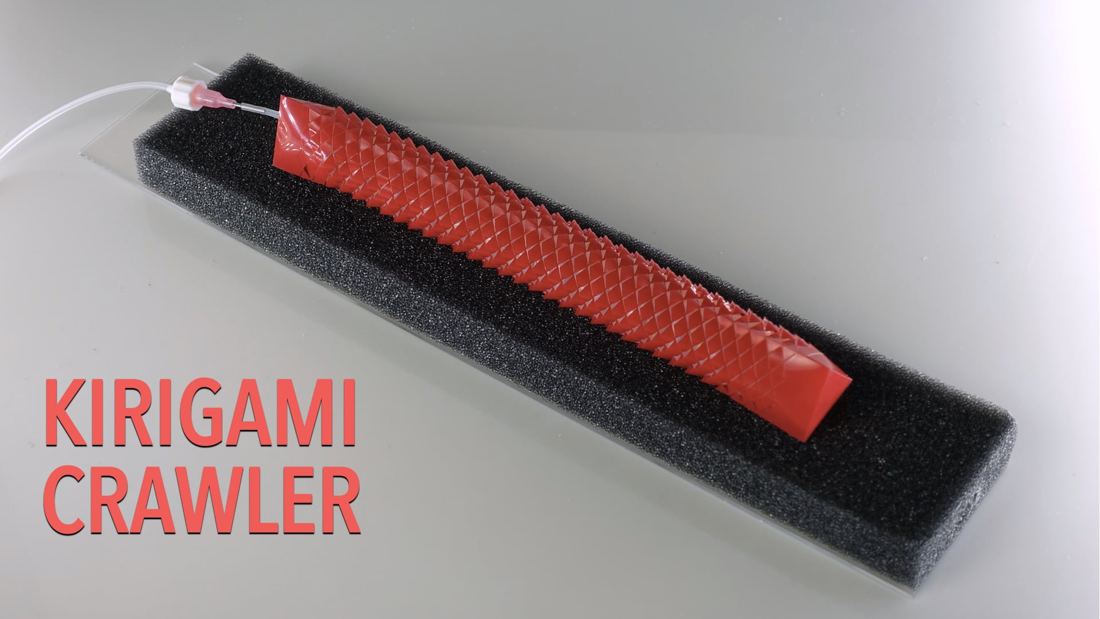
Harvard John A. Paulson School of Engineering and Applied Sciences · YouTube
This video could not play here. Watch on YouTube.
IEEE Spectrum · YouTube
This video could not play here. Watch on YouTube.
National Science Foundation News · YouTube
This video could not play here. Watch on YouTube.
OriSnake is a lightweight origami-based snake using continuum modules for spatial locomotion, including lateral undulation and sidewinding. Its design and fabrication paper provides a separate construction approach from rigid servo brackets and from textile-origami rectilinear robots.
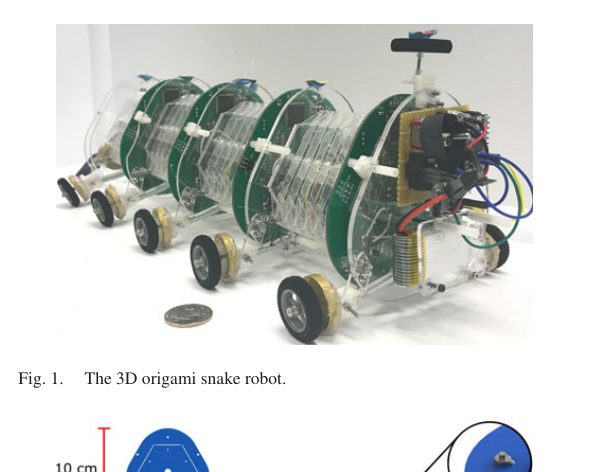
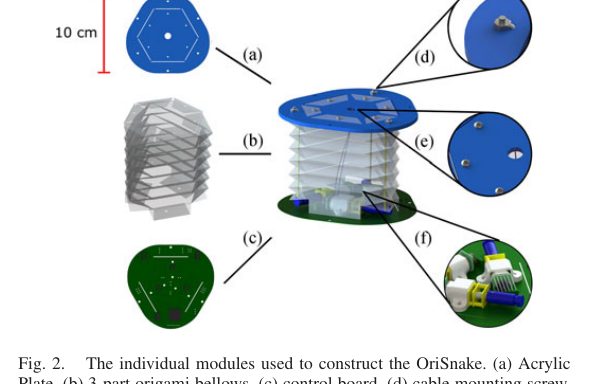
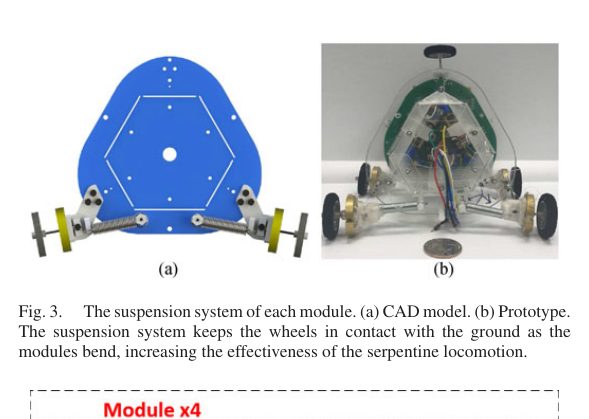
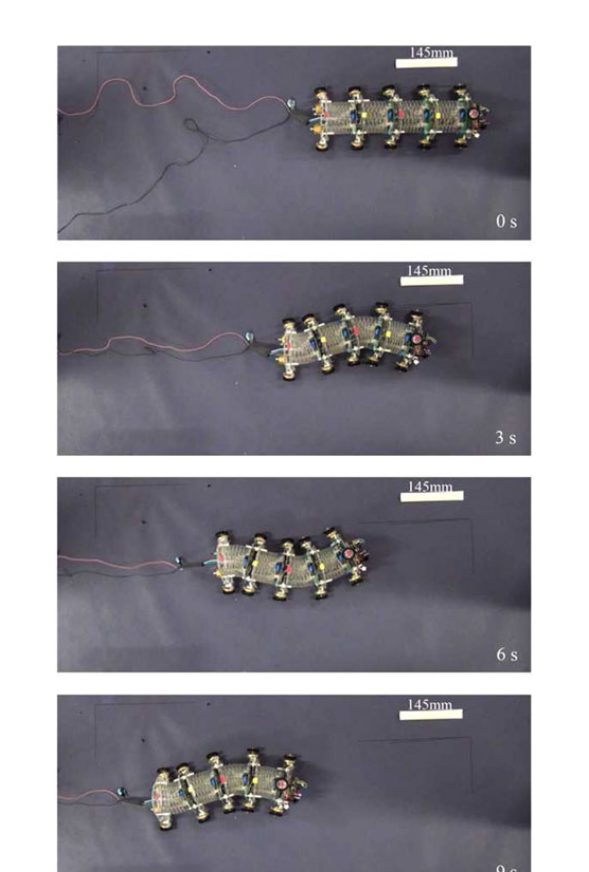
ming luo · YouTube
This video could not play here. Watch on YouTube.
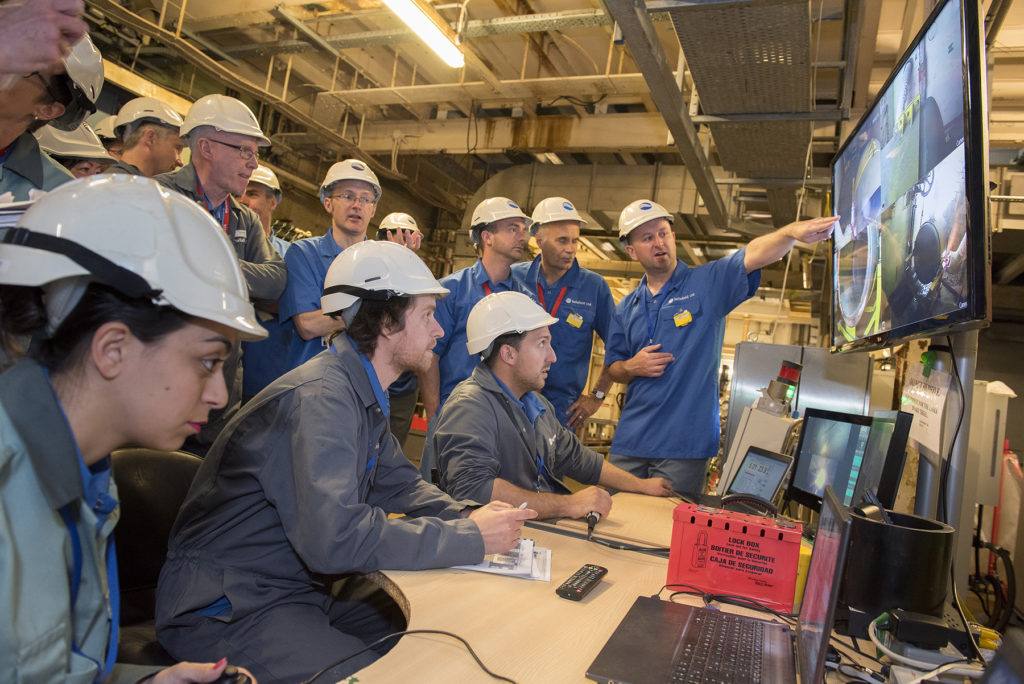
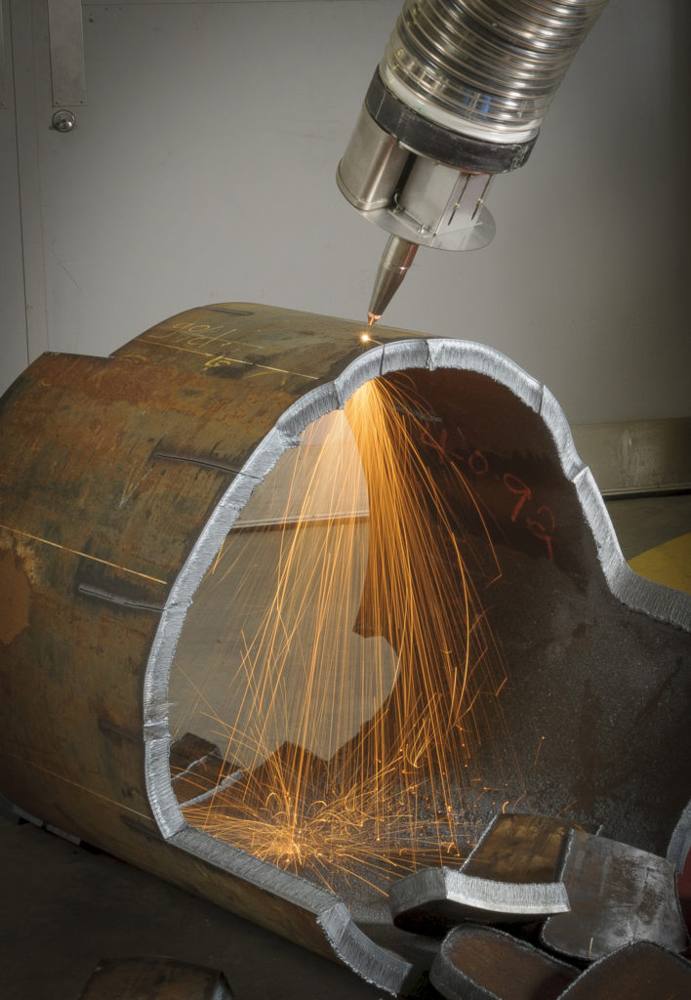
OC Robotics’ cable-driven snake arms carry cameras or tools into confined machinery. A supported base carries the load while successive sections follow the tip’s path. The industrial demonstrations include access inside aircraft engines.
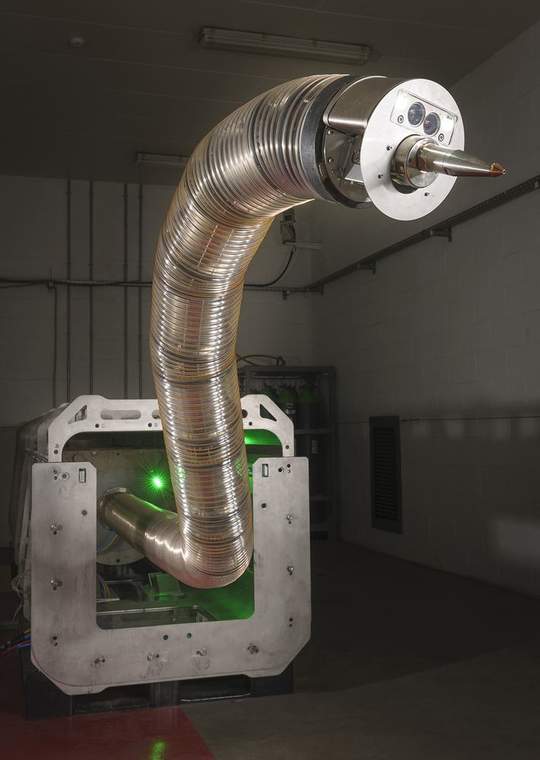
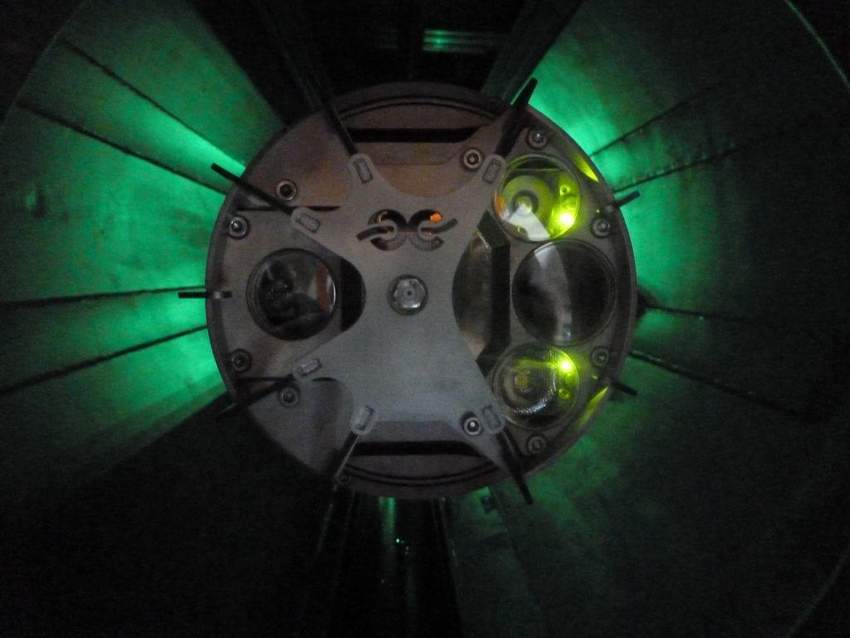
OCRobotics · YouTube
This video could not play here. Watch on YouTube.
ORI - Oxford Robotics Institute · YouTube
This video could not play here. Watch on YouTube.
OCRobotics · YouTube
This video could not play here. Watch on YouTube.
OCRobotics · YouTube
This video could not play here. Watch on YouTube.
OCRobotics · YouTube
This video could not play here. Watch on YouTube.
OCRobotics · YouTube
This video could not play here. Watch on YouTube.
OCRobotics · YouTube
This video could not play here. Watch on YouTube.
maxon UK & Ireland · YouTube
This video could not play here. Watch on YouTube.
OCRobotics · YouTube
This video could not play here. Watch on YouTube.
OCRobotics · YouTube
This video could not play here. Watch on YouTube.
OCRobotics · YouTube
This video could not play here. Watch on YouTube.
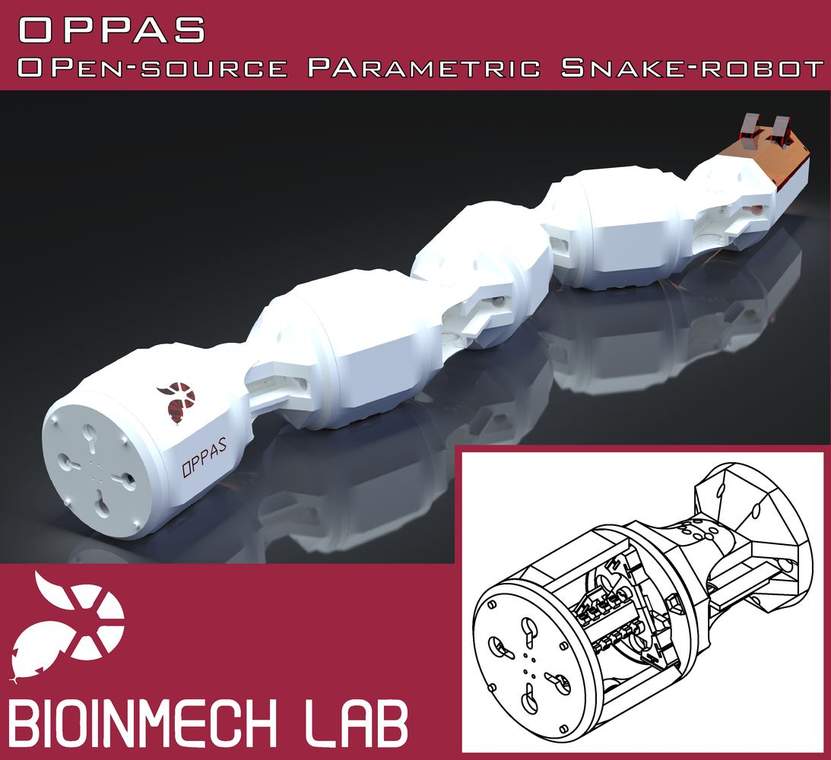
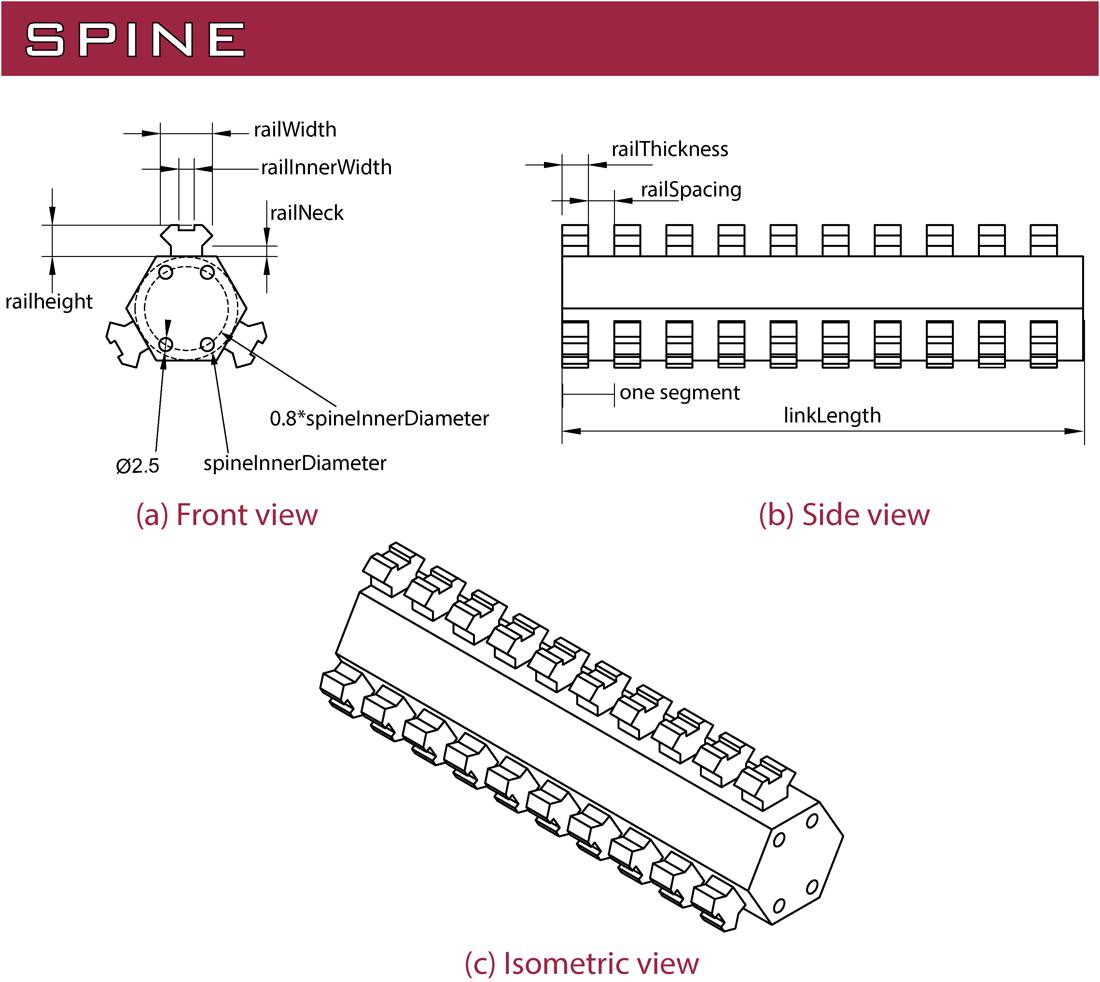
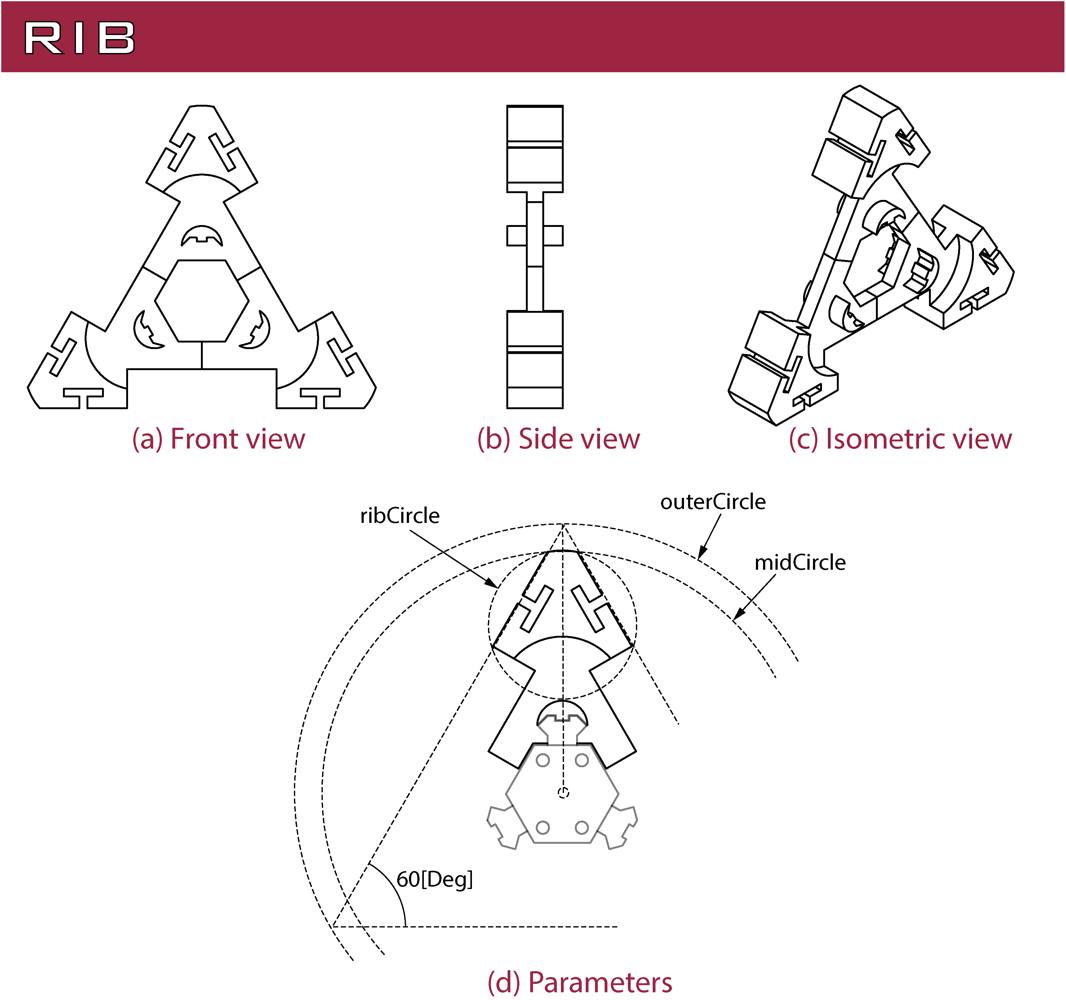
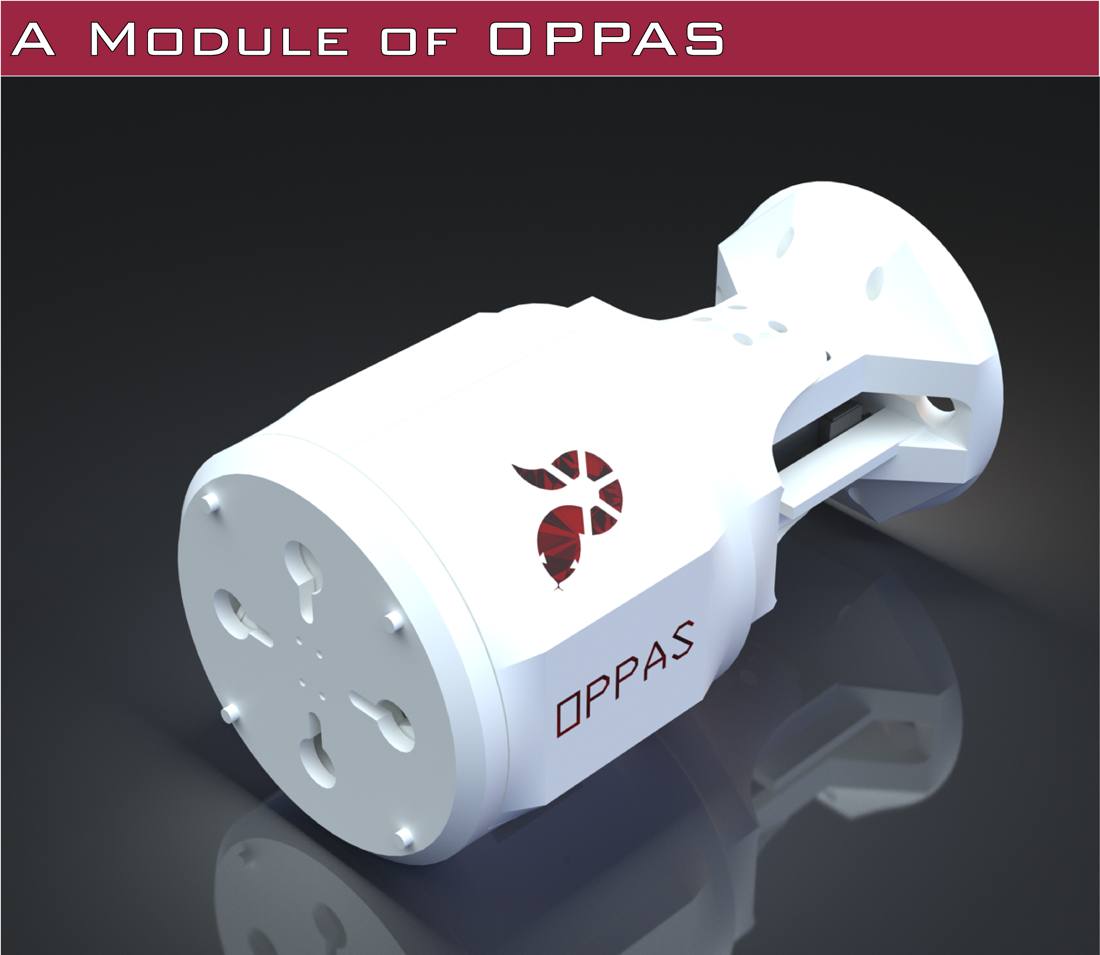
The author provides a Fusion 360 parametric design and documentation, with a GrabCAD download route. Mk. 1.0 targets ROBOTIS MX-64 servos. Link dimensions and belly features are intended to be changed without redesigning every component. The author explicitly lists waterproofing and broader servo support as future improvements. The repository identifies a CC BY 4.0 license.
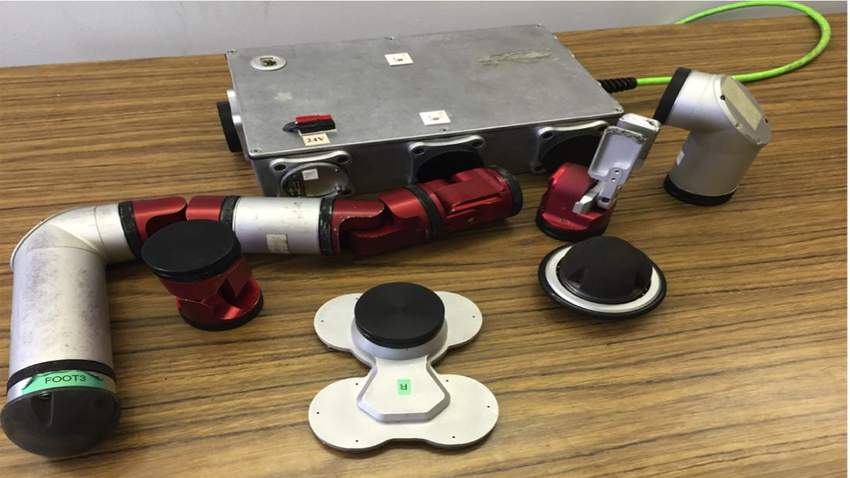
Series elastic joints place a spring between motor transmission and output. Deflection provides a route to torque feedback and passive compliance during environmental contact. CMU's modular architecture separates actuator, electrical interface and controller responsibilities. Related lab pages also discuss reusing modules in other configurations, including legged robots; those are separate machines.
CMUBiorobotics · YouTube
This video could not play here. Watch on YouTube.
CMUBiorobotics · YouTube
This video could not play here. Watch on YouTube.
IEEE Spectrum · YouTube
This video could not play here. Watch on YouTube.
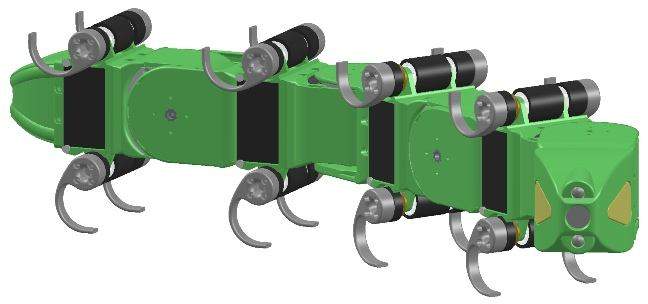
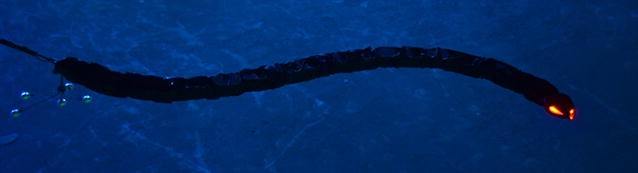
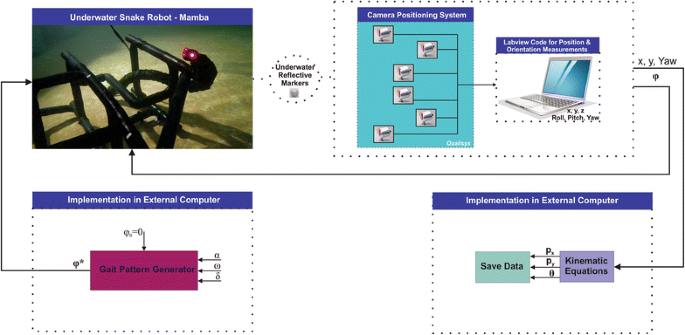
Mamba was developed as a modular, reconfigurable snake with watertight joints and contact-force sensing. The body was designed for interaction with obstacles and possible aquatic operation; the original development page describes some capabilities as goals.
Robotic Motion Intelligence Lab · YouTube
This video could not play here. Watch on YouTube.
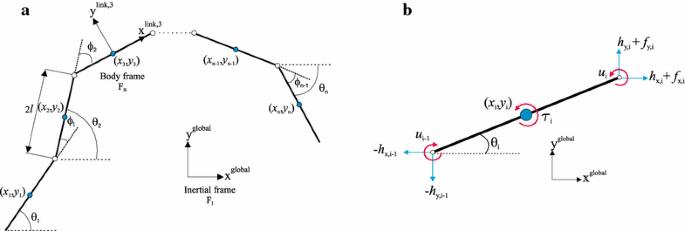
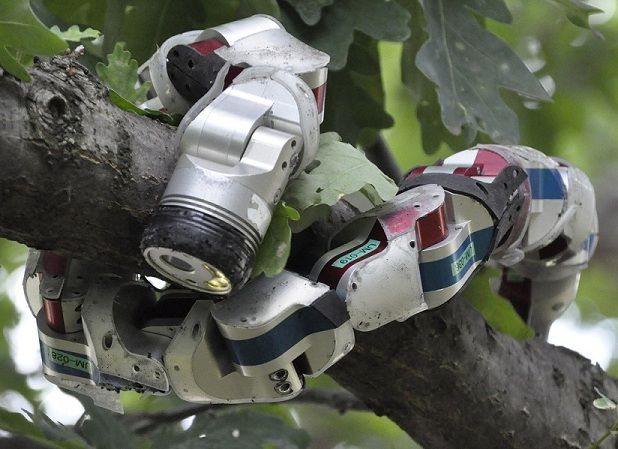
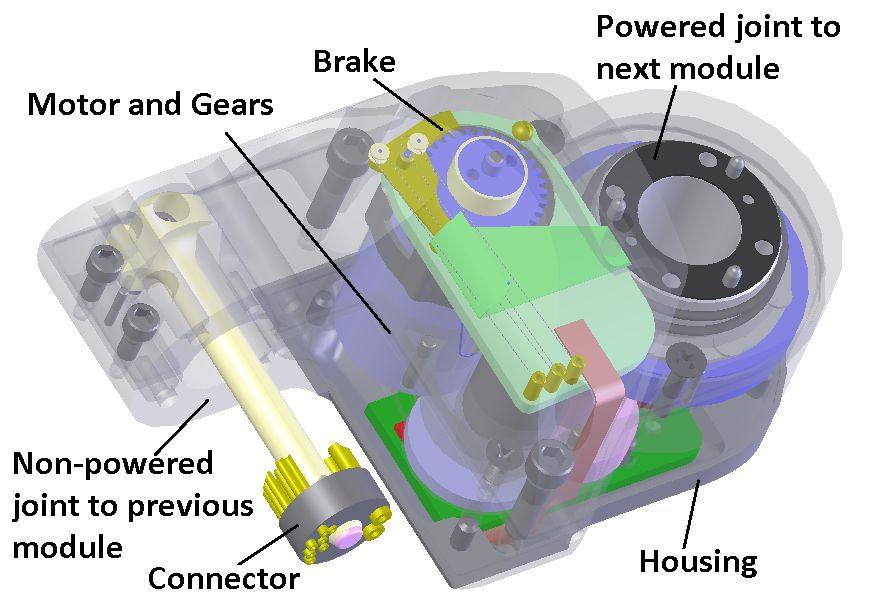
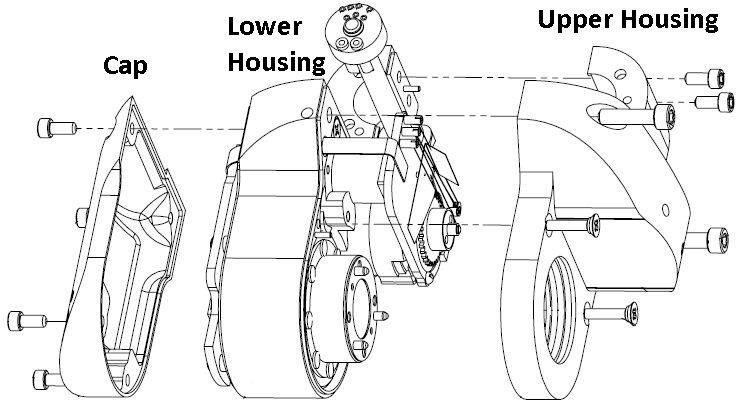
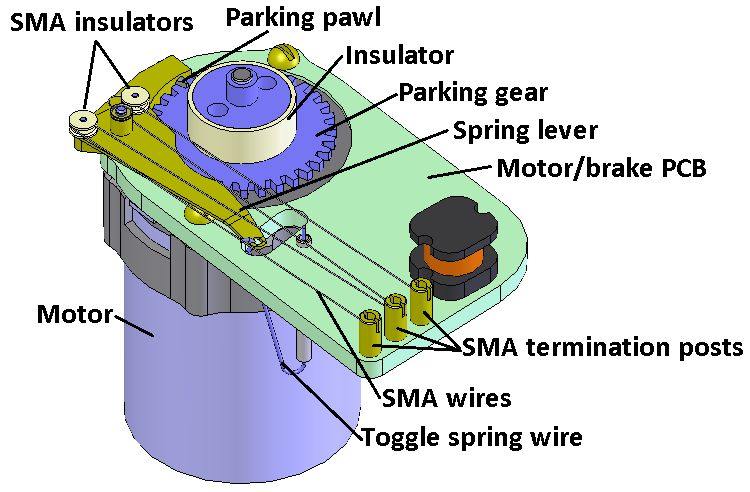
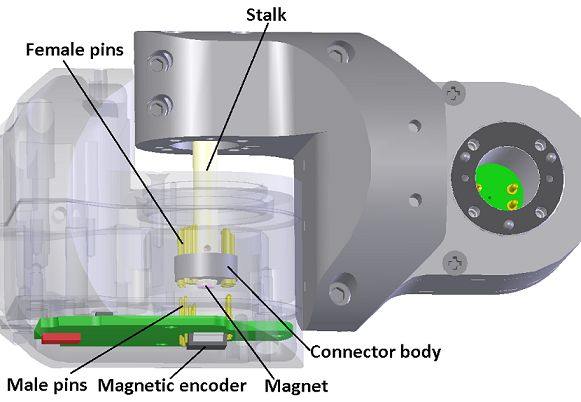
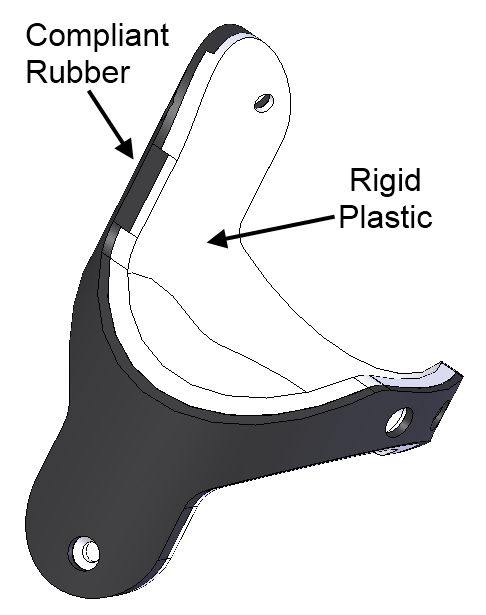
The Unified design packages a custom actuator transmission, sensors, electrical interconnection and a holding brake into modular units. Alternating joint-axis orientations allow 3D body shapes. The team's gait library demonstrates sidewinding, rolling, climbing and related motions. Performance depends on contact geometry and the environment, not just on playing a sinusoid through the joints.
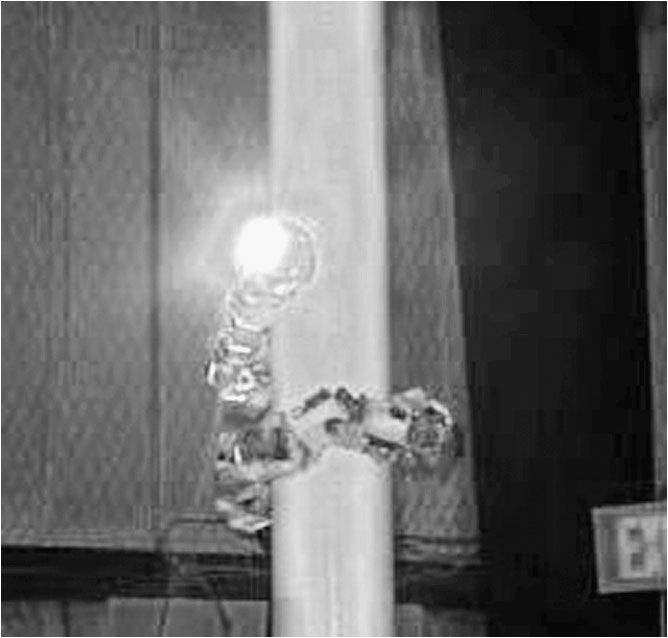
Engadget · YouTube
This video could not play here. Watch on YouTube.
CMUBiorobotics · YouTube
This video could not play here. Watch on YouTube.
CMU Robotics Institute · YouTube
This video could not play here. Watch on YouTube.
CMU Robotics Institute · YouTube
This video could not play here. Watch on YouTube.
CMUBiorobotics · YouTube
This video could not play here. Watch on YouTube.
CMUModsnake · YouTube
This video could not play here. Watch on YouTube.
dgoldmanlab · YouTube
This video could not play here. Watch on YouTube.
Kulko studies obstacle-aided locomotion. Contact sensing tells the controller where the body meets its surroundings, allowing obstacles to become useful push points.
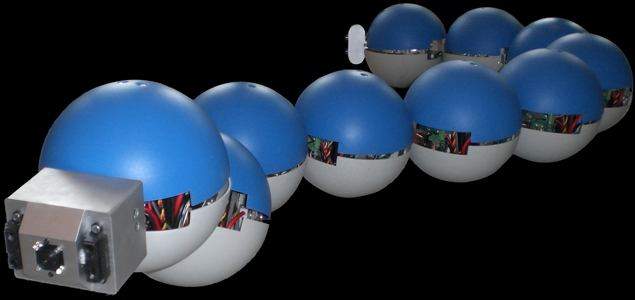
ROBOTNOR (Norway) · YouTube
This video could not play here. Watch on YouTube.
advancedrobots · YouTube
This video could not play here. Watch on YouTube.
sigurdfjerdingen · YouTube
This video could not play here. Watch on YouTube.
Ten identical modules each provide two motorized degrees of freedom. Passive wheels create low rolling resistance along the body and higher resistance laterally. The lab lists 960 g per joint module, 130 mm outer diameter, ±45° travel, 4.5 N·m maximum continuous torque and 70°/s no-load speed. These are module specifications, not whole-robot values.
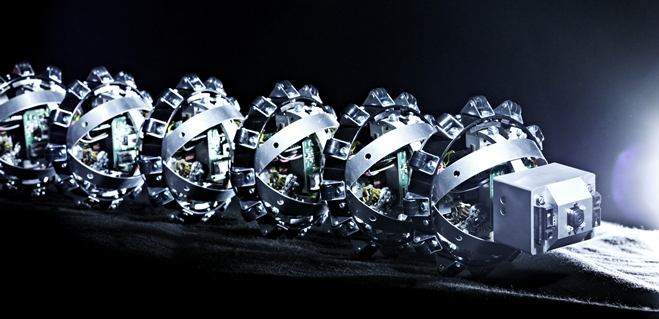
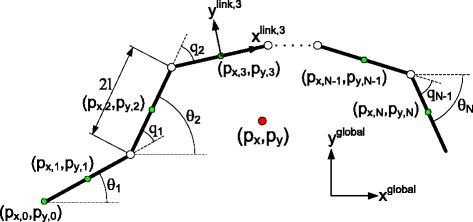
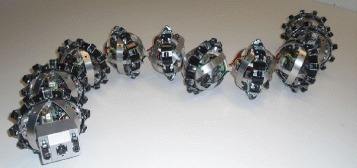
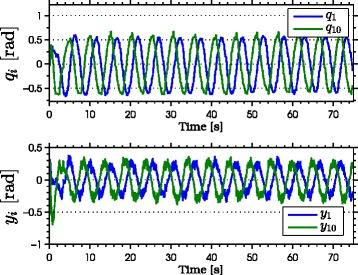
advancedrobots · YouTube
This video could not play here. Watch on YouTube.
Active Scope Camera is a flexible inspection probe that propels itself into narrow voids. Versions use vibrating cilia for traction and air jets to lift or direct the head. Its rescue applications emphasize insertion, tether management and a useful camera view.
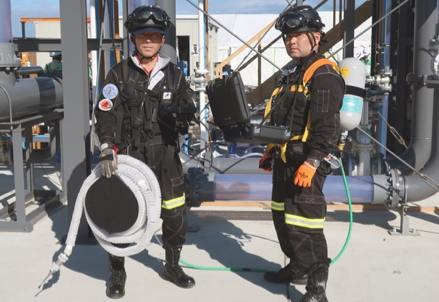
ImPACT Tough Robotics Challenge · YouTube
This video could not play here. Watch on YouTube.
ikinamo · YouTube
This video could not play here. Watch on YouTube.
ikinamo · YouTube
This video could not play here. Watch on YouTube.
ikinamo · YouTube
This video could not play here. Watch on YouTube.
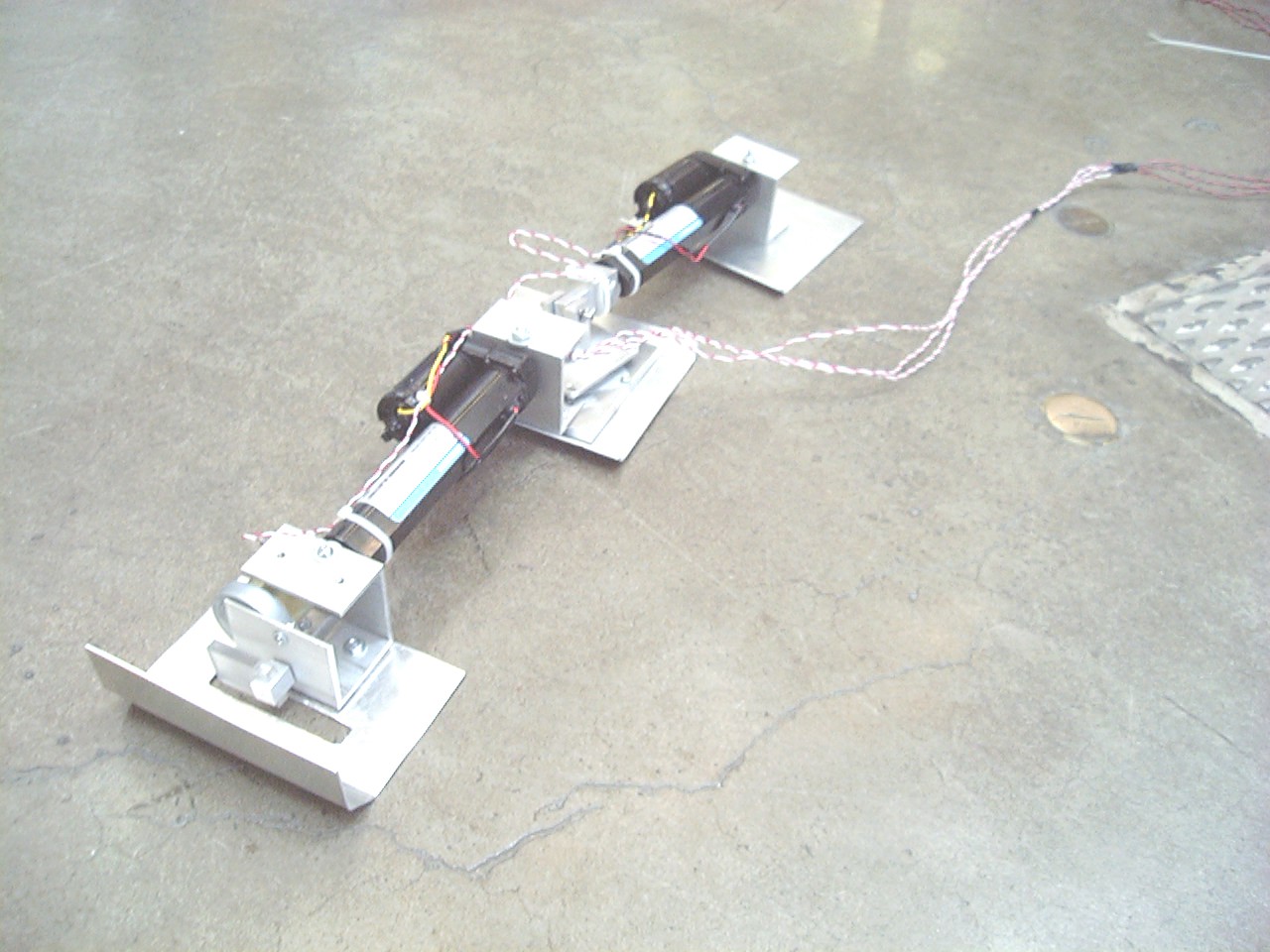
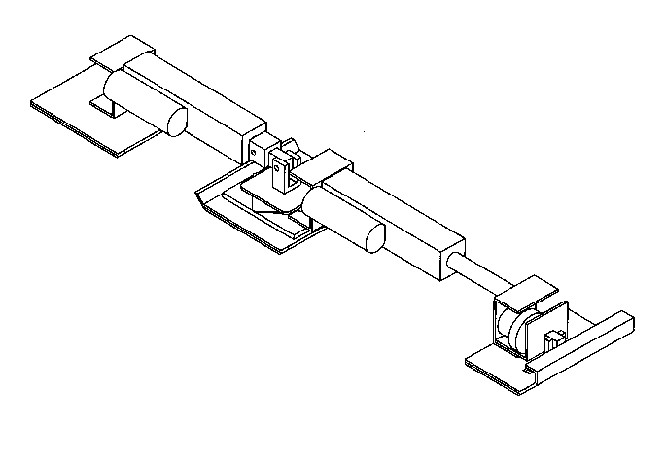
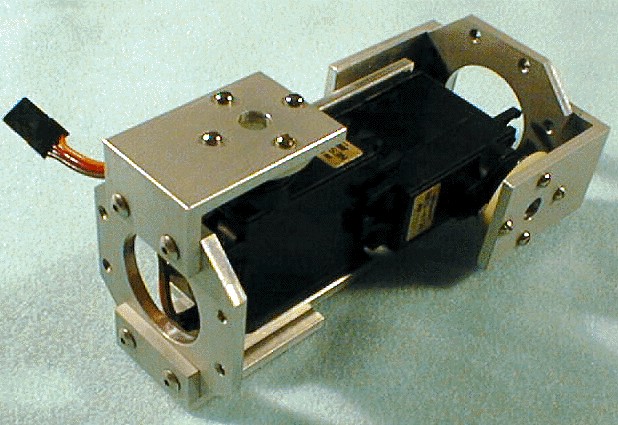
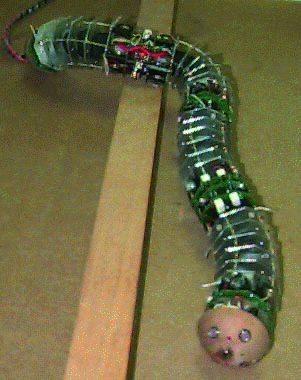
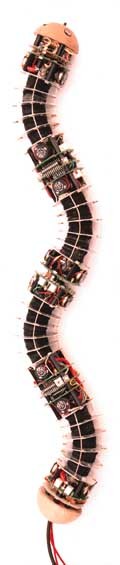
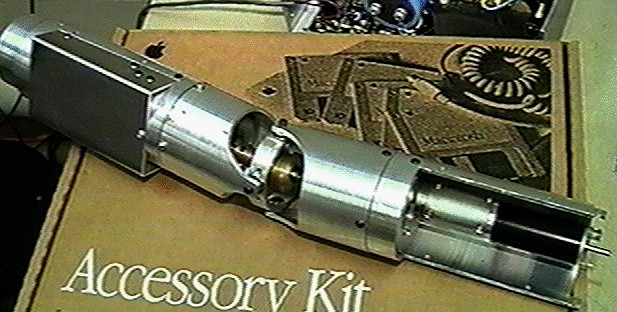
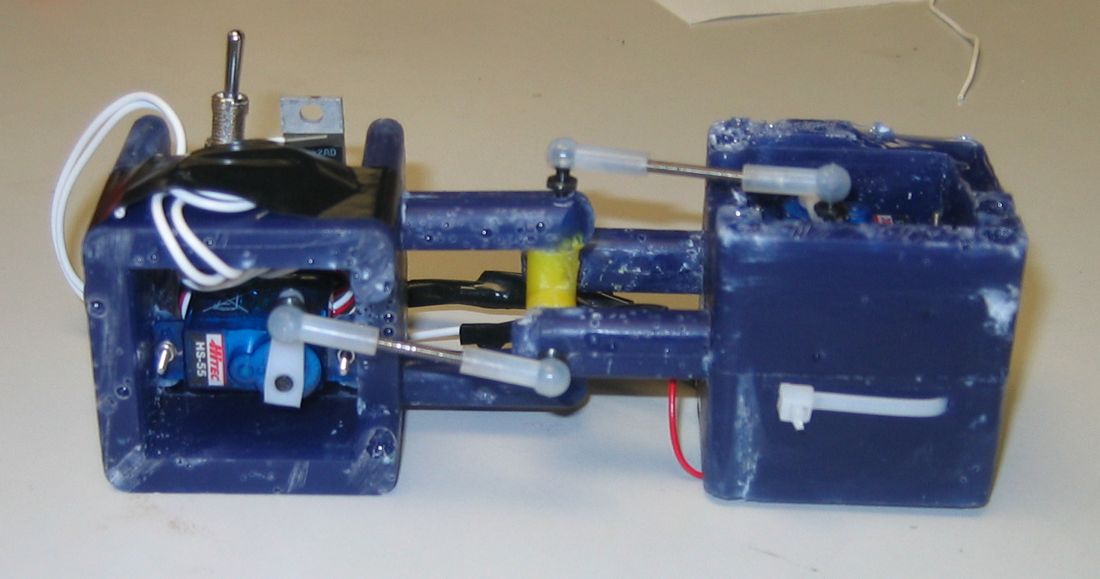
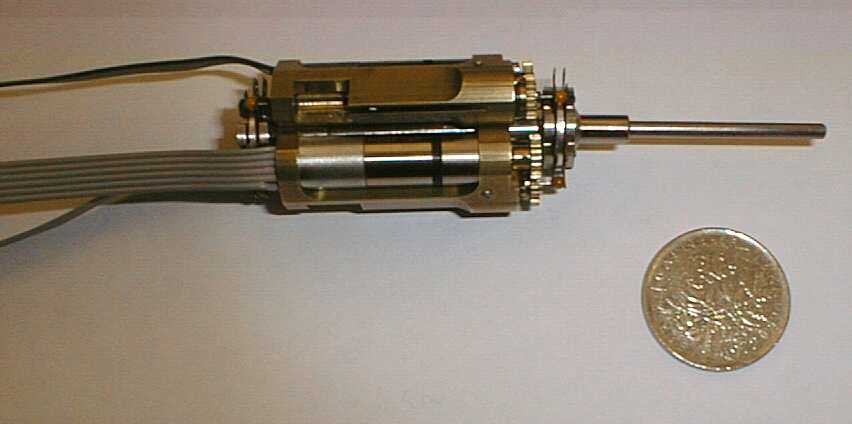
Brent William Spranklin’s 2006 robot explored rectilinear travel through coordinated vertical body motion. The completed module shown below is Figure 5.19 from his University of Maryland thesis.
ACM-R5 is an important land-and-water branch of Hirose's research. The 2005 JSME conference record identifies the design and control work and its authors. It belongs alongside AmphiBot when comparing aquatic and terrestrial locomotion. The conference record is a historical source, not evidence of a newly released 2026 product.
ikinamo · YouTube
This video could not play here. Watch on YouTube.
Michele Guarnieri · YouTube
This video could not play here. Watch on YouTube.
Michele Guarnieri · YouTube
This video could not play here. Watch on YouTube.
Robots Dreams · YouTube
This video could not play here. Watch on YouTube.
Michele Guarnieri · YouTube
This video could not play here. Watch on YouTube.
The lab lists a 3 m, 75 kg robot with 20 degrees of freedom and ±35° joint travel. Water hydraulics at 100 bar provide up to 300 N·m joint torque. Water is both an actuation resource and the firefighting medium. The heavy, powerful mechanism illustrates a different scale from hobby servo snakes. The available motion video establishes a moving prototype, not routine fire-service deployment.
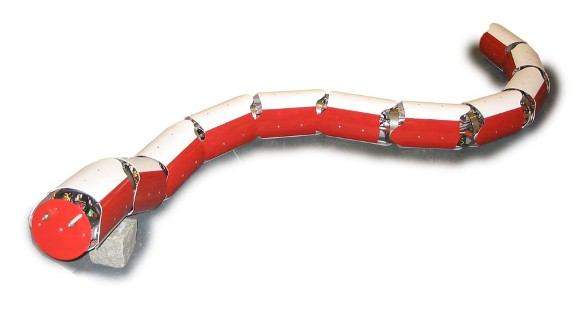
ROBOTNOR (Norway) · YouTube
This video could not play here. Watch on YouTube.
sigurdfjerdingen · YouTube
This video could not play here. Watch on YouTube.
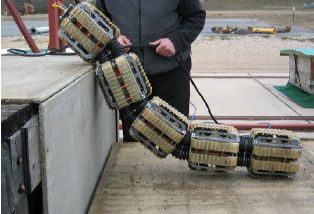
OmniTread combines linked rigid segments with extensive tread coverage. Pneumatic articulation allows sections to lift or bridge terrain while the tracks continue providing traction. The OT-4 development is documented by the university and in a technical paper. Its tracks provide traction while its joints adapt the body to the terrain.
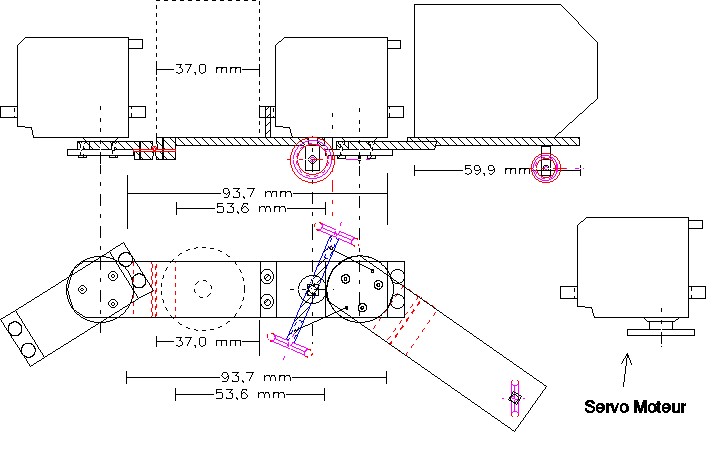
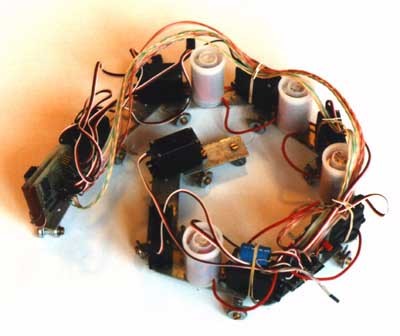
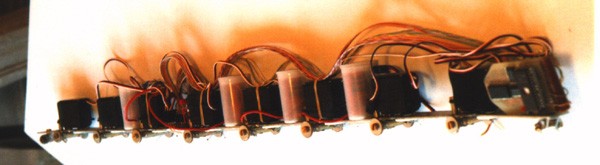
Juan González-Gómez’s CUBE and Cube Reloaded projects document modular servo bodies and traveling-wave locomotion. Cube Reloaded uses eight modules. The related Unimod and Minicube pages show real assembly steps and reusable mechanical designs.
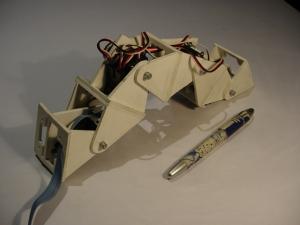
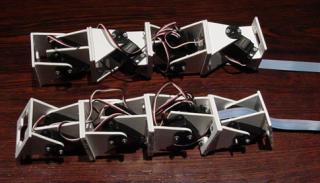
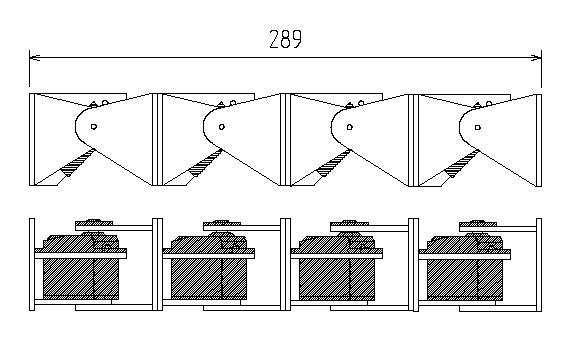
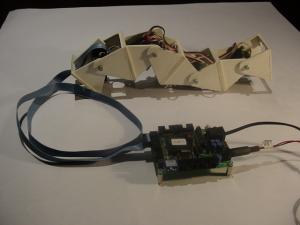
Juan Gonzalez Gomez · YouTube
CUBE family variant. The title identifies Cube Revolutions, Cube-M or Hypercube where applicable.
This video could not play here. Watch on YouTube.
Juan Gonzalez Gomez · YouTube
CUBE family variant. The title identifies Cube Revolutions, Cube-M or Hypercube where applicable.
This video could not play here. Watch on YouTube.
Juan Gonzalez Gomez · YouTube
CUBE family variant. The title identifies Cube Revolutions, Cube-M or Hypercube where applicable.
This video could not play here. Watch on YouTube.
Juan Gonzalez Gomez · YouTube
CUBE family variant. The title identifies Cube Revolutions, Cube-M or Hypercube where applicable.
This video could not play here. Watch on YouTube.
Juan Gonzalez Gomez · YouTube
CUBE family variant. The title identifies Cube Revolutions, Cube-M or Hypercube where applicable.
This video could not play here. Watch on YouTube.
Juan Gonzalez Gomez · YouTube
CUBE family variant. The title identifies Cube Revolutions, Cube-M or Hypercube where applicable.
This video could not play here. Watch on YouTube.
Juan Gonzalez Gomez · YouTube
CUBE family variant. The title identifies Cube Revolutions, Cube-M or Hypercube where applicable.
This video could not play here. Watch on YouTube.
Juan Gonzalez Gomez · YouTube
Simulation or animation, as identified in the video title.
This video could not play here. Watch on YouTube.
Juan Gonzalez Gomez · YouTube
Simulation or animation, as identified in the video title.
This video could not play here. Watch on YouTube.
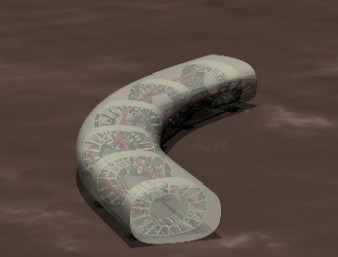
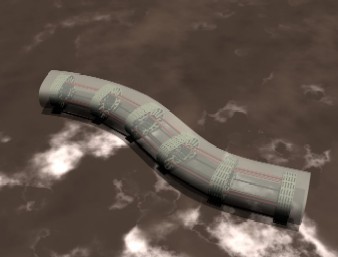
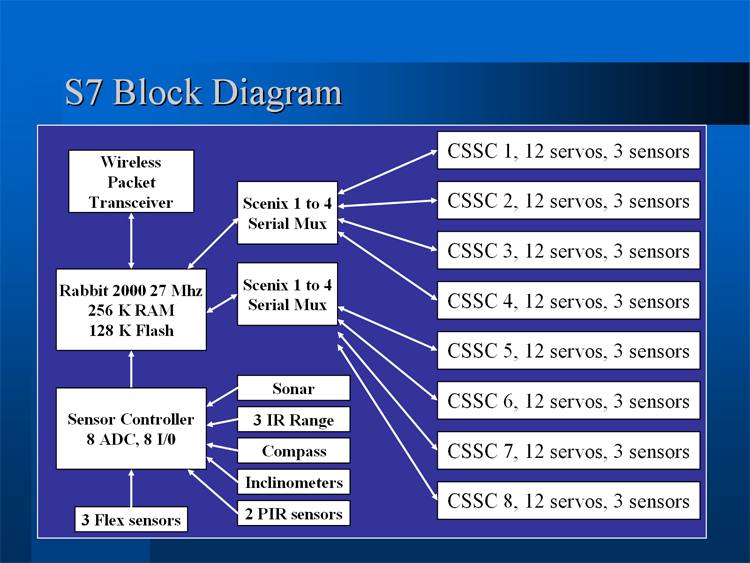
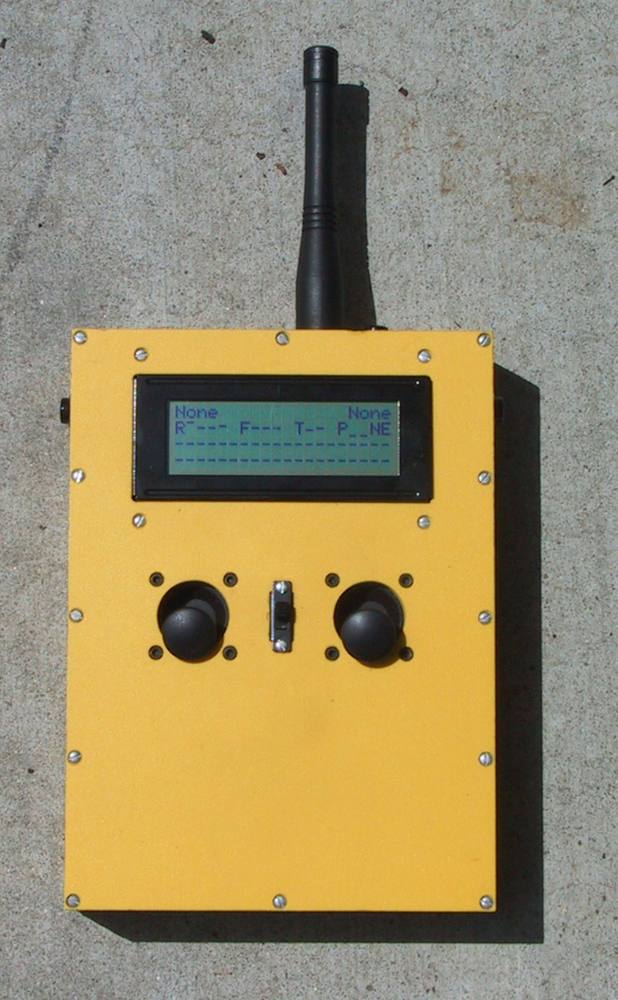
Gavin Miller’s wheel-free S7 was intended to reproduce python-like rectilinear progression. The original page describes expanded PVC, steel rod and plastic gears, plus packet radio and extensive sensing. Construction photos show the body, sensor head and custom controllers. A complete belly-drive drawing and a verified public video of S7 locomoting have not been recovered.
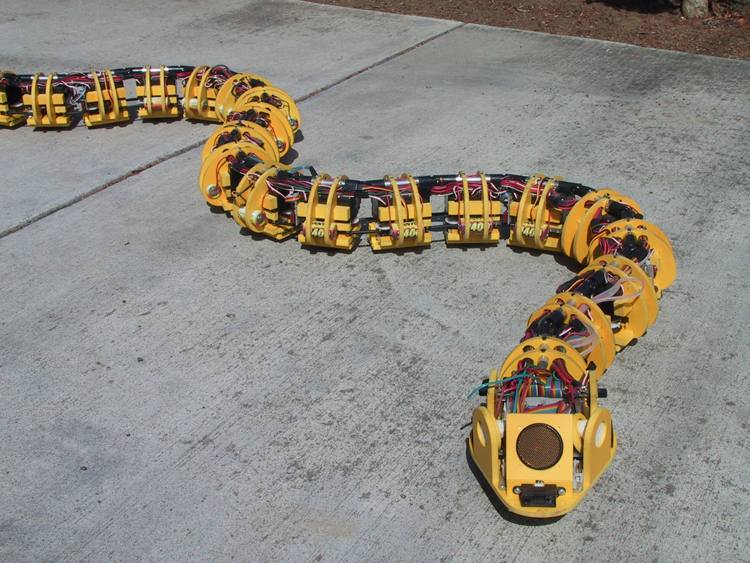
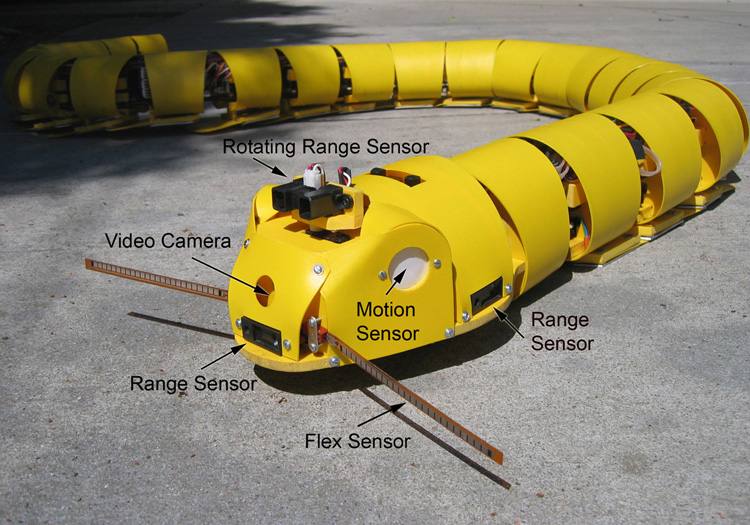
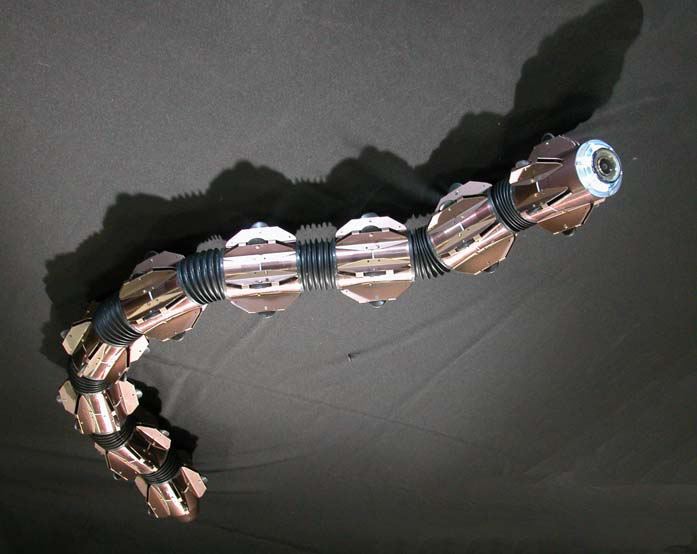
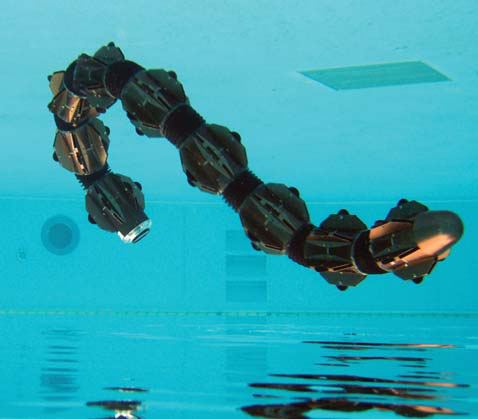
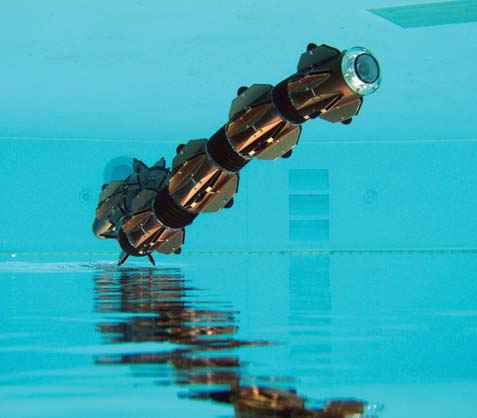
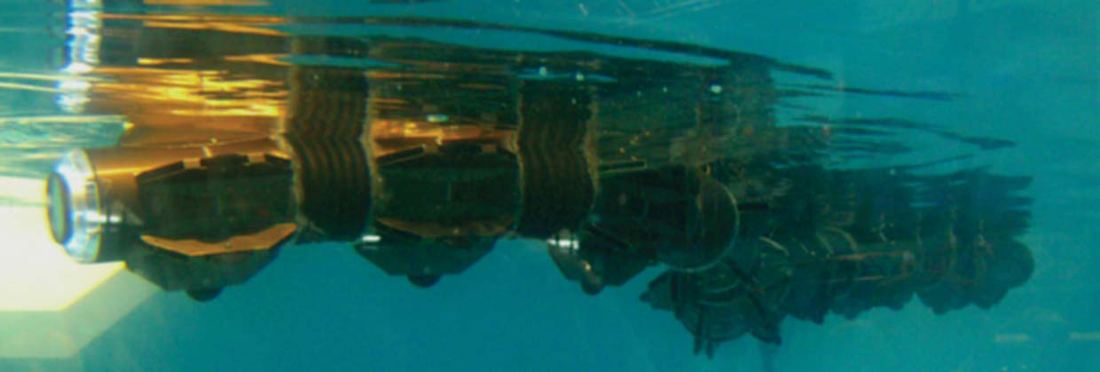
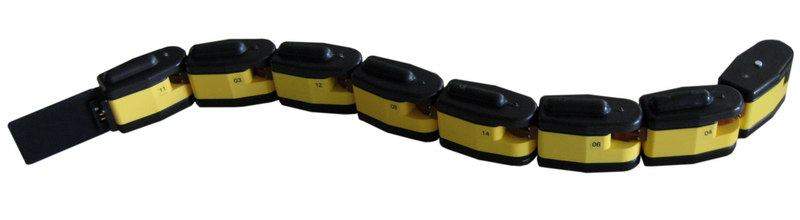
EPFL’s AmphiBot robots use body undulation to crawl and swim. The early versions combined motorized joints with central pattern generator control; the later lineage includes environmental monitoring platforms. Their demonstrations show how a traveling body wave changes between land and water.
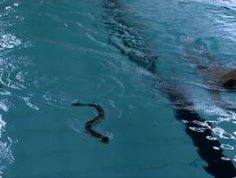
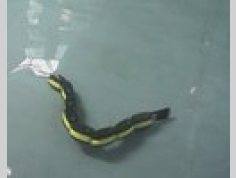
BIOROB · YouTube
This video could not play here. Watch on YouTube.
TechTheLead · YouTube
Envirobot branch of the EPFL swimming-robot lineage.
This video could not play here. Watch on YouTube.
Science Node · YouTube
Envirobot branch of the EPFL swimming-robot lineage.
This video could not play here. Watch on YouTube.
A wheeled sewer-inspection robot with six body sections and five powered joints. MAKRO 1.1 carries its batteries, computer and motor controllers onboard. Joint articulation lifts sections and turns the body through pipe junctions while the wheels supply traction. The 2004 paper reports a two-metre, approximately 50 kg prototype with 21 motors.
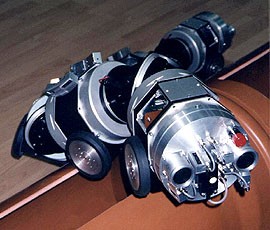
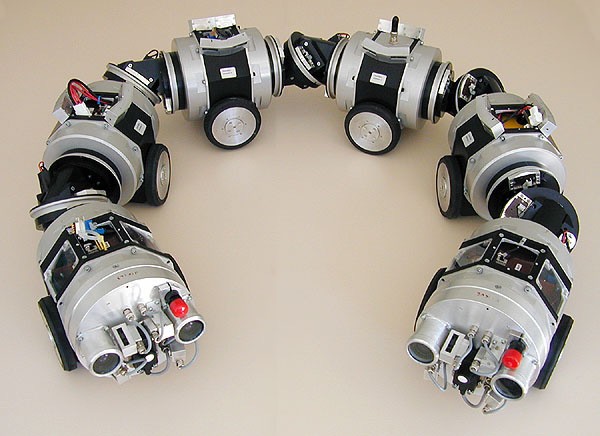
hsurmann · YouTube
This video could not play here. Watch on YouTube.
Peter Bentley and Siavash Haroun Mahdavi explored a snake whose shape-memory-alloy wires act as muscles. Heating contracts the wires; a learned control sequence coordinates their motion. The research investigated whether control could adapt after actuator damage.
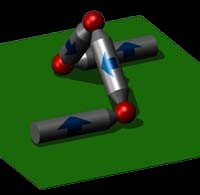
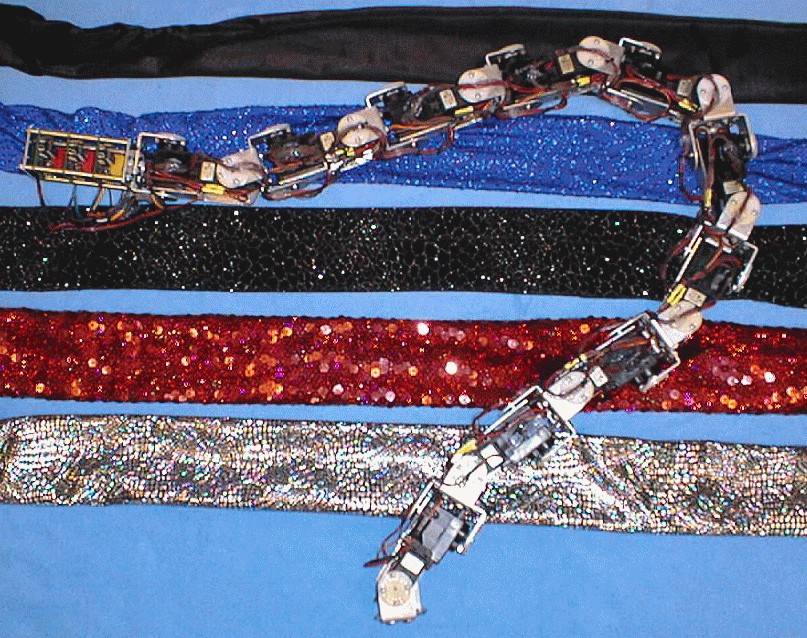
Berkeley’s archived project page preserves photographs of an articulated electromechanical snake and a link to an AVI demonstration. The physical structure and joint arrangement are visible below; a complete fabrication package and a working copy of the linked movie have not been recovered.
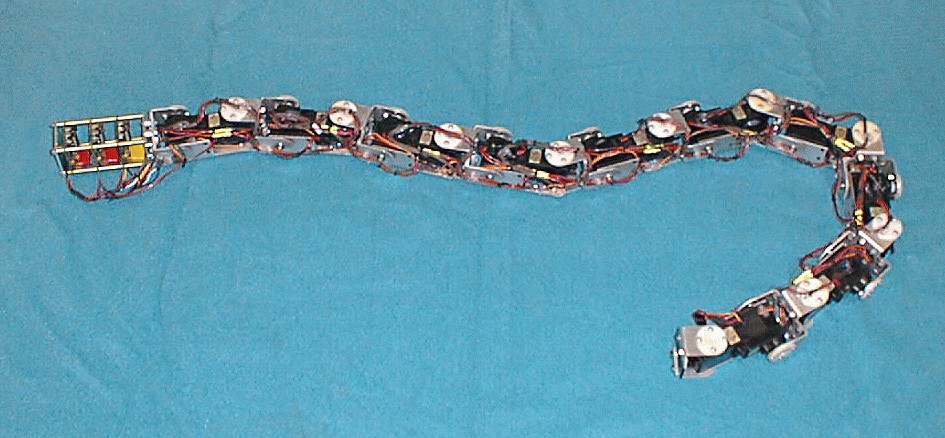
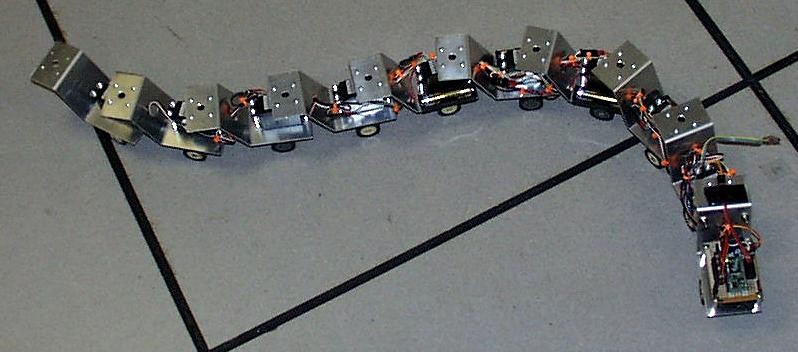
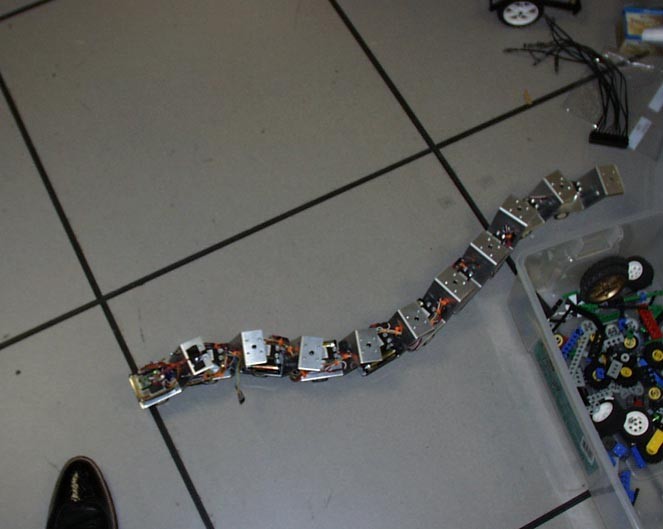
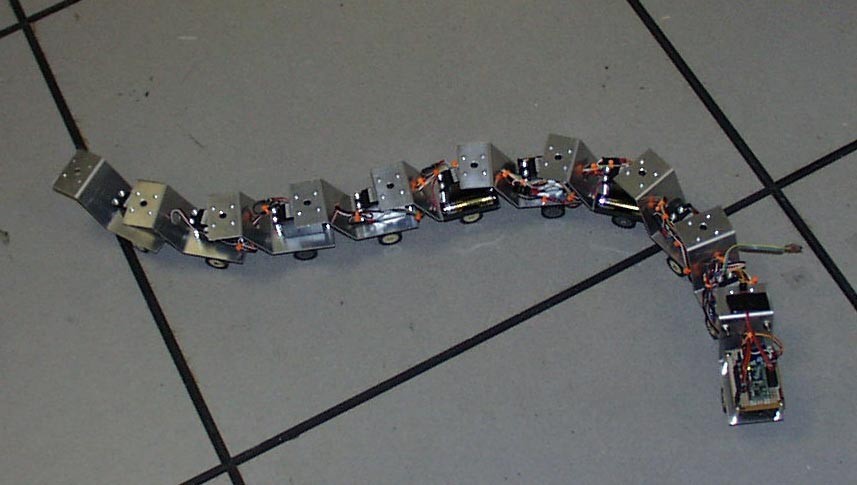
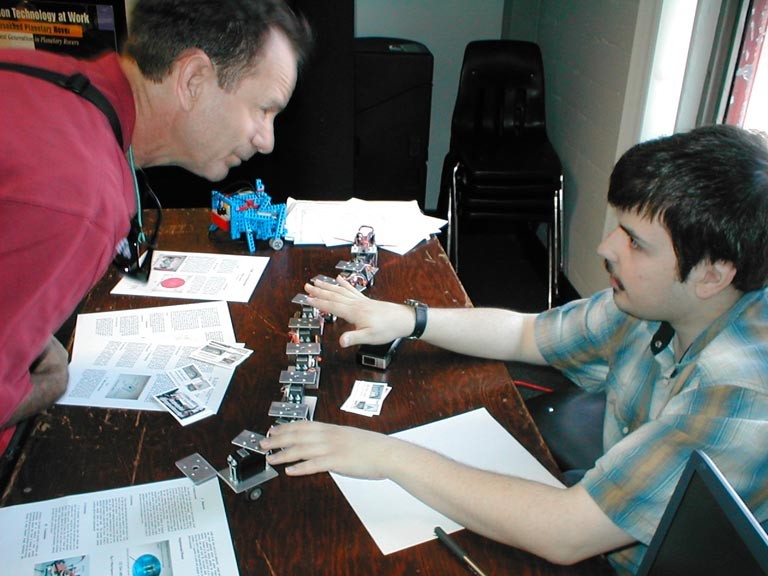
Slither uses ten bent-aluminum segments, nine hobby servos and wheels. A BasicX-24 controller coordinates the wave, accepts infrared-remote commands and responds to whisker switches. The original project gives construction details and code in a short report.
Make: · YouTube
This video could not play here. Watch on YouTube.
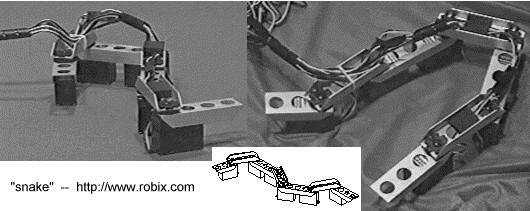
A snake configuration built from the Robix RCS-6 robot construction set. Programmable servo sequences make the linked body bend and straighten; the original page demonstrates one possible configuration of the kit.
This student prototype links three tracked bodies using steerable joints. Six DC motors drive the tracks, while servos adjust pitch and yaw. A tethered Motorola 68HC12 controller coordinates movement. The recovered report documents the electronics and construction; it is a locomotion prototype rather than a demonstrated survivor-locating system.
CMU’s early snake experiments explored bending waves, three-dimensional motion and inspection access using articulated modules. The historical lab credited Mark Yim’s design for one of its modular platforms. These demonstrations precede the later Unified and series elastic snakes.
Martin Nilsson’s modular snake work combined roll–pitch–roll joints with research on learned locomotion, docking and distributed sensing. Physical joint design was chosen to make simulation and control tractable. The DRAGON stage also explored structures assembled from reconnectable modules.
The Copernicus project studied a flexible robot for pipe inspection. Three miniature actuators change each module’s shape; repeating modules bend and extend the body. The team built an enlarged 20-module model with DC motors and CAN-connected Siemens C167 controllers before attempting the intended miniature scale.
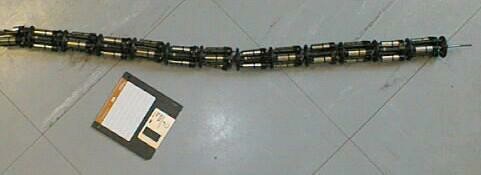
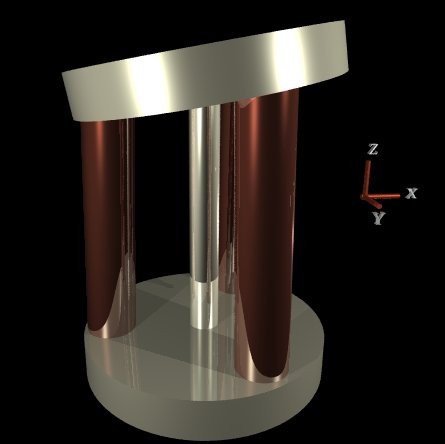
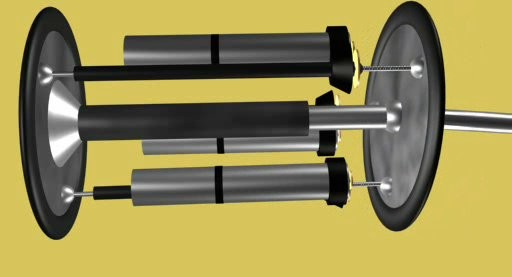
Original project footage. [140]
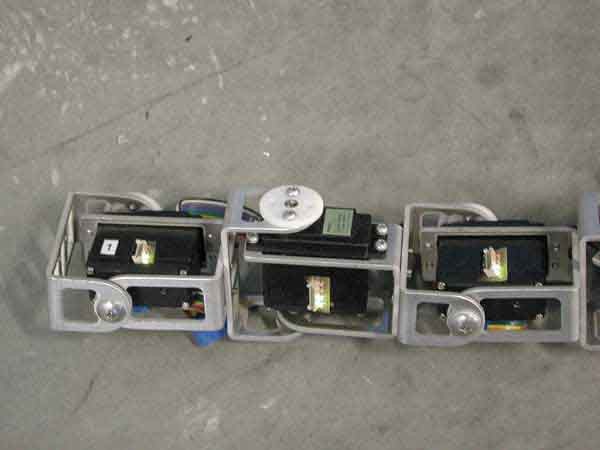
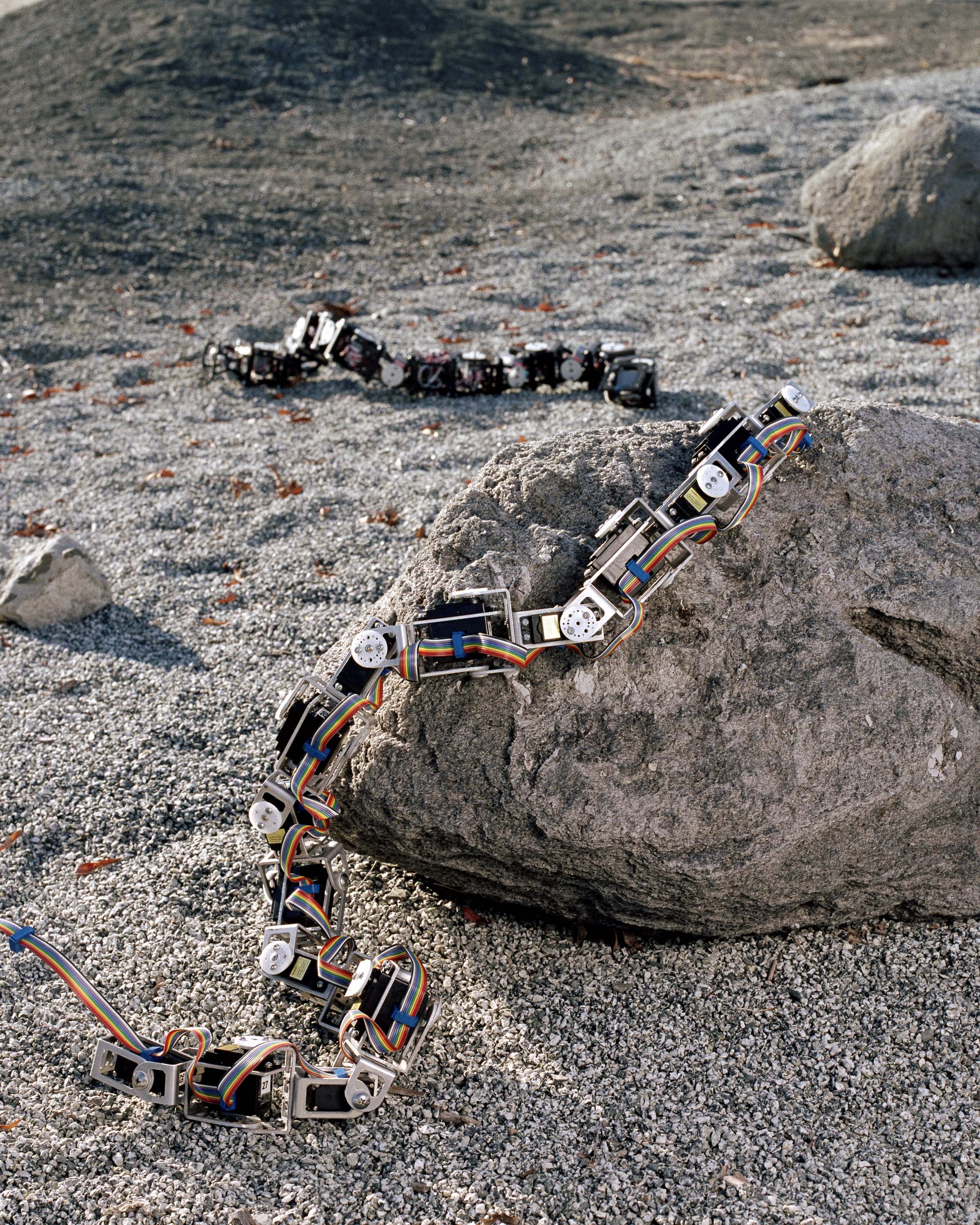
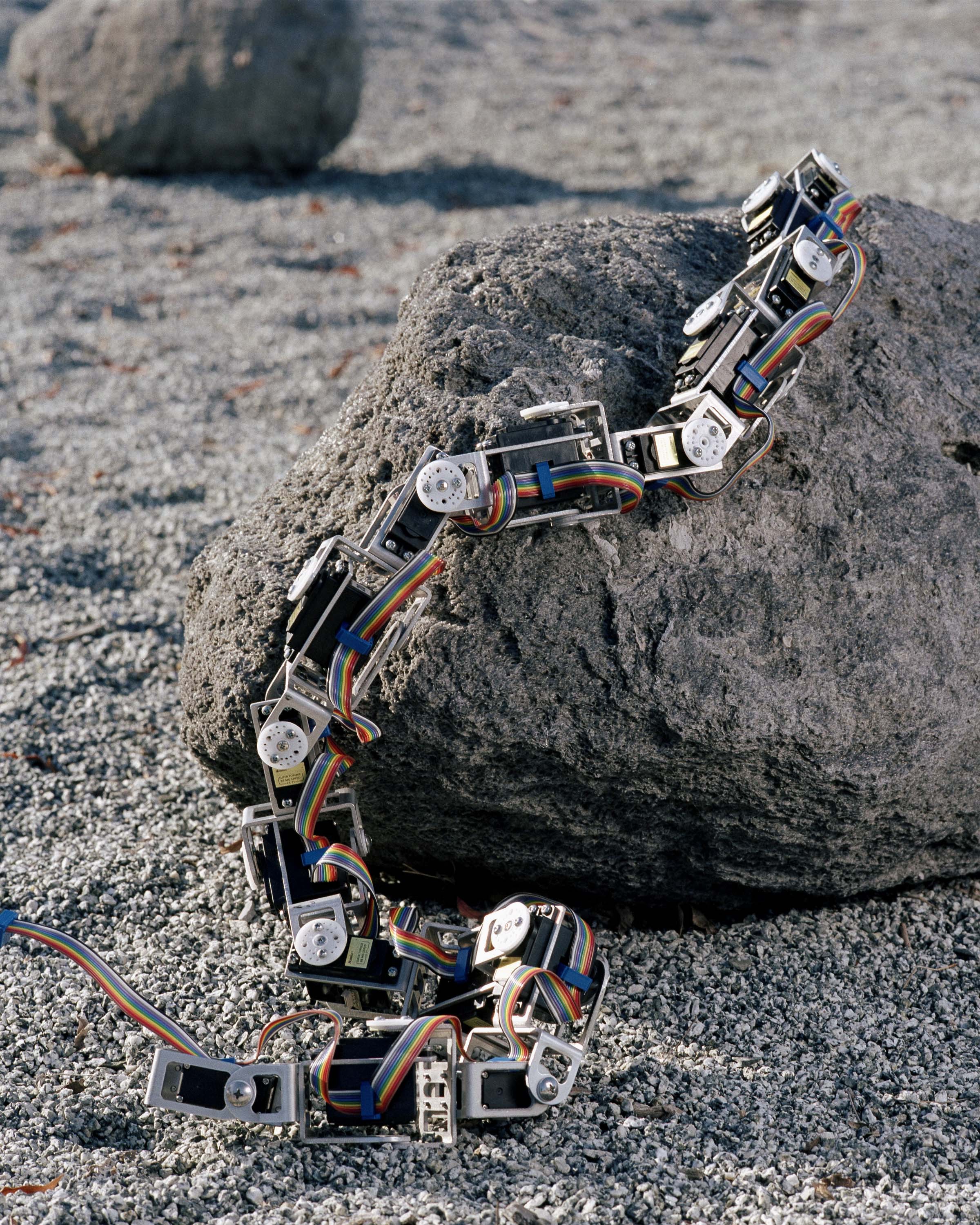
Ames investigated a modular snake for rough terrain, narrow gaps and future planetary exploration. The 2000 announcement describes a mechanical test platform and planned autonomous capabilities. It was a research prototype, separate from JPL’s much later EELS project.
NASA's Ames Research Center · YouTube
This video could not play here. Watch on YouTube.
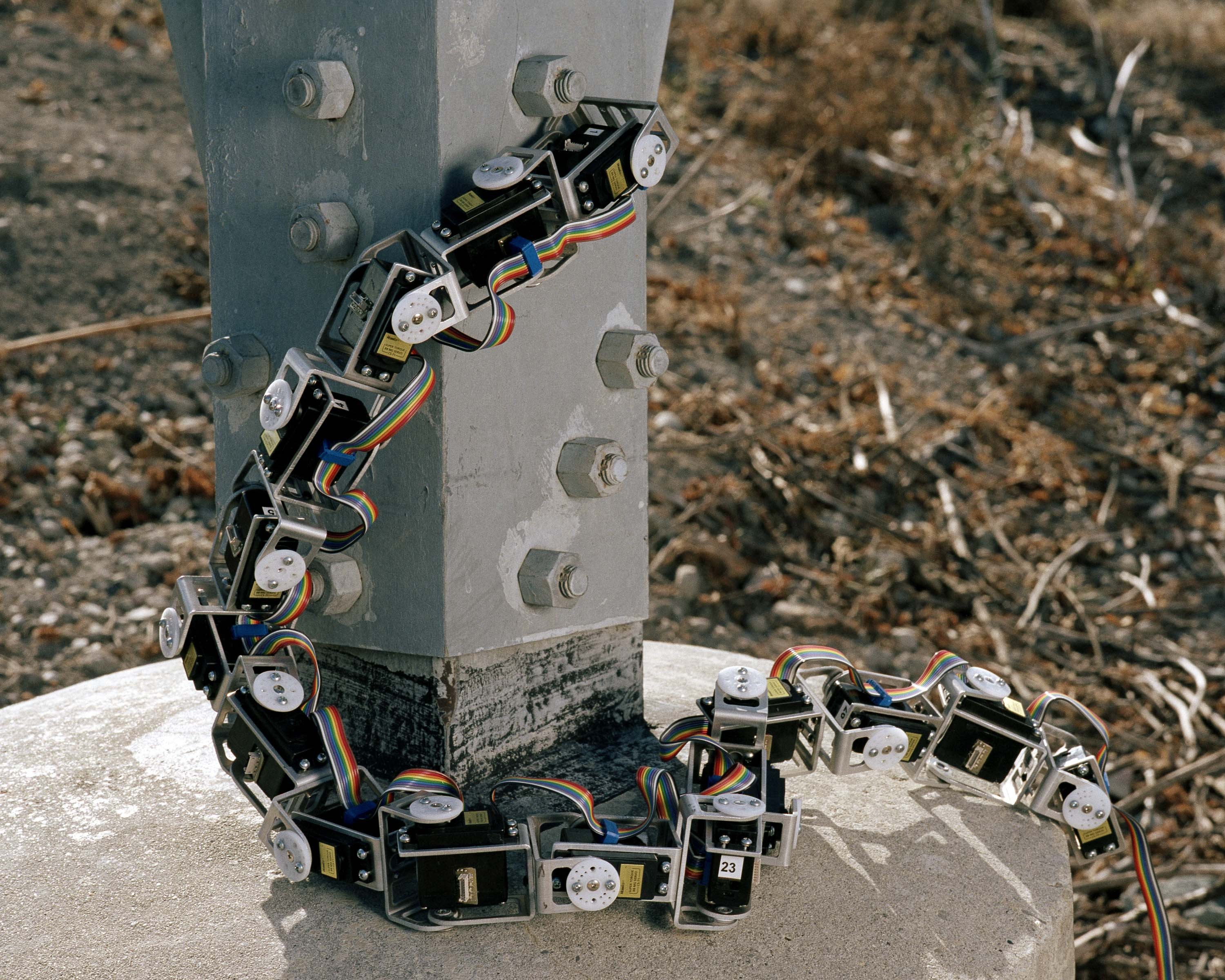
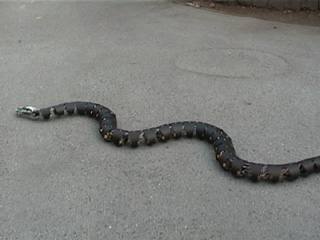
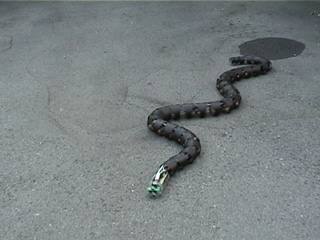
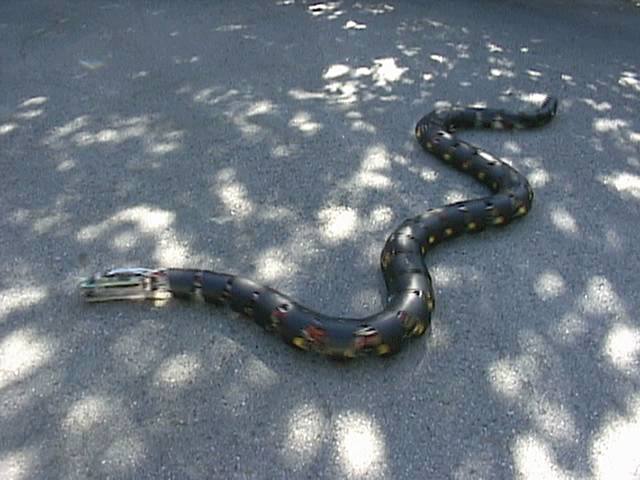
Gavin Miller’s S5 combines a slim articulated body with 64 servos, polycarbonate structure, brass rods and segmented vinyl cladding. A Basic Stamp II and Scenix processor coordinate eight servo-control units over four serial buses. The original description lists 42 batteries and four-channel radio control. The surviving clips show its lifelike body waves and turning.
Original project footage. [141]
Original project footage. [142]
Original project footage. [143]
Snake2 added powered wheels around each section for faster inspection travel. Three motors in a section adjust the joint between neighboring sections. The original page reports more than 12 N·m joint torque, about 0.1 m/s travel, and infrared, torque, tilt and other sensors. It is distinct from the first, body-propelled GMD Snake.
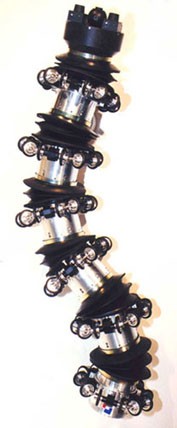
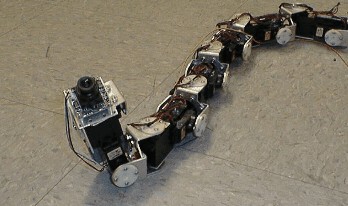
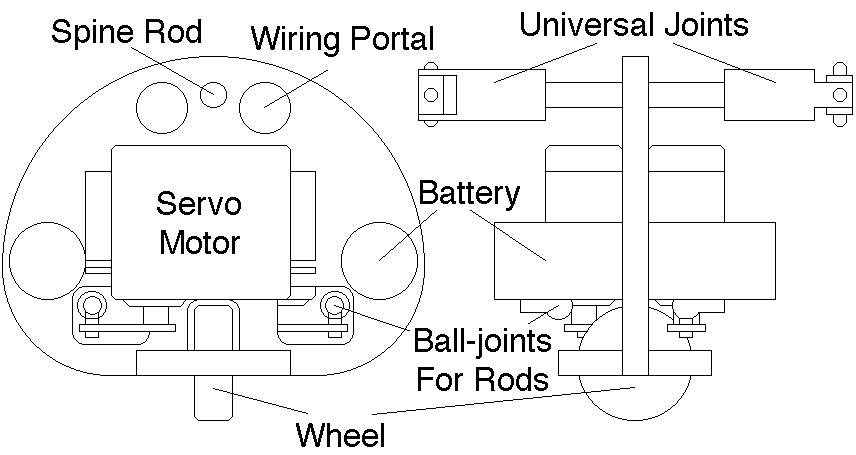
Kevin Dowling’s ten-link robot has 20 servo-driven degrees of freedom. His dissertation joins physical modeling, gait learning and hardware experiments, showing how coordinated body motion can move a wheel-free machine. Replaceable skins and an onboard camera were also investigated.
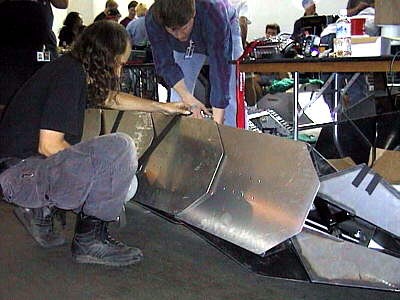
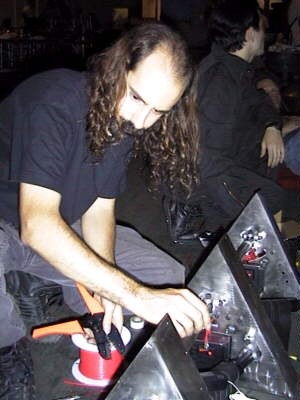
Setrakian’s articulated Snake appeared at Robot Wars 1997. A handheld articulated controller, called the WAC, supplied a body shape for the machine to follow through closed-loop servo control. Contemporary event photographs show the robot and controller; the videos capture its unusual movement in the arena.
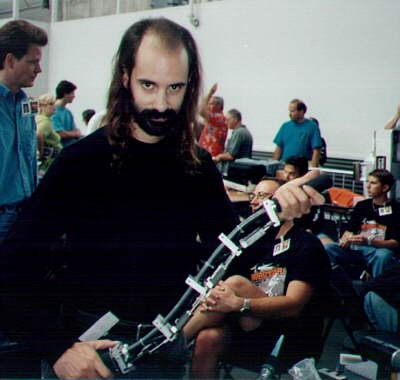
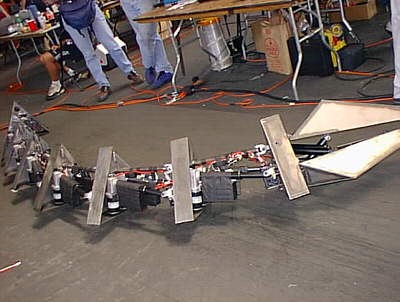
ExperiMENTAL · YouTube
This video could not play here. Watch on YouTube.
Gremlin Co · YouTube
This video could not play here. Watch on YouTube.
GMD’s first snake used identical plug-together sections, rubber joints and an external power tether. Each section had its own processor and position feedback; a CAN bus coordinated the body. The original page describes configurations of up to 15 sections and a sensor-carrying head.
Sniky uses nine wagons, eight steering servos and passive wheels to turn a traveling body bend into forward motion. The original specifications give a 790 mm body, 1.27 kg mass and 13 cm/s speed on a smooth surface. An ST62 microcontroller drives the servos and accepts a two-channel radio command.
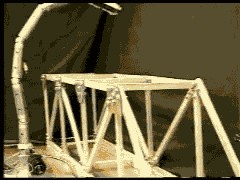
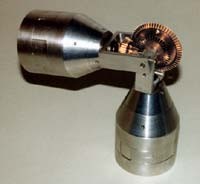
Joel Burdick, Gregory Chirikjian and colleagues built hyper-redundant mechanisms and studied how waves of deformation produce locomotion. The 30-degree-of-freedom Snakey uses a variable-geometry truss. Related spatial joint hardware supported work on slender inspection arms. The archive’s picture gallery, gait abstract, modular research and hyper-redundancy pages belong to this research family.
A slender, internally actuated inspection arm was developed to reach spaces too small for conventional manipulators. The archived page describes an approximately three-foot-long, 1.5-inch-diameter device with a fiber-optic borescope. Its follow-the-tip control guided the rest of the arm through confined openings. Published versions differ in their reported degree-of-freedom count.
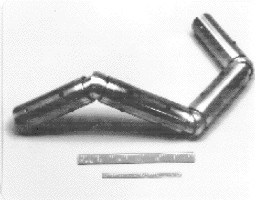
A lightweight inspection and maintenance arm with an articulated truss structure. Foster-Miller’s original description gives a 14-foot reach and 18 degrees of freedom. Its controller records the insertion path so the arm can retract along the same route around obstacles.
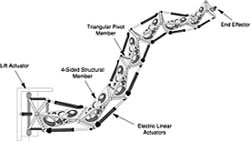
R7 places its motors away from the bending axes and transmits motion through low-force, high-speed cables. Local 11:1 reduction drives reduce the cable loads. Coupled differential drives coordinate 16 axes into eight independent degrees of freedom, with a CCD camera at the tip for inspection.
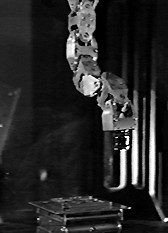
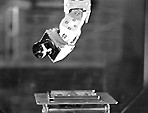
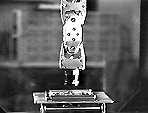
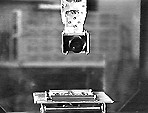
Original project footage. [137]
Original project footage. [138]
Original project footage. [139]
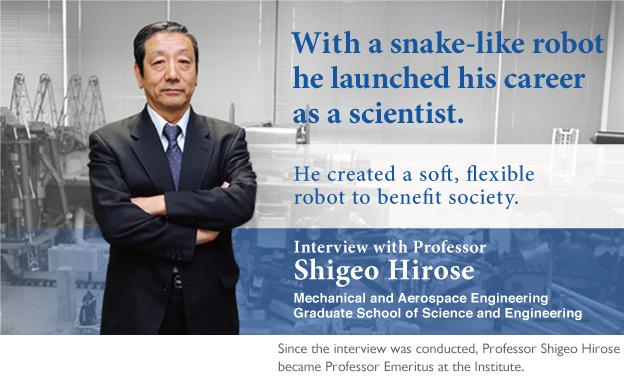
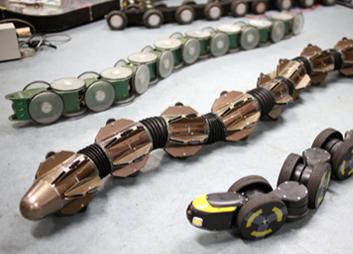
Shigeo Hirose’s Active Cord Mechanism research established a foundational family of snake robots. ACM III used an articulated body and passive wheels to make ground resistance directional: the body wave supplies propulsion while the wheels roll along the body. Later ACM generations developed three-dimensional and amphibious motion.
TEDx Talks · YouTube
This video could not play here. Watch on YouTube.
ULTIMATE OFF-ROAD LOCOMOTION · YouTube
This video could not play here. Watch on YouTube.
More builds, soft robots, pipe climbing and underwater experiments.
MIT CSAIL · YouTube
This video could not play here. Watch on YouTube.
advancedrobots · YouTube
This video could not play here. Watch on YouTube.
matsunolab · YouTube
This video could not play here. Watch on YouTube.
Weikun Zhen · YouTube
This video could not play here. Watch on YouTube.
Kamilo Melo · YouTube
This video could not play here. Watch on YouTube.
sigurdfjerdingen · YouTube
This video could not play here. Watch on YouTube.
advancedrobots · YouTube
This video could not play here. Watch on YouTube.
FZIchannel · YouTube
This video could not play here. Watch on YouTube.
soiboi soft · YouTube
This video could not play here. Watch on YouTube.
Dimuthu D. K. Arachchige · YouTube
This video could not play here. Watch on YouTube.
WPI Soft Robotics Laboratory · YouTube
Simulation or animation, as identified in the video title.
This video could not play here. Watch on YouTube.
Dimuthu D. K. Arachchige · YouTube
This video could not play here. Watch on YouTube.
New China TV · YouTube
This video could not play here. Watch on YouTube.
smartmicrosystems · YouTube
This video could not play here. Watch on YouTube.
Nevon Projects · YouTube
This video could not play here. Watch on YouTube.
Electronics Innovation · YouTube
This video could not play here. Watch on YouTube.
Nikodem Bartnik · YouTube
This video could not play here. Watch on YouTube.
Will Donaldson · YouTube
This video could not play here. Watch on YouTube.
Asphalt Arena · YouTube
This video could not play here. Watch on YouTube.
Mechatronics Lab · YouTube
This video could not play here. Watch on YouTube.
Ayato Kanada · YouTube
This video could not play here. Watch on YouTube.
German Research Center for Artificial Intelligence · YouTube
This video could not play here. Watch on YouTube.
WPI Soft Robotics Laboratory · YouTube
This video could not play here. Watch on YouTube.
Science Magazine · YouTube
This video could not play here. Watch on YouTube.
smartmicrosystems · YouTube
This video could not play here. Watch on YouTube.
Gui Cavalcanti · YouTube
This video could not play here. Watch on YouTube.
advancedrobots · YouTube
This video could not play here. Watch on YouTube.
Kamilo Melo · YouTube
This video could not play here. Watch on YouTube.
Filippo Sanfilippo · YouTube
This video could not play here. Watch on YouTube.